
Self-driving tech startup Wayve raises $1.8B from Nvidia, Uber, and three automakers
Wayve, a pioneering startup in self-driving technology, has successfully raised $1.2 billion in its latest funding round, drawing interest from a variety of investors, including three major automakers and notable tech giants like Microsoft, Nvidia, and Uber. This influx of capital has propelled the company's valuation to an impressive $8.6 billion, highlighting the growing enthusiasm within the tech and automotive sectors for advancements in automated driving. In a recent interview, Wayve's founder and CEO, Alex Kendall, emphasized the company's unique approach to self-driving technology. He described Wayve as a 'contrarian' option in the field, both in terms of its technological innovations and its business model. Kendall stated, "The technology chessboard is set around where different companies have invested on the technology strategy, and now the commercial chessboard is being arranged. We took a very contrarian view on the technology side, pioneering end-to-end deep learning for autonomous driving." Launched in 2017, Wayve has developed a self-learning software layer that utilizes an end-to-end neural network, eliminating the need for high-definition maps. Instead, it leverages data to teach vehicles how to navigate autonomously. This innovative approach supports two key products: an 'eyes on' assisted-driving system and an 'eyes off' fully autonomous-driving system, suitable for applications in both robotaxis and consumer vehicles. A significant aspect of Wayve's technology is its agnostic nature, which allows it to function with various sensors and existing vehicle chips. The startup's Gen 3 platform, unveiled last fall, integrates with Nvidia’s advanced vehicle development kit, Nvidia Drive AGX Thor, enabling advanced driving assistance and Level 4 driverless capabilities on public roads. While Wayve's technology shares similarities with Tesla's, the two companies differ fundamentally in their business strategies. Unlike Tesla, Wayve does not aim to operate its own autonomous driving systems or manufacture vehicles with proprietary software. Instead, it focuses on providing its advanced 'embodied AI' to automakers and tech companies, such as Uber, aiming for a more expansive market reach. Wayve's collaborations include partnerships with Nissan, which plans to implement the startup's self-driving software in its advanced driver-assistance systems by 2027. Furthermore, Uber is set to initiate commercial trials this year using Wayve's technology, with CEO Dara Khosrowshahi expressing excitement about expanding their partnership into over ten global markets. The funding round was led by prominent investors such as Eclipse, Balderton, and the SoftBank Vision Fund 2, with participation from new investors like the Ontario Teachers’ Pension Plan and various global institutional funds. With major automakers like Mercedes-Benz, Nissan, and Stellantis also backing Wayve's technology, the startup's future looks promising as it seeks to redefine the landscape of autonomous driving.
The Boring Company Eyes $4 Billion Funding Boost Amid Expanding Tunnel Ventures
Elon Musk's tunneling enterprise, The Boring Company, is reportedly negotiating a substantial funding round of $4 billio...
TechCrunch | Jul 25, 2026, 19:50
SpaceX's Latest Starlink Launch Marks Milestone Amid Booster Setbacks
On Friday, SpaceX marked a significant achievement by successfully launching its first batch of third-generation Starlin...
TechCrunch | Jul 24, 2026, 23:40
Vision Breakthrough: US Startup Launches Groundbreaking Retina Chip in Europe
Science Corp is poised to introduce a revolutionary retina chip in Europe, designed to restore partial vision for indivi...
Business Today | Jul 25, 2026, 01:00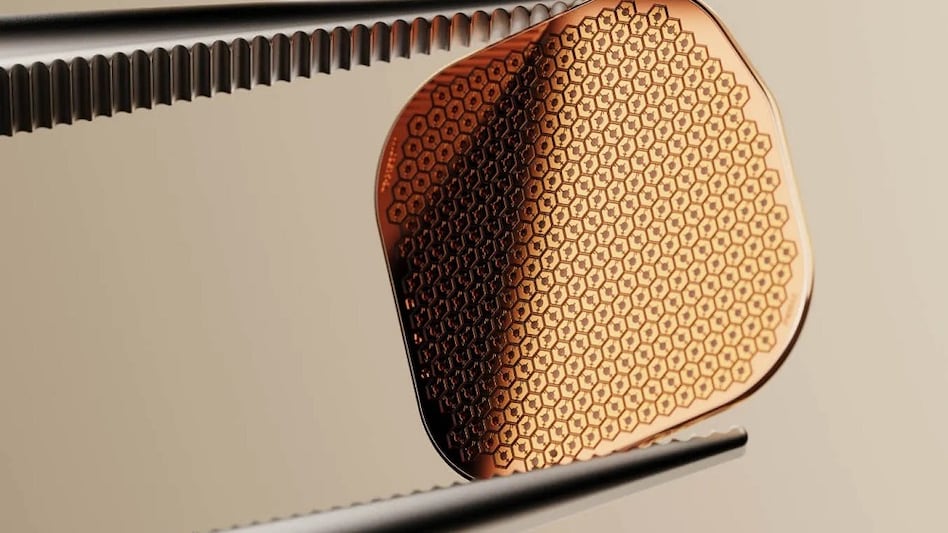
Market Turbulence: Four Key Factors Impacting Stocks This Week
This past week has been challenging for the stock market, driven by several significant forces that have created turbule...
CNBC | Jul 25, 2026, 20:05
OpenAI's Micro Keypad: A Novelty for Coders or Just a Confounding Gadget?
Last week, OpenAI made its debut in the hardware landscape with the launch of Micro, a stylish keypad designed to integr...
TechCrunch | Jul 25, 2026, 24:40