Wayve is launching an AI lab to look beyond self-driving cars
Wayve, a British startup specializing in autonomous vehicle software, is set to launch Wayve Labs, a new research division aimed at exploring the frontiers of artificial intelligence beyond just self-driving cars. This initiative is spearheaded by Jamie Shotton, the company's chief scientist and a former Microsoft executive, who holds a Ph.D. in computer vision from the University of Cambridge. The focus of Wayve Labs will be on embodied intelligence—creating AI systems capable of understanding and interacting with the physical environment. Shotton, who has been with Wayve for close to five years, emphasized that the lab's mission is to advance the company's research horizons, seeking to apply their AI models to a variety of physical-world applications. According to Shotton, the lab aims to enhance the company’s future capabilities, predicting developments five years ahead. The research will delve into teaching machines about spatial awareness, movement, causality, and risk management, including the ability to learn from the outcomes of their actions even in complex situations. While there are no immediate plans for commercialization of the lab's research, it is already staffed by numerous Wayve employees, with intentions to expand the team by recruiting additional AI researchers and machine learning engineers. This effort is part of a broader strategy to publish research findings and innovate new models within the lab. Earlier this year, Wayve announced a significant funding round, raising $1.5 billion from prominent tech companies and major automotive players like Microsoft, Nvidia, Uber, Mercedes-Benz, Nissan, and Stellantis. This funding has pushed the company's valuation to $8.6 billion. Wayve also has a partnership with Uber to deploy self-driving vehicles on the Uber app in over ten global markets, beginning with London. Distinct from competitors such as Tesla and Waymo, Wayve's strategy revolves around developing software for other companies aiming to implement self-driving technology rather than launching its own fleet of robotaxis. Shotton explained that the inspiration for establishing Wayve Labs stemmed from the realization that engineering teams often lack time to deeply contemplate future innovations. By creating a dedicated space for researchers, Wayve aims to leverage its extensive experience in autonomous driving and apply these insights to other robotic technologies. Wayve’s origins date back to its founding in 2017 by machine learning experts Amar Shah and Alex Kendall, who embraced the idea of training self-driving vehicles through AI rather than relying solely on manual coding and exhaustive mapping. This innovative approach has since gained traction within the self-driving vehicle industry. Shotton believes that Wayve Labs is well-positioned to lead this research, supported by the company’s vast data resources, computational power, and ongoing funding. "There’s a wide horizon in front of us," he remarked, highlighting the exciting journey ahead for Wayve Labs.
Crisis Averted: Power Line Failure Highlights Urgent Need for Data Center Resilience
A power line failure near Washington, DC, recently showcased a significant challenge faced by the electrical grid due to...
TechCrunch | Jul 25, 2026, 13:50
The Shift in Human Cognition: Embracing AI as a Collaborative Tool
As technology continues to evolve, a notable shift is occurring in the relationship between humans and artificial intell...
Business Insider | Jul 25, 2026, 09:50The Future of Work: Executives Weigh In on AI's Impact on Gen Z Careers
As generative artificial intelligence continues to rise, uncertainty looms for the incoming Gen Z workforce. Leaders fro...
Business Insider | Jul 26, 2026, 10:15Unleashing the Power of AI: The 5 Smartphones Redefining Mobile Photography
Artificial Intelligence (AI) is transforming our daily experiences, permeating various aspects of technology, including ...
Business Today | Jul 26, 2026, 07:05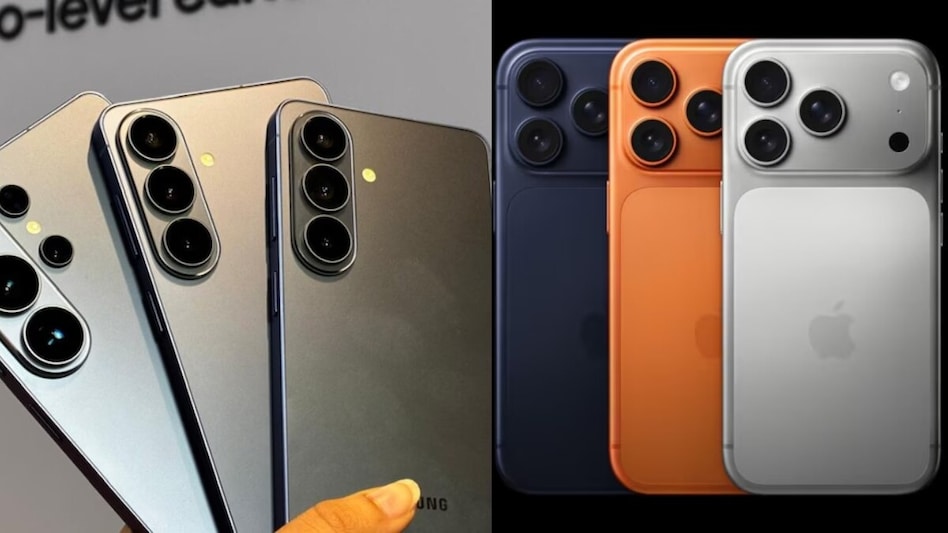
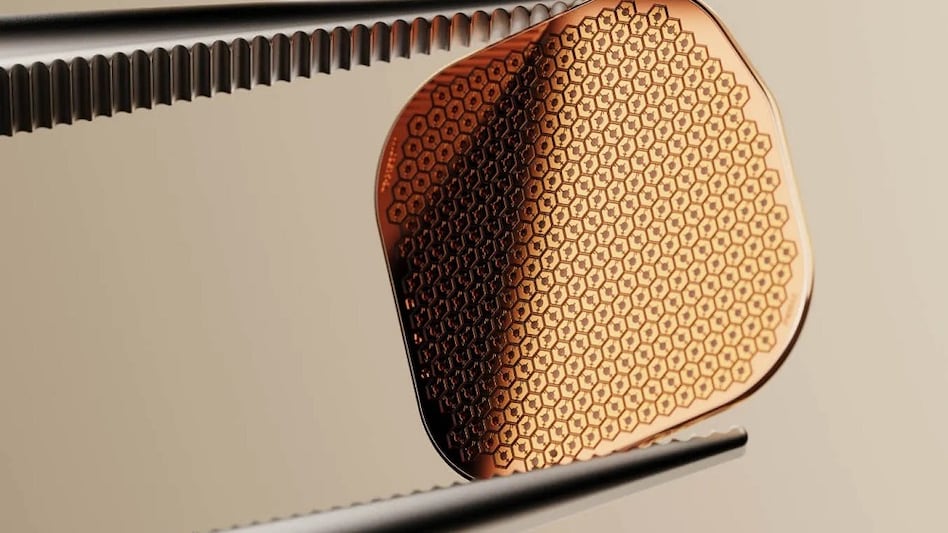
Vision Breakthrough: US Startup Launches Groundbreaking Retina Chip in Europe
Science Corp is poised to introduce a revolutionary retina chip in Europe, designed to restore partial vision for indivi...
Business Today | Jul 25, 2026, 01:00