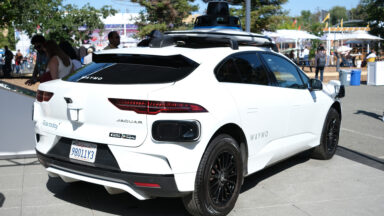
Waymo leverages Genie 3 to create a world model for self-driving cars
Waymo, the autonomous vehicle company spun off from Google, is actively broadening its fleet of self-driving cars into new territories. With an impressive record of over 200 million miles driven, the company is utilizing more than just real-world data to enhance its navigation capabilities. The introduction of the Waymo World Model, powered by Google DeepMind’s innovative Genie 3, marks a significant leap forward in this effort. This new model is designed to generate "hyper-realistic" simulated environments, enabling the AI to practice driving scenarios that are infrequently or never encountered in real-life situations, such as navigating through snow on the Golden Gate Bridge. Historically, the autonomous driving sector has depended heavily on data from actual vehicles in real conditions, often leaving rare and potentially hazardous scenarios poorly represented in their training datasets. The Waymo World Model seeks to fill this gap by allowing engineers to generate simulations using straightforward prompts and driving inputs. Google unveiled Genie 3 last year, highlighting its enhancements over previous models, especially its long-term memory capabilities. Unlike earlier versions that would quickly forget details when an object was no longer in view, Genie 3 can retain contextual information for several minutes, making it a more effective tool for training. Although autoregressive models like Genie don’t create 3D spaces in a traditional sense, they can generate video that gives the illusion of an interactive environment. This technology has drawn comparisons to video games, leading to a notable drop in gaming company stocks following Google's announcement of expanded access to Project Genie. Despite the challenges posed by latency and the current limitations of memory in world models, Waymo believes that Genie 3 is particularly suited for the complex data requirements necessary for training its self-driving cars.
Streamlining AI: Major Update to the Model Context Protocol Simplifies Operations
The Model Context Protocol (MCP) serves as a crucial foundation for AI interoperability, enabling AI models to securely ...
TechCrunch | Jul 20, 2026, 21:15
Agility Robotics Shuns Hiring Wars, Focuses on Culture and Innovation
Agility Robotics has recently established a new base in Silicon Valley, aiming to attract top-tier engineers for its inn...
Business Insider | Jul 20, 2026, 21:45The Future of AI: Moving Beyond Token Concerns, Says OpenAI Chair
The conversation around AI tokens is evolving, and Bret Taylor, chairman of OpenAI, believes it won't be a major concern...
Business Insider | Jul 20, 2026, 16:35Resignation Shakes Trump’s AI Oversight as New Leader Steps Down
Chris Fall, who took the helm of the Center for AI Standards and Innovation (CAISI) just three months ago, has officiall...
TechCrunch | Jul 20, 2026, 22:55
Boeing's Strategic Shift in Aircraft Development: Insights and Caution Ahead of Earnings
Boeing is making notable strides in its aircraft development strategy, embracing modern approaches that reflect changing...
CNBC | Jul 20, 2026, 16:25