
Waabi raises $1B and expands into robotaxis with Uber
Waabi, an autonomous vehicle startup, has successfully raised $1 billion in funding and entered into a groundbreaking partnership with Uber to introduce self-driving cars to the ride-hailing service. This marks a significant shift for the company as it ventures into the robotaxi market, expanding beyond its initial focus on autonomous trucking. The funding includes a robust $750 million Series C round, which was oversubscribed and co-led by Khosla Ventures and G2 Venture Partners. Additionally, Uber has committed approximately $250 million in milestone-based capital to facilitate the deployment of at least 25,000 Waabi Driver-powered robotaxis exclusively on its platform. However, no specific timeline for this ambitious rollout has been disclosed. This collaboration signifies a strategic move for Waabi, as it aims to leverage its advanced AI technology to overcome challenges faced by other companies in the self-driving arena. While competitors like Waymo have previously attempted to navigate both robotaxi and trucking sectors, they eventually shuttered their freight initiatives. Waabi’s founder and CEO, Raquel Urtasun, believes that their unique, capital-efficient approach and adaptable AI architecture position them to simultaneously tackle both markets effectively. Urtasun remarked, "Our remarkable core technology enables us, for the first time, to offer a single solution that can operate across multiple verticals at scale. It’s not just about managing two separate programs or technology stacks." The partnership also reflects Urtasun’s journey, as she previously led the autonomous vehicle division at Uber before it was sold to Aurora Innovation in 2020. This new alliance builds upon Waabi's existing relationship with Uber Freight and is part of Uber's broader strategy to utilize its vehicles for gathering data to support autonomous vehicle partners. Waabi's innovative approach reduces its reliance on extensive data collection compared to some competitors. The Waabi Driver is developed using a closed-loop simulator named Waabi World, which creates digital twins of the environment, simulates real-time sensor data, and generates scenarios to rigorously test the Waabi Driver’s capabilities. This method enables the system to learn and adapt in a manner akin to human reasoning, allowing it to make informed decisions based on its surroundings. With over four years of development focusing on highway and surface street capabilities for trucks, Waabi’s technology is now being adapted for different vehicle types, hinting at future expansions into robotics. The company had always planned for robotaxis, as it collected and simulated passenger car data alongside its trucking efforts, suggesting a long-term vision for this sector. Urtasun claims that this strategic focus has allowed Waabi to develop more rapidly and economically than its rivals, stating, "We don’t require extensive human resources or massive fleets like previous autonomous vehicle models. We can operate efficiently without the need for extensive data centers, energy usage, or the latest chips." Following this latest funding, Waabi’s total capital raised has reached approximately $1.28 billion, building on a previous $200 million Series B round completed in June 2024. In contrast, competitors such as Aurora Innovation and Kodiak Robotics have raised significantly more, with $3.46 billion and $448 million, respectively. Waabi has been active in launching commercial pilot projects featuring a human driver in the vehicle in Texas. Although plans to deploy fully driverless trucks on public roads were initially set for last year, the timeline has shifted to the next few quarters. The company is also collaborating with Volvo to develop specialized autonomous trucks, which were showcased at TechCrunch Disrupt last October. While Urtasun has expressed confidence in the readiness of the Waabi Driver, she emphasizes that the trucks must undergo complete validation before their launch. With a direct-to-consumer approach for shippers, she is optimistic about Waabi’s ability to efficiently penetrate the market and scale operations alongside Uber, stating, "We’re still in the early stages of robotaxi deployment, and there is significant growth potential ahead." Details regarding the automaker partnership for the Uber rollout remain under wraps, but Urtasun indicated that Waabi would pursue a similar strategy to its autonomous trucking rollout by integrating its technology directly into vehicles from the manufacturing stage, ensuring a robust and scalable solution.
Transform Your Photos: Apple Introduces AI-Powered Editing Tools
At the recent WWDC 2026 event, Apple unveiled exciting advancements for its Photos app, harnessing the power of artifici...
TechCrunch | Jun 08, 2026, 19:00
NASA's Artemis II Crew Achieves Record-Breaking Speed and Unveils New Emblem
NASA's Artemis II mission has marked a significant milestone in human space exploration, with its crew achieving speeds ...
Ars Technica | Jun 08, 2026, 19:45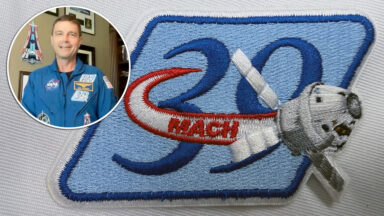
Transforming Waste into Green Solutions: The Innovative Use of Polystyrene in Carbon Capture
The consequences of fossil fuel consumption have significantly impacted our atmosphere, filling it with carbon dioxide (...
Ars Technica | Jun 08, 2026, 18:50
Microsoft Faces Second Credential Theft Incident Amid Open Source Package Breaches
In a troubling development for Microsoft, several open-source packages were found compromised late last week, harboring ...
Ars Technica | Jun 08, 2026, 18:40
Apple Revamps Image Playground with Exciting New Features
Have you ever explored the Image Playground app on your iPhone? If not, you're not alone. Many users may be unaware that...
TechCrunch | Jun 08, 2026, 19:00