A future without work? What Elon Musk, Bill Gates, and others in AI are saying about the future.
As discussions around the potential of artificial intelligence (AI) intensify, tech leaders like Elon Musk and Bill Gates are painting an optimistic picture of a future where work may become a luxury rather than a necessity. In this envisioned world, concepts such as universal basic income (UBI) might evolve dramatically, as the need for government support could diminish if wealth becomes universally accessible. Elon Musk, the CEO of Tesla and xAI, envisions a future where AI and robotics generate unprecedented wealth for everyone, a scenario he refers to as 'universal high income.' Musk believes that poverty could become a relic of the past, stating on social media, "There will be no poverty in the future, and so no need to save money." He suggests that work might transform into a leisurely pursuit akin to a hobby, with individuals enjoying abundant resources and top-tier healthcare. Bill Gates shares a vision where AI will revolutionize labor, allowing humans to engage in a shorter workweek while technology handles essential tasks like food production and logistics. He expressed this during an appearance on a late-night show, suggesting that many current challenges will be resolved by AI advancements. Sam Altman, CEO of OpenAI, also anticipates a society characterized by widespread wealth, but he emphasizes the importance of UBI to ensure equitable distribution of AI-generated profits. He envisions a system where individuals have a stake in the wealth created by AI, allowing them to barter their share of technological resources, although he acknowledges concerns about the potential loss of human purpose in an AI-driven world. Nvidia's CEO, Jensen Huang, offers a more cautious perspective, suggesting that while both UBI and Musk's vision may not coexist harmoniously, the focus should not solely be on monetary wealth. He highlights the value of information in today's society, noting that true wealth extends beyond just financial metrics. Dario Amodei, CEO of Anthropic, encourages a rethinking of work's role in society, proposing that fulfillment could take precedence over economic survival in a post-AGI world. This shift may reflect ideas once proposed by economist John Maynard Keynes, who suggested that future generations might only need to work a fraction of the hours they do today. Demis Hassabis, CEO of Google DeepMind, envisions a future of 'radical abundance' resulting from AI advancements. He stresses the importance of fair distribution of this wealth and acknowledges that how society manages this abundance will be crucial for its future. As these influential figures speculate on the implications of AI, the discourse highlights both the promise and the challenges that lie ahead in a rapidly evolving technological landscape.
Unlocking the Secrets of Quantum Gravity: Can AI Help Physics Make a Leap?
The realm of scientific research is undergoing a profound transformation, fueled by the rapid advancements in artificial...
Business Today | Jul 25, 2026, 24:30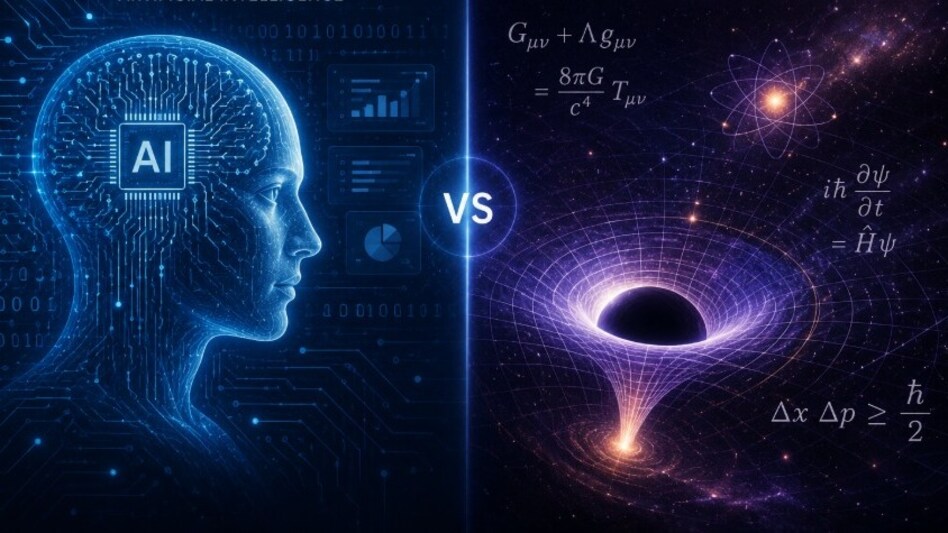
Vision Breakthrough: US Startup Launches Groundbreaking Retina Chip in Europe
Science Corp is poised to introduce a revolutionary retina chip in Europe, designed to restore partial vision for indivi...
Business Today | Jul 25, 2026, 01:00
The Boring Company Eyes $4 Billion Funding Boost Amid Expanding Tunnel Ventures
Elon Musk's tunneling enterprise, The Boring Company, is reportedly negotiating a substantial funding round of $4 billio...
TechCrunch | Jul 25, 2026, 19:50
The Elusive Phineas Fisher: The Hacktivist Who Took Down Spyware Giants
In the realm of cybersecurity, few figures are as intriguing as Phineas Fisher, a hacker who has evaded capture for near...
TechCrunch | Jul 25, 2026, 21:00
Kalshi Challenges Netflix Over Controversial Documentary Trailer
Kalshi, the prediction market platform, has taken significant legal steps against Netflix, sending a cease-and-desist le...
TechCrunch | Jul 25, 2026, 17:10