
Silicon Valley’s new buyout playbook is hitting Wall Street
Venture capitalists are changing their approach to the artificial intelligence landscape, moving away from merely selling AI tools to companies. Instead, they are opting to acquire legacy firms and transform them from the inside out, a strategy that is gaining traction in Silicon Valley and making waves on Wall Street. This innovative tactic, dubbed the 'AI rollup', has emerged as a counter-strategy against traditional private equity firms, which have previously focused on purchasing enterprise software at high prices. Over the past six months, this approach has made its mark on public markets, highlighted by General Catalyst and Trian's $7.6 billion acquisition of Janus Henderson last December, and Long Lake Management's $6.3 billion deal to take American Express Global Business Travel private, offering a 65% premium. Madhu Namburi, managing director at General Catalyst, describes this concept as 'service as software', drawing parallels to the software-as-a-service (SaaS) model that has proven profitable by minimizing growth costs. The AI rollup seeks to apply this principle to service-oriented businesses. Since the beginning of 2023, venture firms have been diligently executing this playbook, primarily within the private market. General Catalyst has collaborated with Long Lake and Alpha Wave to establish approximately a dozen rollup entities. Meanwhile, Joshua Kushner's Thrive Capital is leveraging a similar model through Thrive Holdings, which has over $1 billion in capital dedicated to AI rollups, including investments in regional accounting firms. These acquisitions target sectors where software adoption has significantly lagged, including healthcare, accounting, insurance, customer service, property management, and construction. This focus on growth distinguishes the AI rollup strategy from traditional private equity, which often relies on financial engineering to maximize cash flow. Long Lake Management aims to hold onto these acquired companies indefinitely, mirroring the strategy of Berkshire Hathaway. The firm, which is just three years old, has already integrated over 30 businesses in various industries, utilizing its proprietary AI platform, Nexus. This platform is tailored to enhance the specific workflows within each sector, outperforming general-purpose models like Claude or ChatGPT in internal assessments. The foundation of this strategy is to embed engineers in the acquired companies, fostering a long-term, sustainable transformation. Many of Long Lake's engineers have backgrounds from Ramp and Palantir, where they engage directly with clients for extended periods. In contrast, traditional private equity has focused on acquiring enterprise software at peak valuations, betting on the security of recurring SaaS revenues. However, as the landscape shifts, these once-coveted companies are now facing potential disruption from AI technologies. Recent partnerships between major firms like Anthropic and Blackstone, as well as initiatives involving OpenAI and others, represent a response to the evolving situation, emphasizing the need to integrate cutting-edge AI solutions into existing portfolios. Yet, this approach may lack the depth needed for effective implementation. The venture capital model could encounter challenges, particularly regarding returns. Historically, operating companies yield returns of 100% to 200% over prolonged periods, contrasting with the ambitious 10x returns often anticipated in venture capital. Investors, such as pension funds and endowments, may find themselves with outcomes more akin to private equity. Execution also poses a risk; while firms like Vista and Thoma Bravo have built extensive operational teams for managing acquired companies, venture funds typically focus on startups. However, Taubman defends the venture approach, asserting that 'three years in AI is actually like three decades of pre-AI'. As the next wave of take-private transactions begins, it appears to be shifting toward less tech-centric, more traditional companies.
Cybersecurity Alert: Iranian Hackers Target Shipping Vessels in Surge of Attacks
U.S. authorities are investigating a series of cyberattacks on shipping vessels, with suspicions pointing toward Iranian...
TechCrunch | Nov 24, 2026, 21:15
LinkedIn CEO Highlights Gen Z's Potential Edge in AI-Driven Job Market
As the job landscape becomes increasingly challenging for young professionals, LinkedIn's CEO, Daniel Shapero, suggests ...
Business Today | Nov 25, 2026, 24:25
Nvidia's Jensen Huang Opens Up About Personal Struggles and Commitment to Improvement
In a heartfelt address to Nvidia employees, Jensen Huang revealed that he has been attending daily therapy sessions as h...
Business Today | Nov 25, 2026, 02:10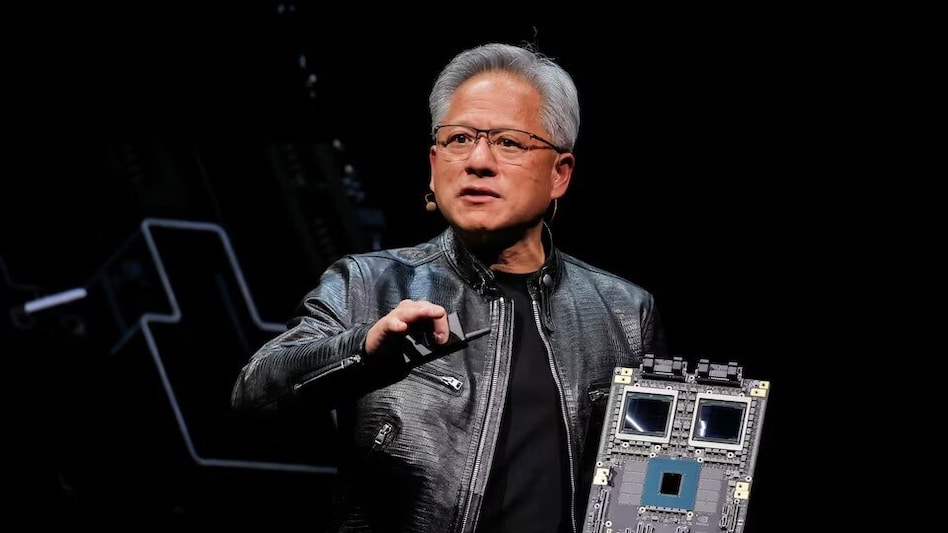
Anthropic's Stock Plummets, Raising Concerns for the AI Sector
Shares of Anthropic have dipped below their initial public offering (IPO) price of $83, reaching a low of $76 by midday ...
TechCrunch | Nov 24, 2026, 18:45
Walmart Partners with Meta's Muse for a Smarter Black Friday Shopping Experience
The future of shopping is now, as Walmart embraces the integration of artificial intelligence into its retail strategy. ...
TechCrunch | Nov 24, 2026, 21:45