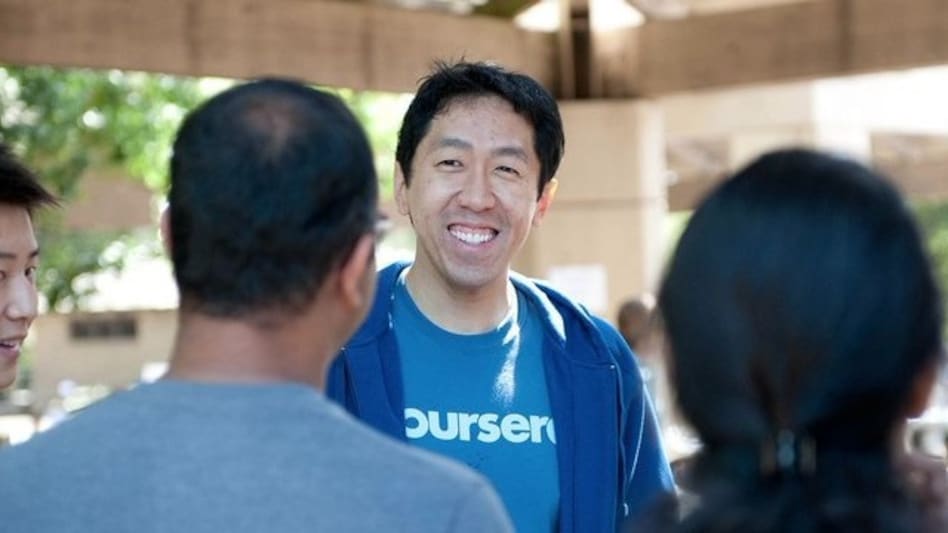
'America First policy unintentionally pushing US allies toward sovereign AI,' warns Coursera co-founder
Andrew Ng, the co-founder of Coursera and a prominent figure in the field of artificial intelligence, has raised concerns that U.S. policies may inadvertently be steering allied nations away from American AI technologies. In a recent post on X (formerly Twitter), Ng explained that a series of decisions made by various U.S. administrations have created an atmosphere of hesitance among other nations regarding over-dependence on American technology, especially in such a vital area as AI. Ng introduced the concept of 'sovereign AI,' which refers to a country's ability to utilize and develop artificial intelligence independently, without reliance on foreign powers that could potentially restrict access. As governments seek to assert their technological independence, the notion of sovereign AI is gaining traction, despite its still-evolving definition. Highlighting several U.S. actions that have potentially undermined international trust, Ng pointed to the repercussions of sanctions following Russia's invasion of Ukraine. These sanctions resulted in everyday Russians losing access to essential financial services, illustrating how geopolitical tensions can disrupt access to civilian technologies. More recently, the Biden administration's export controls on AI chip sales have further complicated relationships with allied nations. Additionally, Ng criticized the 'America First' approach of the Trump administration, which he believes intensified fears through widespread tariffs and negative rhetoric towards allies, alongside a challenging immigration climate that may deter skilled professionals from entering the U.S. As the significance of AI continues to rise in terms of economic and national security, Ng noted that countries are increasingly eager to ensure they are not vulnerable to restrictions imposed by any single foreign entity. However, he acknowledged that complete independence is impractical, as advanced AI chips are predominantly designed in the U.S. and manufactured in Taiwan, with significant supply chain involvement from China. In light of these challenges, nations are actively exploring alternatives to the leading AI models from American companies such as OpenAI, Google, and Anthropic. This pivot has led to a surge in the adoption of open-weight AI models developed in China, such as DeepSeek, Kwen, Kimi, and GLM, especially in regions outside the United States. Ng emphasized that achieving sovereign AI doesn't necessitate that countries develop all their technologies from scratch. Instead, he advocated for engagement with the global open-source community, which provides a cost-effective route to gaining autonomy. Just as nations leverage systems like Linux and Python, open-weight AI models can enable governments to maintain access to cutting-edge technology without being tethered to a handful of dominant companies. Recent initiatives highlight this movement, with the UAE launching K2 Think, an open-source reasoning model, while countries like India, France, South Korea, and Saudi Arabia are working on domestic AI models and securing reliable computing infrastructure. While Ng acknowledged that the fragmentation and diminished trust among democracies could be detrimental, he also noted a potential silver lining: increased competition. He drew parallels to the web search industry, where U.S. companies like Google and Bing hold a global market share, but regional players like Baidu and Yandex succeed locally. A similar trend in AI could lead to innovation and reduce reliance on a small number of powerful firms. Ng concluded by pointing out the irony that policies aimed at prioritizing U.S. interests might unwittingly promote broader access to AI by encouraging open-source initiatives and bolstering non-U.S. ecosystems.
Finland Unveils World's Largest Sand Battery to Tackle Renewable Energy Challenges
In a groundbreaking move to address the critical issue of renewable energy intermittency, a small town in southern Finla...
CNBC | Jul 25, 2026, 05:35
Nvidia Strikes Major Deal with SK Hynix to Secure AI Memory Supply
Nvidia has successfully forged a significant partnership with South Korea's SK Hynix to secure memory supplies essential...
CNBC | Jul 25, 2026, 05:15
Unlocking the Secrets of Quantum Gravity: Can AI Help Physics Make a Leap?
The realm of scientific research is undergoing a profound transformation, fueled by the rapid advancements in artificial...
Business Today | Jul 25, 2026, 24:30
Prentis: Ambitious New AI Lab Eyes $100 Million Funding with Innovative Automation Goals
Prentis, a cutting-edge AI research laboratory co-founded by Ritankar Das, Reid Hoffman, and Marc Pincus, is currently i...
TechCrunch | Jul 24, 2026, 22:45
The Shift in Human Cognition: Embracing AI as a Collaborative Tool
As technology continues to evolve, a notable shift is occurring in the relationship between humans and artificial intell...
Business Insider | Jul 25, 2026, 09:50