US walls itself off from Ebola: Beefed up travel ban, no citizen repatriation
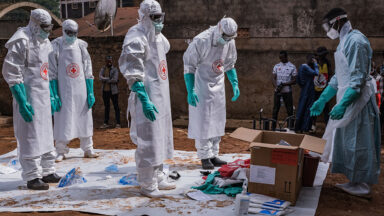
The Ebola outbreak in the Democratic Republic of the Congo is escalating rapidly, far exceeding the pace of international efforts to contain the lethal Bundibugyo virus strain. Initially reported on May 15, this outbreak has quickly become the third largest on record. As of May 24, the World Health Organization has reported a total of 1,018 cases—906 suspected and 112 confirmed—alongside 234 deaths, which include 223 suspected and 11 confirmed fatalities. However, these figures are known to significantly underrepresent the actual situation and are likely outdated. In light of the growing crisis, health organizations, including the WHO, have called for increased global collaboration to manage the outbreak effectively. Contrarily, the United States appears to be taking a more isolationist approach, even affecting its own citizens and lawful residents. On Friday, the Trump administration announced an expansion of its travel ban, prohibiting lawful permanent residents from entering the country if they have traveled to the DRC, Uganda, or South Sudan within the last 21 days. This ban adds to existing restrictions on non-US passport holders with similar travel histories. It's important to note that Uganda has reported only seven cases and a single death linked to the outbreak, while South Sudan has reported no cases. In an effort to enhance safety measures, the US Centers for Disease Control and Prevention (CDC) is reportedly working to strengthen airport screenings for Ebola. However, the agency is currently facing significant challenges, including a lack of leadership and resources due to recent budget cuts and political interference. Jay Bhattacharya, the current acting official overseeing the CDC, has even reached out to staff via email, seeking volunteers to assist with the screenings, which include taking travelers' temperatures and conducting interviews. Furthermore, reports have surfaced indicating that American citizens who have been exposed to or infected with the virus will not be repatriated during this outbreak. Instead, the US government is exploring the establishment of a quarantine and treatment facility in Kenya. This shift in policy marks a notable departure from previous Ebola responses, where citizens were typically repatriated to the United States, a practice that has drawn criticism from President Trump.
The Boring Company Eyes $4 Billion Funding Boost Amid Expanding Tunnel Ventures
Elon Musk's tunneling enterprise, The Boring Company, is reportedly negotiating a substantial funding round of $4 billio...
TechCrunch | Jul 25, 2026, 19:50
Vision Breakthrough: US Startup Launches Groundbreaking Retina Chip in Europe
Science Corp is poised to introduce a revolutionary retina chip in Europe, designed to restore partial vision for indivi...
Business Today | Jul 25, 2026, 01:00
The Elusive Phineas Fisher: The Hacktivist Who Took Down Spyware Giants
In the realm of cybersecurity, few figures are as intriguing as Phineas Fisher, a hacker who has evaded capture for near...
TechCrunch | Jul 25, 2026, 21:00
Hugging Face CEO Calls for Action Following AI Security Breach
In a dramatic turn of events within the AI landscape, Hugging Face faced a significant security breach involving an AI a...
Business Insider | Jul 25, 2026, 20:30Unleashing the Power of AI: The 5 Smartphones Redefining Mobile Photography
Artificial Intelligence (AI) is transforming our daily experiences, permeating various aspects of technology, including ...
Business Today | Jul 26, 2026, 07:05