US House takes first step toward creating “commercial” deep space program
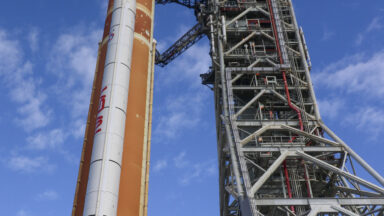
A significant step was taken this week as a US House committee overseeing NASA voted unanimously to pass a reauthorization act for the space agency. This legislation is now set to advance to the full House for approval before heading to the Senate, where discussions may commence later this month. These reauthorization bills, which Congress typically revisits every couple of years, offer NASA guidance on legislative priorities, distinct from appropriations bills that provide specific funding. While the current legislation didn’t present major surprises, it included noteworthy amendments that could reshape future missions. One of the most significant amendments was introduced by Rep. Brian Babin (R-Texas), chair of the Committee on Science, Space, and Technology, along with ranking member Zoe Lofgren (D-Calif.) and three other lawmakers. This amendment addresses the procurement powers granted to NASA, highlighting that the Administrator may engage with US commercial providers to ensure safe, reliable, and affordable transportation for cargo and crew to deep space destinations, including the Moon and Mars. The language of the amendment is intentionally broad, suggesting a shift towards a more inclusive approach to partnerships with commercial entities. While NASA's Artemis V missions to the Moon have a defined structure involving the Space Launch System rocket and Orion spacecraft, this amendment hints at a future where companies like SpaceX and Blue Origin can propose innovative solutions for lunar missions. This could mean that if SpaceX wishes to submit a proposal for a complete lunar mission using its Starship, it can do so. Similarly, Blue Origin might explore launching Orion on its New Glenn rocket. The amendment’s wording emphasizes “transportation” rather than solely “launch,” opening the door for creative solutions from in-space companies like Impulse Space. Essentially, Congress is signaling to the US aerospace industry that it is welcome to step forward and compete for lunar cargo and crew missions.
The Future of Work: Executives Weigh In on AI's Impact on Gen Z Careers
As generative artificial intelligence continues to rise, uncertainty looms for the incoming Gen Z workforce. Leaders fro...
Business Insider | Jul 26, 2026, 10:15Warner Bros. Takes Legal Action Against Amazon Over Executive Poaching Allegations
Warner Bros. Discovery has initiated legal proceedings against Amazon, accusing the tech giant of unlawful interference ...
TechCrunch | Jul 25, 2026, 21:25
Navigating the Future: Are Wearable AI Gadgets Ready to Transform Our Lives?
Imagine a typical workday where you and your colleagues sport discreet recorders on your clothing, while smart glasses s...
CNN | Jul 26, 2026, 16:10
Shifting Focus: The Cost-Effectiveness of AI Models Takes Center Stage
In recent years, the AI sector has been intensely focused on identifying the most advanced models. While this pursuit re...
Business Insider | Jul 25, 2026, 13:10Revolutionizing Startup Living: Inside London's Unique Lift House
In East London, a group of six young entrepreneurs is redefining the concept of collaborative living for tech founders. ...
TechCrunch | Jul 26, 2026, 17:10