
US accuses DeepSeek of aiding China's military and dodging chip export rules
The United States has leveled serious allegations against the Chinese AI company DeepSeek, claiming it is providing support to Beijing's military and intelligence operations. A senior official from the U.S. State Department, speaking anonymously, stated that DeepSeek has actively sought to circumvent export regulations to obtain advanced semiconductor technology from American firms. This development marks a notable intensification in the U.S. scrutiny of Chinese tech companies amid ongoing technological rivalries and trade tensions between the two nations. According to the official, DeepSeek has not only engaged with China's military and intelligence sectors but has also attempted to source restricted Nvidia chips through front companies located in Southeast Asia. "DeepSeek has willingly provided and is likely to continue supporting China’s military and intelligence operations," the official asserted. "This situation goes beyond simple access to open-source AI models." Earlier this year, DeepSeek made headlines within the technology sector by claiming that its AI reasoning models, DeepSeek-V3 and DeepSeek-R1, rival or surpass those created by prominent U.S. companies like OpenAI and Meta, all while incurring much lower training costs of approximately $5.58 million. However, this figure has been met with skepticism from AI experts who suspect the actual expenses are significantly higher. Furthermore, the U.S. official alleged that DeepSeek is sharing user data and analytics with Chinese surveillance systems. While Chinese law requires companies to comply with government data requests, such a claim—if substantiated—could raise substantial privacy concerns for DeepSeek's millions of users around the globe. Previous warnings from U.S. lawmakers pointed to DeepSeek's transmission of American user data through infrastructure associated with China Mobile, a state-owned telecom entity. DeepSeek has yet to respond to inquiries about its privacy practices and alleged data-sharing activities. Compounding these concerns, it has been cited over 150 times in procurement records linked to the People’s Liberation Army (PLA) and related defense organizations. The U.S. official further claimed that the firm has provided technology to PLA research institutions, although these procurement connections remain unverified by independent sources. Despite U.S. restrictions on the export of Nvidia's advanced H100 chips to China since 2022, reports suggest that DeepSeek has acquired a significant quantity of these chips. The official accused the company of employing shell entities in Southeast Asia to access these components and is allegedly using regional data centers to operate the hardware remotely. While the official refrained from confirming whether DeepSeek has successfully evaded these export controls, the mere suggestion that one of China's leading AI firms might be bypassing U.S. regulations is likely to provoke further investigations. Nvidia has expressed its disapproval of any company violating export controls or appearing on U.S. entity lists, emphasizing that it is effectively excluded from the China data center market, which is primarily serviced by domestic companies like Huawei. In earlier reports, DeepSeek was stated to have acquired H100 chips, although there are conflicting views on the extent of its holdings. Nvidia indicated that its review suggested DeepSeek utilized H800 processors, a compliant variant, instead of the H100s. Additionally, Singaporean authorities recently charged three individuals with fraud in connection with the illicit transfer of Nvidia chips to DeepSeek, while Malaysian officials are currently investigating whether a Chinese firm is using Nvidia-equipped servers to train large language models in possible violation of local regulations. Despite increasing scrutiny, DeepSeek remains off any U.S. trade blacklist, and there is no public evidence that Nvidia knowingly facilitated any military-related activities by the company. Under U.S. regulations, companies are prohibited from exporting advanced chips to Chinese firms that are blacklisted or involved in the development of weapons of mass destruction. However, these allegations are likely to heighten calls for the U.S. to intensify its monitoring of Chinese technology firms, especially those with potential military connections.
The Rise of Hacked Surveillance: A New Battlefield for Global Militaries
In the modern landscape of warfare, traditional methods of surveillance such as satellites and drones are being joined b...
Ars Technica | Mar 07, 2026, 11:35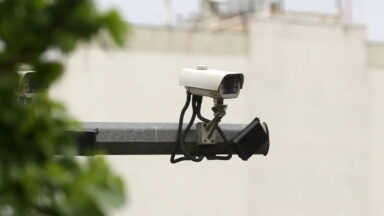
OpenAI Robotics Leader Resigns Over Pentagon Deal Controversy
Caitlin Kalinowski, who headed the robotics division at OpenAI after joining from Meta in 2024, has announced her resign...
Business Insider | Mar 07, 2026, 17:45New Spinosaurus Fossils Challenge Previous Theories in the Sahara
A team of researchers, headed by paleontologist Paul C. Sereno from the University of Chicago, has uncovered groundbreak...
Ars Technica | Mar 07, 2026, 12:35
Target Leverages AI for Strategic Revitalization Amidst Competition
In an era where retail competition is intensifying, Target is boldly integrating artificial intelligence into its operat...
Business Insider | Mar 07, 2026, 10:00Sundar Pichai's Massive $692 Million Compensation Package Unveiled
Sundar Pichai, the CEO of Google, is set to receive a staggering pay package potentially valued at $692 million. Accordi...
TechCrunch | Mar 08, 2026, 24:35