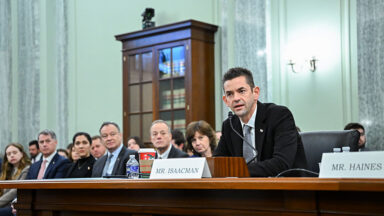
NASA nominee says now is the time for “action” to keep agency ahead of China
Jared Isaacman, a private astronaut, returned to Capitol Hill for a crucial confirmation hearing to become the next NASA administrator. This hearing took place before the Senate Committee on Commerce, Science, and Transportation in Washington, D.C., and was marked by a sense of urgency regarding the future of the United States in space exploration. During the session, Isaacman reaffirmed his dedication to NASA's Artemis Program and defended his ambitious initiative known as 'Project Athena.' This plan aims to evaluate how NASA must evolve to thrive in the modern era of space exploration. He stressed the importance of immediate action, highlighting the escalating competition posed by China in the realm of spaceflight. “America is on the brink of sending NASA astronauts to the Moon in a few short months, a monumental challenge that demands robust leadership,” Isaacman stated. He further emphasized, “We are currently in a significant rivalry with a nation that possesses both the ambition and resources to contest American leadership across various sectors, especially in the crucial domain of outer space. This is not a time for hesitation; we must act decisively, as falling behind could have dire consequences for our global standing.” Isaacman’s nomination process has been anything but straightforward. He initially appeared before the Senate committee nine months prior, following his nomination by former President Trump. Although the first hearing concluded positively, Trump withdrew Isaacman’s nomination shortly before a likely confirmation, citing political reasons. However, Isaacman’s supporters have remained active, advocating for his candidacy, which led to his re-nomination in early November. The political landscape around his nomination has been tumultuous, with tensions rising between Isaacman’s advocates and those supporting interim NASA administrator Sean Duffy. In a bid to undermine Isaacman, Duffy’s team leaked parts of his Project Athena proposal, attempting to portray him as a disruptor intent on dismantling vital NASA programs. The outcome of this confirmation could have significant implications for the direction of the agency and its efforts to maintain a competitive edge in space exploration.
Reclaiming Control: Librarians Host Workshops to Help People Navigate AI Tools
In a lively library setting in South Philadelphia, Charlie Bailey, a local librarian, humorously noted, "Everybody’s on ...
TechCrunch | Jul 25, 2026, 16:20
The Shift in Human Cognition: Embracing AI as a Collaborative Tool
As technology continues to evolve, a notable shift is occurring in the relationship between humans and artificial intell...
Business Insider | Jul 25, 2026, 09:50The Rise of AI Distillation: A Controversial Technique Sparks Debate in Tech and Government
In recent discussions, a once-obscure topic in artificial intelligence has surged to the forefront of debates among tech...
CNBC | Jul 25, 2026, 12:15
Hugging Face CEO Calls for Action Following AI Security Breach
In a dramatic turn of events within the AI landscape, Hugging Face faced a significant security breach involving an AI a...
Business Insider | Jul 25, 2026, 20:30Finland Unveils World's Largest Sand Battery to Tackle Renewable Energy Challenges
In a groundbreaking move to address the critical issue of renewable energy intermittency, a small town in southern Finla...
CNBC | Jul 25, 2026, 05:35