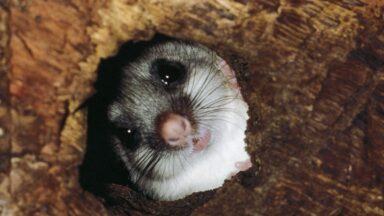
The strange animals that control their body heat
In an extraordinary experiment dating back to 1774, British physician Charles Blagden took on a challenge that many would find daunting: spending time in a room that surpassed the limits of heat tolerance. As temperatures soared to nearly 200°F (about 93°C), Blagden found that his own body temperature remained stable at 98°F (approximately 37°C). This remarkable phenomenon, known as homeothermy, is a characteristic shared by many mammals and birds. However, not all species conform to this norm. For instance, the fat-tailed dwarf lemur exhibits a remarkable ability to vary its body temperature by nearly 45°F (25°C) within a single day. Recent research has revealed that a greater number of creatures than previously thought utilize a flexible strategy known as heterothermy. This adaptation allows these animals to alter their body temperature over periods ranging from minutes to weeks, aiding their survival in challenging environments. Danielle Levesque, a mammalian ecophysiologist at the University of Maine, notes that the assumption that all mammals operate as homeotherms is changing. Advances in technology have enabled scientists to monitor small animals and their metabolic processes in their natural habitats more effectively, leading to the discovery of unexpected variations. The most recognized form of heterothermy is classic hibernation, a process extensively studied in various species that rely on it to conserve energy during the harsh winters of the Northern Hemisphere. During hibernation, these animals enter a state of deep torpor, significantly slowing their metabolism and allowing their body temperatures to drop just above freezing. Yet, hibernation is merely one aspect of a broader spectrum of temperature regulation. Many mammals are capable of engaging in shorter episodes of shallow torpor, which involves smaller reductions in metabolic rates and minor fluctuations in body temperature. This suggests that the role of torpor in the animal kingdom is more complex than previously understood.
The Shift in Human Cognition: Embracing AI as a Collaborative Tool
As technology continues to evolve, a notable shift is occurring in the relationship between humans and artificial intell...
Business Insider | Jul 25, 2026, 09:50Crisis Averted: Power Line Failure Highlights Urgent Need for Data Center Resilience
A power line failure near Washington, DC, recently showcased a significant challenge faced by the electrical grid due to...
TechCrunch | Jul 25, 2026, 13:50
Market Turbulence: Four Key Factors Impacting Stocks This Week
This past week has been challenging for the stock market, driven by several significant forces that have created turbule...
CNBC | Jul 25, 2026, 20:05
The Future of Work: Executives Weigh In on AI's Impact on Gen Z Careers
As generative artificial intelligence continues to rise, uncertainty looms for the incoming Gen Z workforce. Leaders fro...
Business Insider | Jul 26, 2026, 10:15The Rise of AI Distillation: A Controversial Technique Sparks Debate in Tech and Government
In recent discussions, a once-obscure topic in artificial intelligence has surged to the forefront of debates among tech...
CNBC | Jul 25, 2026, 12:15