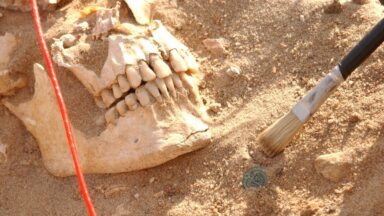
DNA analysis reveals likely pathogens that killed Napoleon’s army
In 1812, Napoleon Bonaparte embarked on a fateful military expedition to Moscow, leading to catastrophic losses. Out of the approximately 615,000 soldiers, only around 110,000 made it back, as Napoleon himself retreated in early December, leaving his army behind. The majority of the casualties—around 100,000—were due to battle, while an estimated 300,000 succumbed to the severe cold of Russia's unforgiving winter, starvation, and rampant diseases. For years, historians and scholars have speculated about the specific diseases that devastated Napoleon's troops. Recent DNA analysis of remains from some of these soldiers has shed light on the situation, revealing two significant pathogens, as discussed in a paper published in the journal Current Biology. The first pathogen identified is Salmonella enterica, responsible for paratyphoid fever, while the second is Borrelia recurrentis, which is transmitted by body lice and causes relapsing fever. Co-author Nicolás Rascovan from the Institut Pasteur expressed enthusiasm for utilizing modern technology to diagnose ailments that have been buried in history for two centuries. He emphasized that examining the genomic data of historical pathogens enriches our understanding of how infectious diseases have evolved, spread, and faded over time, while also highlighting the social and environmental factors that have influenced these changes. This research offers vital insights that can help combat infectious diseases in the present day. Contemporary narratives, including personal accounts from the era, detail the various illnesses that plagued Napoleon's soldiers, including diarrhea, dysentery, fevers, pneumonia, jaundice, and notably typhus, often referred to as camp fever. Evidence supporting the prevalence of typhus has been strengthened by previous research, which identified body lice in the remains of soldiers. These lice are known to be the primary carriers of typhus. A 2006 DNA analysis of remains from a mass grave in Vilnius indicated the presence of the typhus pathogen R. prowazeklii and trench fever pathogen B. quintana, although those findings were not definitive. Subsequently, a 2011 study found ancient DNA from the Anelloviridae family in a dental pulp sample from Kaliningrad, further contributing to the historical understanding of these diseases.
X Unveils a Completely Overhauled Android App After Extensive Development
After nearly a year of intensive development, X, the social media platform owned by Elon Musk, has officially launched a...
TechCrunch | Jul 20, 2026, 20:10
Agility Robotics Shuns Hiring Wars, Focuses on Culture and Innovation
Agility Robotics has recently established a new base in Silicon Valley, aiming to attract top-tier engineers for its inn...
Business Insider | Jul 20, 2026, 21:45The Open-Weight AI Debate: Navigating Innovation and Regulation
The emergence of Kimi K3, a leading open-weight large language model developed by the Chinese lab Moonshot, has ignited ...
TechCrunch | Jul 20, 2026, 20:10
AI Safety Leadership Shakeup: Chris Fall Exits After Brief Tenure
In a surprising turn of events, Chris Fall, the top AI safety official within the Trump administration, has stepped down...
Business Insider | Jul 20, 2026, 20:05Navigating Market Turbulence: Cramer Urges Caution in Tech Investments
In a recent discussion, CNBC's Jim Cramer expressed concerns about the current state of the artificial intelligence mark...
CNBC | Jul 20, 2026, 22:35