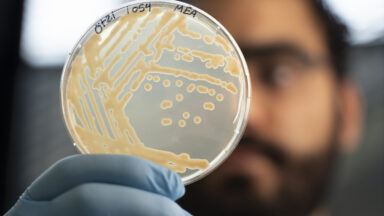
Ötzi’s mummified body is home to ancient strains of yeast and bacteria
Ötzi the Iceman, renowned as Europe's most iconic mummy, is teeming with a variety of microbes—some long extinct, some still alive after millennia, and others more contemporary. After his demise in the Ötztal Alps, this Copper Age individual remained undisturbed for 5,300 years until hikers discovered his remarkably preserved remains in 1991. Since that momentous find, Ötzi has captivated the scientific community. Researchers have meticulously analyzed his DNA, examined the remnants of his last meal, and investigated the gut microbes that once thrived within him, along with his clothing and tools. Currently, he rests in a state-of-the-art facility at the South Tyrol Museum of Archaeology in Italy. Remarkably, scientists have discovered that his body still harbors several cold-adapted yeast species, likely surviving since shortly after his death. In a recent study led by microbiologist Mohamed S. Sarhan from the Institute of Mummy Studies at Eurac Research, researchers sampled materials from Ötzi’s stomach, collected meltwater from within his body, swabbed his skin, and even gathered airborne microbes from his preservation environment. Additionally, they examined a block of frozen alpine soil collected alongside Ötzi in 1991. While previous research has shed light on Ötzi's gut microbiome—thanks to a comprehensive study conducted in 2019—Sarhan and his team aimed to gain a more holistic understanding. Instead of merely sequencing all available microbial DNA, they sought to identify which species were genuinely part of Ötzi's ancient ecosystem versus those that may be modern contaminants. By culturing some of the samples and employing a technique called shotgun metagenomics, which sequences all DNA fragments within a sample, they uncovered a treasure trove of information. Within Ötzi's digestive system, the researchers unearthed ancient DNA from various bacteria consistent with what one would expect from traditional, non-Westernized gut microbiomes. However, intriguingly, they also detected living microbes both on and within the mummy, further enriching the narrative of Ötzi's long-forgotten world.
Shifting Focus: The Cost-Effectiveness of AI Models Takes Center Stage
In recent years, the AI sector has been intensely focused on identifying the most advanced models. While this pursuit re...
Business Insider | Jul 25, 2026, 13:10Kalshi Challenges Netflix Over Controversial Documentary Trailer
Kalshi, the prediction market platform, has taken significant legal steps against Netflix, sending a cease-and-desist le...
TechCrunch | Jul 25, 2026, 17:10
Navigating the AI Landscape: Insights from a Former OpenAI Intern
As the demand for expertise in artificial intelligence surges, many are seeking ways to break into this dynamic field. H...
Business Insider | Jul 26, 2026, 10:10Warner Bros. Takes Legal Action Against Amazon Over Executive Poaching Allegations
Warner Bros. Discovery has initiated legal proceedings against Amazon, accusing the tech giant of unlawful interference ...
TechCrunch | Jul 25, 2026, 21:25
Crisis Averted: Power Line Failure Highlights Urgent Need for Data Center Resilience
A power line failure near Washington, DC, recently showcased a significant challenge faced by the electrical grid due to...
TechCrunch | Jul 25, 2026, 13:50