Google's Gemini 3 is live after months of hype. Here's what it can do.
Google has officially launched Gemini 3, a highly anticipated AI model that promises to elevate the company's standing in the artificial intelligence arena. This new iteration is said to represent a significant leap in reasoning capabilities and creativity compared to its predecessor, Gemini 2. With the ability to seamlessly integrate text, images, and videos, this model aims to enhance user experience and learning. According to Google DeepMind CEO Demis Hassabis, the latest version of Gemini marks a transition from merely processing information to a more nuanced understanding of context. This means that Gemini 3 can now better explain and visualize complex ideas, offering a more interactive experience for users. Tulsee Doshi, the product lead for Gemini, emphasized that the model can adapt information into the most suitable format, whether it be a presentation or an interactive graphic. In a strategic move, Google is rolling out Gemini 3 directly to its search platform, but there’s a catch: only users subscribed to the Pro or Ultra tiers will have immediate access to the new “Thinking” feature in AI Mode, which leverages Gemini 3. However, Google has assured users that broader access will follow soon. The new model is designed to handle more intricate queries, breaking them down into manageable parts to enhance search performance. Robbie Stein, VP of Search at Google, highlighted that as users have begun posing more complex questions, Gemini 3 is prepared to meet that demand with improved capabilities for generating visualizations and interactive content. Notably, Gemini 3 has already made headlines by scoring 37.5% on a comprehensive assessment known as Humanity's Last Exam, which consists of 2,500 questions spanning various subjects. This achievement indicates its enhanced reliability in solving math and science problems. Additionally, Google is introducing the Gemini Agent, a feature that allows the AI to perform multi-step tasks, further integrating with other Google applications like Calendar and Gmail. This initiative is part of Google's broader vision to create a universal AI assistant that can autonomously manage tasks with minimal user input. The company also introduced a new platform named Antigravity, which promises to revolutionize coding by allowing the AI to autonomously develop applications based on user prompts. This capability is expected to streamline the software development process significantly, reflecting the transformative potential of large language models in the tech industry. As Google pushes forward with this launch, it aims not only to meet user expectations but also to redefine how AI can be utilized in everyday tasks, making the future of technology even more interactive and user-friendly.
Meta Tightens Access to Rival AI Tools Amid Intellectual Property Concerns
Meta has taken the significant step of limiting employee access to artificial intelligence tools developed by competitor...
Business Today | Jun 30, 2026, 07:25
China's Humanoid Robot Rental Boom: A Glimpse into the Future and Its Limitations
Last year's Spring Festival Gala showcased humanoid robots performing spectacular dance routines, but for entrepreneur A...
CNN | Jun 30, 2026, 06:25
OKX Unveils AI Marketplace for Autonomous Transactions Among Digital Agents
In a groundbreaking move towards an AI-driven future, crypto exchange OKX has launched a new marketplace designed specif...
TechCrunch | Jun 30, 2026, 09:25
Waymo and Uber Conclude Robotaxi Experiment in Phoenix
Waymo has announced that its automated vehicle services will no longer be accessible through the Uber app in Phoenix, Ar...
CNBC | Jun 29, 2026, 22:45
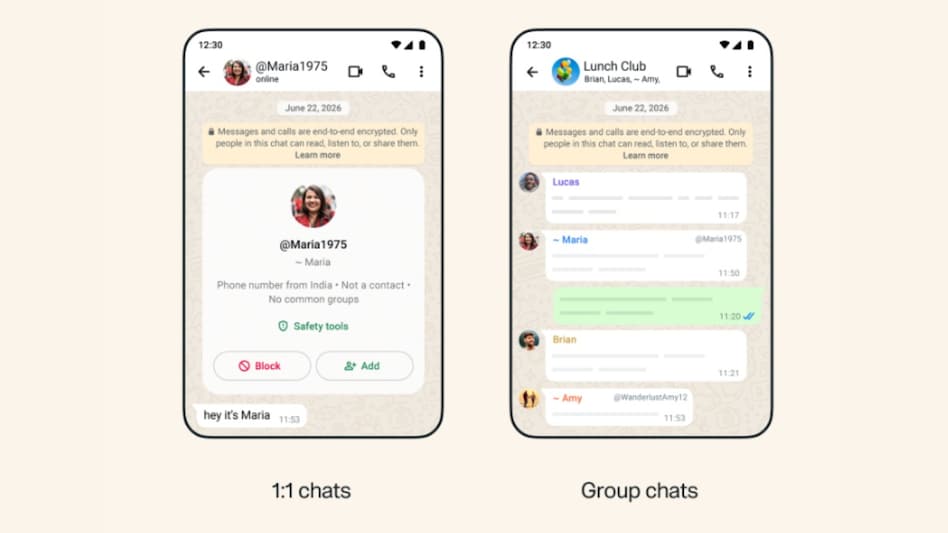
Unlocking Privacy: How to Secure Your WhatsApp Username
WhatsApp is set to introduce a game-changing feature: the ability to reserve a unique username, enhancing user privacy b...
Business Today | Jun 30, 2026, 06:35