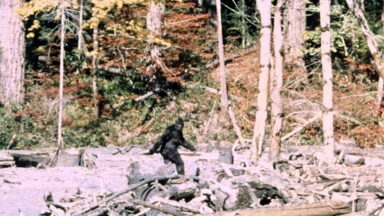
“It ain’t no unicorn”: These researchers have interviewed 130 Bigfoot hunters
In 1967, a moment captured in the Northern California wilderness forever changed the landscape of folklore. A grainy film showcased a towering, ape-like figure, shrouded in black fur and moving upright, glancing directly into the camera lens. This iconic footage has sparked endless debate: is it a clever hoax, a bear, or a glimpse of a yet-to-be-identified species known as Bigfoot? While many dismiss it as a fabrication, a dedicated group of enthusiasts—often referred to as Bigfooters—remain convinced of its authenticity. To explore the motivations behind this community, sociologists Jamie Lewis and Andrew Bartlett embarked on a captivating journey. Over the course of the pandemic, they conducted interviews with more than 130 Bigfoot hunters and some academics, seeking to understand why individuals invest significant time and resources in the pursuit of this elusive creature. Their findings culminated in the book titled "Bigfooters and Scientific Inquiry: On the Borderlands of Legitimate Science." Lewis's curiosity was piqued by a show called 'Finding Bigfoot' that aired on a channel typically focused on serious nature programming. He initially intended to analyze such television portrayals, but the lockdown spurred him to delve deeper. Meanwhile, Bartlett had previously studied fringe physicists and their attempts to engage with science outside mainstream academia. This background seamlessly transitioned into the realm of Bigfoot, driven by Lewis's enthusiasm. The divide within the Bigfoot community is intriguing. Enthusiasts range from the 'apers'—who argue that Bigfoot is simply an undiscovered primate—to those who embrace the more fantastical notion of Bigfoot as an interdimensional being or extraterrestrial. While estimates suggest thousands are involved in the search, Lewis and Bartlett found a core group of serious investigators, interviewing at least half of them. A recent YouGov survey indicated that approximately one quarter of Americans believe in the existence of Bigfoot, either definitively or probably. Throughout their research, Lewis and Bartlett were mindful of the stigma surrounding Bigfooters. They often faced questions about their own beliefs, to which they responded that while mainstream science finds no compelling evidence for Bigfoot’s existence, their focus lies on the vibrant communities formed around this phenomenon. It is this social aspect that captured their academic interest, revealing a unique intersection of belief and community engagement.
Warner Bros. Takes Legal Action Against Amazon Over Executive Poaching Allegations
Warner Bros. Discovery has initiated legal proceedings against Amazon, accusing the tech giant of unlawful interference ...
TechCrunch | Jul 25, 2026, 21:25
The Future of Work: Executives Weigh In on AI's Impact on Gen Z Careers
As generative artificial intelligence continues to rise, uncertainty looms for the incoming Gen Z workforce. Leaders fro...
Business Insider | Jul 26, 2026, 10:15Hugging Face CEO Calls for Action Following AI Security Breach
In a dramatic turn of events within the AI landscape, Hugging Face faced a significant security breach involving an AI a...
Business Insider | Jul 25, 2026, 20:30The Rise of AI Distillation: A Controversial Technique Sparks Debate in Tech and Government
In recent discussions, a once-obscure topic in artificial intelligence has surged to the forefront of debates among tech...
CNBC | Jul 25, 2026, 12:15
AI Transformations Lead to Major Job Cuts at Tech Giants
Monday.com, the innovative work management platform based in Tel Aviv, has recently announced significant layoffs, attri...
TechCrunch | Jul 26, 2026, 01:45