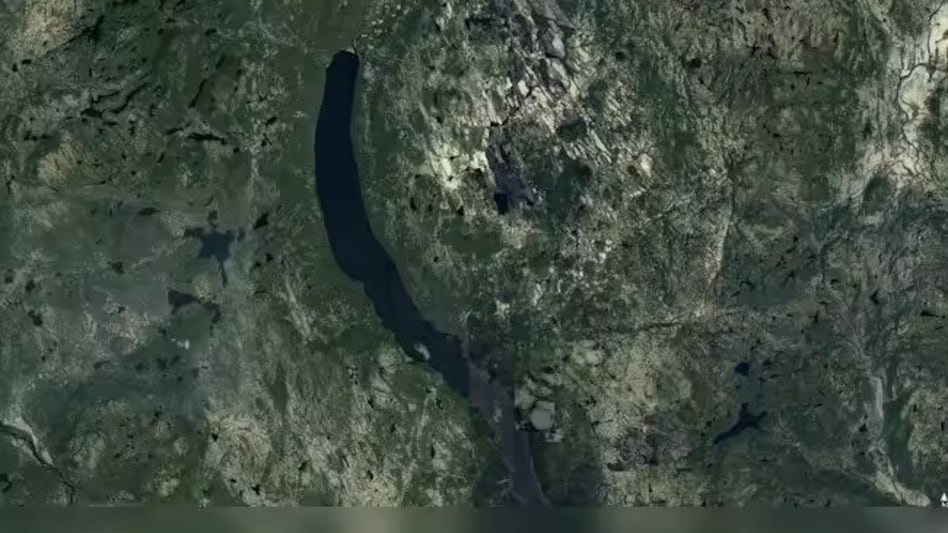
A man zoomed into Google Maps—and may have uncovered a 390-million-year-old secret hidden on Earth
A striking circular formation discovered on Google Maps in a secluded area of Quebec, Canada, has captured the attention of scientists who suggest it could be a meteor impact crater dating back approximately 390 million years. This groundbreaking research is set to advance next month when experts present their findings at a major planetary science conference in Germany, according to reports from CBC News. The story began with Daniel Breton, a Quebec resident, who noticed an unusual ring-like depression while exploring satellite imagery on Google Maps. Intrigued by its distinct appearance, he reached out to researchers for insight. His inquiry ultimately attracted the interest of Gordon Osinski, a planetary geologist and professor at Western University in Canada, who specializes in meteorite impact studies. Osinski and his research team initially analyzed satellite images, geological maps, and other field data. They later embarked on a field trip to the remote location, where they collected rock samples and documented their findings. Discovering a meteor impact crater of such antiquity could provide valuable insights into Earth's geological history and the role of meteorite impacts in shaping the planet. During their expedition, the researchers uncovered several indicators typically associated with meteor impacts, such as altered rock formations and landscape patterns resembling those found at other known impact sites. However, experts caution that conclusive laboratory analysis is necessary before the site can be officially designated as an impact crater. Identifying an impact crater involves more than just recognizing a circular feature from aerial views. Geologists must find definitive geological evidence formed by the intense pressures from a meteor strike. This rigorous process often spans years and includes extensive field investigations, laboratory tests, and peer-reviewed studies. Initial estimates suggest that the structure measures around 15 kilometers in diameter and could be nearly 390 million years old. If validated, it would enhance Canada's roster of documented impact craters and expand our understanding of ancient cosmic collisions that have influenced Earth's surface. The next significant step in this research will occur when Osinski presents the team's findings at the Meteoritical Society's annual meeting in Germany next month. This event is one of the largest gatherings of planetary scientists globally, offering an opportunity for researchers to scrutinize the evidence, engage in discussions, and provide constructive feedback before concluding their studies. Osinski acknowledged the crucial role of public curiosity in this discovery, stating, "Without Daniel, this wouldn't have happened." He underscored that while the initial evidence is promising, further scientific efforts are necessary to reach definitive conclusions. Canada is already home to numerous confirmed meteorite craters, but experts believe that many more remain concealed beneath forests, lakes, and layers of soil. Validating this site in Quebec as an impact crater would significantly contribute to our knowledge of ancient events that transformed Earth's landscape. As the scientific community prepares for the upcoming conference in Germany, the remarkable discovery initiated by a simple Google Maps exploration edges closer to formal validation, although additional laboratory analyses and possibly further fieldwork are anticipated post-conference.
Navigating the AI Landscape: Insights from a Former OpenAI Intern
As the demand for expertise in artificial intelligence surges, many are seeking ways to break into this dynamic field. H...
Business Insider | Jul 26, 2026, 10:10The Elusive Phineas Fisher: The Hacktivist Who Took Down Spyware Giants
In the realm of cybersecurity, few figures are as intriguing as Phineas Fisher, a hacker who has evaded capture for near...
TechCrunch | Jul 25, 2026, 21:00
Linux Creator Challenges Developers: Embrace AI or Fork Off!
In a recent discussion surrounding the use of AI in software development, Linus Torvalds, the founder of Linux, voiced h...
Business Insider | Jul 26, 2026, 13:10AI Transformations Lead to Major Job Cuts at Tech Giants
Monday.com, the innovative work management platform based in Tel Aviv, has recently announced significant layoffs, attri...
TechCrunch | Jul 26, 2026, 01:45
Shifting Focus: The Cost-Effectiveness of AI Models Takes Center Stage
In recent years, the AI sector has been intensely focused on identifying the most advanced models. While this pursuit re...
Business Insider | Jul 25, 2026, 13:10