Runaway black hole mergers may have built supermassive black holes
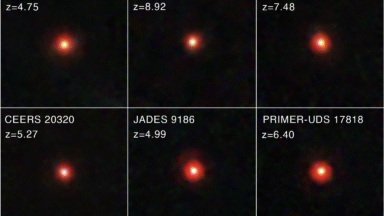
Astronomy is on the brink of a breakthrough as new simulations dive into the enigmatic origins of supermassive black holes. These colossal entities are found at the centers of nearly every one of the estimated 2 trillion galaxies scattered throughout the cosmos. Emerging shortly after the birth of the Universe, these giant black holes have puzzled scientists with their rapid growth, reaching masses millions or even billions of times greater than that of our Sun in less than a billion years. The mystery deepened in 2022 with the discovery of intriguing “little red dots” in images captured by the James Webb Space Telescope (JWST). Initially, the nature of these small, luminous orbs sparked intense debate among astronomers. Now, with a growing sample size of hundreds of these dots, many experts believe they represent the early stages of supermassive black holes forming in the Universe. However, these dots appeared much earlier than previously anticipated, complicating the understanding of how these massive structures could exist so soon after the Big Bang. Observations indicate that these little red dots emerged when the Universe was approximately 600 million years old, fading away within the next billion years, while the supermassive black holes they heralded continue to exist today, albeit no longer glowing as they did. A recent study aims to shed light on the rapid formation of these giant black holes, proposing that they could have formed from colliding clusters of stars rather than through previously accepted mechanisms like direct collapse of gas clouds or remnants of the first stars. "Our research strongly supports the idea that dense star clusters evolve and collapse at their centers to create intermediate-mass black hole seeds," stated Fred Garcia, a graduate student at Columbia University and lead researcher of the study. This groundbreaking perspective challenges long-held beliefs about the physics governing black hole formation, suggesting that the early Universe may have been capable of producing these massive entities without requiring any new physics. As researchers continue to explore these cosmic phenomena, the quest to understand the origins of supermassive black holes is only just beginning.
Tesla Expands Robotaxi Trials in Florida Ahead of Earnings Report
Tesla has introduced an undisclosed number of its self-driving Model Y SUVs in Orlando and Tampa, just a day prior to it...
TechCrunch | Jul 21, 2026, 18:45
The Challenges of Open-Weight AI: Why China's Approach Is Struggling
The recent enthusiasm surrounding China's open-weight AI models is overshadowed by a stark reality: they are fundamental...
Business Insider | Jul 21, 2026, 17:50Meta Introduces Parental Controls for Threads to Enhance Teen Safety
Meta has announced the launch of new parental supervision features for its social media platform, Threads, aiming to bol...
TechCrunch | Jul 21, 2026, 16:20
Soaring to New Heights: This Company’s Future Growth Lies in AI-Powered Identity Security
As artificial intelligence continues to reshape industries, one company is strategically positioning itself to capitaliz...
CNBC | Jul 21, 2026, 18:05
Instagram Introduces New Feature: Change Music on Old Posts Effortlessly
In a significant update announced on Tuesday, Instagram has unveiled a feature that allows users to change the music in ...
TechCrunch | Jul 21, 2026, 16:20