Generative AI meets the genome
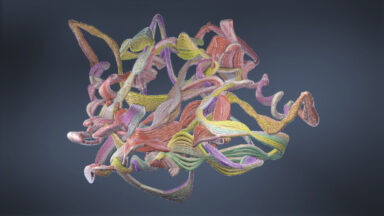
Recent advancements in artificial intelligence have significantly impacted our understanding of biology, particularly in how a protein's structure relates to its function. Researchers are now capable of predicting the structures of numerous proteins and even designing new proteins to perform specific tasks. However, these breakthroughs traditionally focus on proteins and their constituent amino acids, overlooking the crucial underlying processes that occur at the nucleic acid level. To truly innovate, one must consider that biological changes originate from DNA, a realm that encompasses not only coding sequences but also essential non-coding regions and considerable redundancy. This complexity raises questions about how understanding genome organization could assist AI systems in predicting functional proteins. Yet, a new study suggests that training AI on bacterial genomes may pave the way for creating predictive models capable of identifying proteins that are entirely novel. Conducted by a team at Stanford University, the research harnesses a characteristic found in bacterial genomes: the grouping of genes associated with similar functions. Often, bacteria organize all necessary genes for a specific function—such as sugar digestion or amino acid synthesis—close to one another within their genomes. In many instances, these genes are transcribed into a single large messenger RNA molecule, allowing bacteria to efficiently regulate entire biochemical pathways simultaneously. The Stanford researchers introduced a groundbreaking “genomic language model” named Evo, trained on a vast array of bacterial genomes. This model operates similarly to large language models, predicting the next base in a genetic sequence and receiving rewards for accurate predictions. As a generative model, Evo can also produce unique sequences based on given prompts, introducing an element of randomness that enables a variety of outputs from the same starting point. This innovative approach could transform our understanding of protein synthesis and functionality.
Dataland: The Revolutionary Museum Showcasing AI-Generated Art
Los Angeles has unveiled what is being hailed as the first museum exclusively dedicated to art created by artificial int...
Business Today | Jun 21, 2026, 12:35
AI Chatbot Pioneer Warns of Potential Job Protests Amidst Automation Fears
Eugenia Kuyda, founder and CEO of the AI chatbot platform Replika, has voiced serious concerns regarding the impact of a...
Business Insider | Jun 20, 2026, 10:20Kevin O'Leary Predicts AI's Rise Over Traditional Consulting
Kevin O'Leary, the prominent investor from 'Shark Tank', has voiced strong opinions on the evolving business landscape, ...
Business Insider | Jun 21, 2026, 13:20Signal's Whittaker Warns Against Trusting AI Chatbots: 'They Aren't Your Friends'
In a recent discussion with Bloomberg, Meredith Whittaker, the president of Signal, highlighted the significant privacy ...
TechCrunch | Jun 20, 2026, 20:55
Navigating AI in Education: A Parent's Journey to Shape School Policy
As a parent in a tech-savvy community just north of San Francisco, I found myself facing the challenges of navigating my...
Business Insider | Jun 21, 2026, 13:35