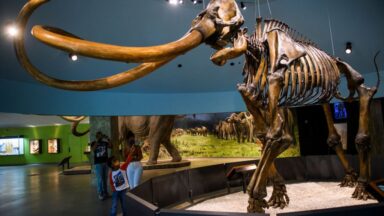
Genetically, Central American mammoths were weird
Mammoths are often stereotyped as large, furry creatures resembling elephants with impressive tusks, but the truth is more complex. Various species of these ancient giants roamed the Earth, including some that were less hairy and adapted to temperate climates. Among the notable types are the Eurasian steppe mammoth, the woolly mammoth specialized for Arctic conditions, and the Columbian mammoth, which evolved exclusively in North America. The Arctic-dwelling species have yielded a wealth of genetic data, helping researchers map out their evolutionary relationships. Recent findings indicate that the woolly mammoth branched off from the steppe mammoth lineage and was the first to make its way into North America. However, the Columbian mammoth has posed a genetic mystery. While some evidence pointed to it being a descendant of the steppe mammoth, other samples hinted at a hybrid origin involving both woolly and steppe mammoths. Previously, most genetic analyses focused on specimens from colder regions, leaving a gap in our understanding of the Columbian mammoths that roamed as far south as Central America. A dedicated team of researchers has now made strides by analyzing genetic material extracted from bones discovered in the Basin of Mexico, near Mexico City. Their findings reveal that these Central American mammoths form a distinct genetic group, more related to each other than to any woolly or Columbian mammoths previously studied. The challenge of preserving DNA in warmer climates has complicated the research, which is why much of what we know about Columbian mammoths has come from colder habitats where they coexisted with woolly mammoths. This led to a somewhat muddled genetic narrative. Nuclear genome analyses suggest a hybridization between steppe and woolly mammoths, while mitochondrial DNA, passed down maternally, points to a unique lineage separate from woolly mammoths. These revelations offer new insights into the diversity and adaptability of mammoths, shedding light on a fascinating chapter of prehistoric life.
Startup Senra Secures $65 Million to Revolutionize Wire Harness Manufacturing
Jordan Black, the CEO of Senra and a former engineer at SpaceX, has turned his expertise into a groundbreaking venture a...
TechCrunch | Jul 15, 2026, 10:35
Revolutionizing Job Searches: How a Startup Is Changing the Game for Job Seekers
In a landscape where job hunting can feel overwhelming, a new startup called Refer is flipping the script on traditional...
Business Insider | Jul 15, 2026, 10:00Anthropic's Research Reveals Language-Specific Biases in AI Responses
In a groundbreaking study, Anthropic has discovered that its AI chatbot, Claude, exhibits varying values based on the la...
Business Today | Jul 15, 2026, 06:10
SK Hynix Shares Surge Amid Broader Asian Tech Recovery
On Wednesday, SK Hynix experienced a remarkable surge, with shares of the South Korean memory chip manufacturer rising o...
CNBC | Jul 15, 2026, 01:05
India's Ambitious Leap into Mobile Manufacturing with New PLI Scheme
The Indian Union Cabinet has greenlit an extensive Mobile Phone Manufacturing Scheme (MPMS) worth Rs 62,500 crore, set t...
Business Today | Jul 15, 2026, 11:20