
AI explained: A beginner's guide to all buzzwords driving AI boom
Artificial intelligence (AI) has permeated our lives, influencing everything from smartphones to everyday applications. As this cutting-edge technology expands, grasping its complexities can be quite daunting. With a myriad of technical terms like AGI, inference, and tokenmaxxing, navigating the AI landscape requires a clear understanding of these buzzwords that are shaping our future. One pivotal term is AGI, or Artificial General Intelligence. Visionaries in the tech world, including Sam Altman of OpenAI and Dario Amodei from Anthropic, suggest we are nearing the advent of AGI. This concept refers to an AI system capable of human-like thinking, learning, reasoning, and problem-solving across various tasks. Such advancements could enable machines to exhibit critical thinking, learn from experiences, comprehend intricate concepts, and possibly even achieve self-awareness. The term 'compute' represents the backbone of AI technology, embodying the processing power essential for developing and executing AI systems. An increase in computing capability accelerates the efficiency and complexity of AI models, encompassing everything from processors and GPUs to specialized AI chips and data center infrastructure. Another emerging trend is 'tokenmaxxing,' where employees optimize their use of AI tools to demonstrate productivity, quantified in 'tokens.' This phenomenon has led companies to invest significantly in AI, prompting a reevaluation of its application in the workplace. The concept of 'inference' describes the process by which an AI model applies its training to respond to queries or perform tasks. For instance, when interacting with AI chatbots like ChatGPT, every response generated is a result of inference, showcasing how AI utilizes its knowledge. Additionally, the 'context window' defines how much information an AI can retain while generating a response, functioning as its short-term memory. A broader context window enhances the model’s ability to manage extensive documents and engage in more in-depth conversations. 'Inference' is complemented by 'distillation,' a machine learning technique that refines smaller, efficient AI models using the outputs from larger, more powerful ones. This approach allows for effective performance with reduced computational demands. Another critical concept is 'AI hallucinations,' which occur when AI generates inaccurate or fabricated information, despite appearing confident. This can pose risks in sensitive areas such as healthcare, finance, or legal matters. Finally, 'multimodal' models represent a significant advancement in AI, as they can process and integrate various information types—text, images, audio, and video—into a cohesive understanding, enhancing their responsiveness and effectiveness. As AI continues to advance, familiarizing yourself with these terms will empower you to better navigate this transformative technology.
Unlocking the Secrets of Quantum Gravity: Can AI Help Physics Make a Leap?
The realm of scientific research is undergoing a profound transformation, fueled by the rapid advancements in artificial...
Business Today | Jul 25, 2026, 24:30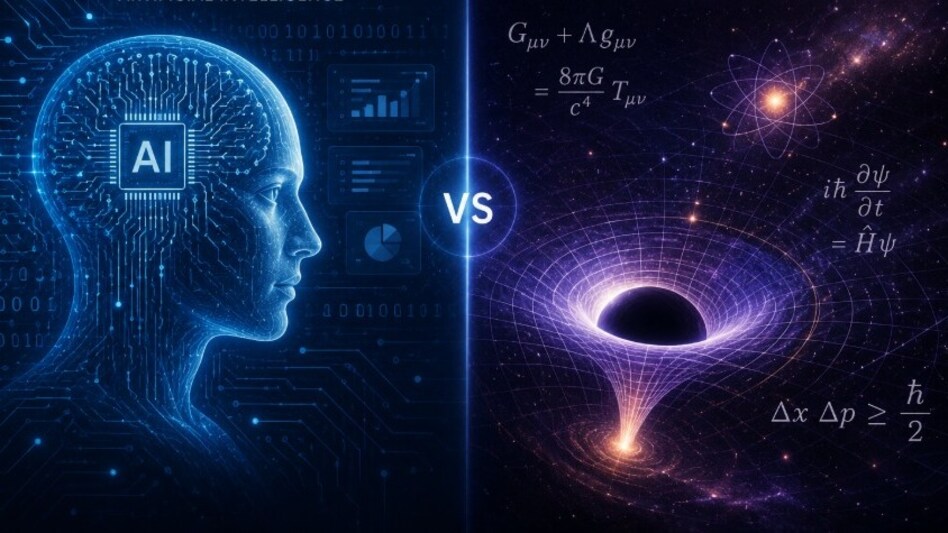
The Aluminum Foil Trend: A DIY Shield Against Wireless Identity Theft
Have you noticed an unusual trend where people are wrapping their wallets in aluminum foil? This peculiar practice has e...
Business Today | Jul 25, 2026, 02:45
Trump Signals Trade War with EU Over Tech Giants' Fines
In a bold move, President Donald Trump announced on Friday that his administration would initiate a trade investigation ...
CNBC | Jul 24, 2026, 18:15
Unveiling the Future of Finance: TechCrunch Disrupt 2026's Smart Money Stage
The landscape of money is transforming beyond just cash or bank balances, and TechCrunch Disrupt 2026 is set to spotligh...
TechCrunch | Jul 24, 2026, 22:40
Rising Concerns in Bond Market as AI Investments Surge
Investors are growing increasingly uneasy about the substantial capital required to realize the ambitions of artificial ...
CNBC | Jul 24, 2026, 20:15