The only AI glossary you’ll need this year
As artificial intelligence continues to transform our world, it comes with a unique vocabulary that can be daunting even for tech-savvy individuals. In today’s meetings and discussions, terms like LLMs, RAG, and RLHF frequently pop up, leaving many feeling overwhelmed. This guide aims to demystify these terms with straightforward definitions relevant to anyone involved in AI, whether you’re developing, investing, or simply trying to stay informed through tech media. Artificial General Intelligence (AGI) is a term that describes AI systems that can outperform humans in most tasks. OpenAI's CEO, Sam Altman, characterizes AGI as comparable to a median human co-worker. Google DeepMind interprets AGI slightly differently, viewing it as an AI capable of matching human cognitive abilities across various tasks. Despite the varying definitions, even experts in the field acknowledge the ambiguity surrounding AGI. AI agents represent advanced tools that leverage AI technologies to automate a wide range of tasks, from booking travel to managing expenses and writing code. This concept evolves continually, and the infrastructure supporting these capabilities is still in development. AI agents are designed to carry out complex, multi-step tasks by integrating various AI systems, thereby enhancing efficiency. In programming, API endpoints act like buttons that allow different software applications to communicate. Developers utilize these endpoints to create integrations that enable seamless data transfer between applications. As AI agents advance, they increasingly learn to utilize these endpoints autonomously, which opens the door to new automation possibilities. When it comes to problem-solving, AI systems often require a structured approach. Chain-of-thought reasoning helps large language models break down complex problems into manageable steps, leading to more accurate outcomes. This method, while often taking longer, improves the quality of answers, particularly in logic and coding. Coding agents, a specialization within AI, are capable of autonomously writing, testing, and debugging code. They streamline the development process by handling repetitive tasks that typically consume a developer's time. The term 'compute' refers to the computational power necessary for AI models to function. This includes the hardware like GPUs and CPUs that support the training and deployment of powerful AI systems. Deep learning, a subset of machine learning, utilizes artificial neural networks to identify patterns in data. These systems require vast amounts of data to achieve optimal results but can learn and improve from their own errors. Diffusion and distillation are crucial techniques in generative AI. Diffusion methods systematically disrupt data to create new forms, while distillation helps create more efficient models by transferring knowledge from larger models to smaller ones. In the realm of AI, hallucination describes instances when models produce incorrect information, highlighting the need for more specialized systems to mitigate misinformation risks. Inference, the process of running an AI model to make predictions based on learned data, is essential for effective AI operation. This ever-evolving glossary serves as a living document, updated regularly to reflect advancements in the AI landscape. As the field continues to grow, understanding these terms will be critical for anyone looking to navigate the complexities of artificial intelligence.
Shifting Focus: The Cost-Effectiveness of AI Models Takes Center Stage
In recent years, the AI sector has been intensely focused on identifying the most advanced models. While this pursuit re...
Business Insider | Jul 25, 2026, 13:10Waymo to Launch Standalone App, Ending Exclusivity with Uber in Major Cities
For the past three years, Uber and Waymo, the autonomous vehicle division of Alphabet, have collaborated to provide driv...
CNBC | Jul 24, 2026, 21:55
Finland Unveils World's Largest Sand Battery to Tackle Renewable Energy Challenges
In a groundbreaking move to address the critical issue of renewable energy intermittency, a small town in southern Finla...
CNBC | Jul 25, 2026, 05:35
Kalshi Challenges Netflix Over Controversial Documentary Trailer
Kalshi, the prediction market platform, has taken significant legal steps against Netflix, sending a cease-and-desist le...
TechCrunch | Jul 25, 2026, 17:10
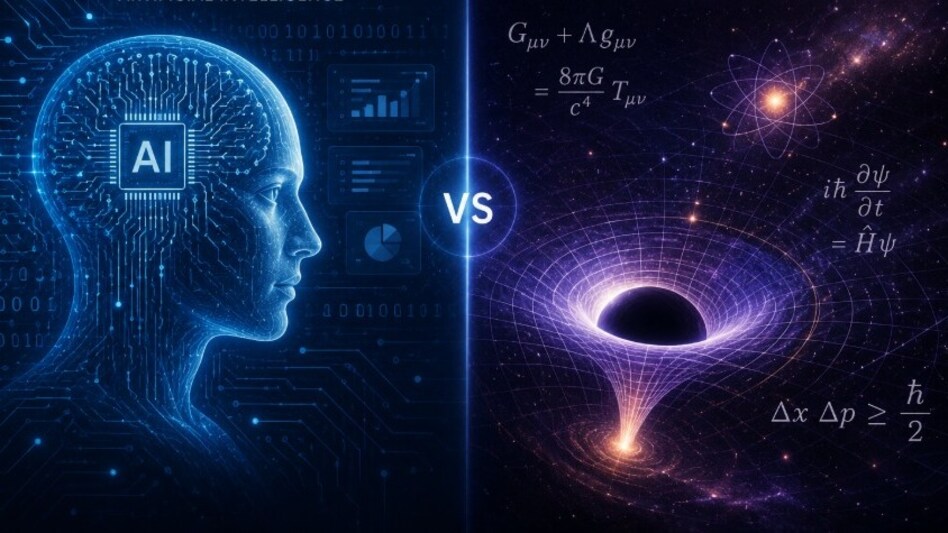
Unlocking the Secrets of Quantum Gravity: Can AI Help Physics Make a Leap?
The realm of scientific research is undergoing a profound transformation, fueled by the rapid advancements in artificial...
Business Today | Jul 25, 2026, 24:30