Why imperfection could be key to Turing patterns in nature
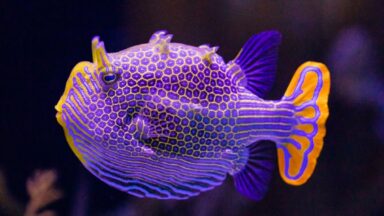
The striking black-and-white stripes of zebras and the unique spots of leopards are classic examples of Turing patterns, named after the renowned mathematician and computer scientist Alan Turing. While Turing initially proposed a theoretical framework for how these complex patterns could form in nature, his early model fell short of accurately representing the intricacies observed in real-world examples. Researchers at the University of Colorado at Boulder have made significant strides in this area by developing a novel modeling technique that incorporates intentional imperfections, leading to much more precise representations of Turing patterns. Their findings, published in the journal Matter, suggest that these imperfections play a crucial role in the emergence of such distinctive patterns. Turing's foundational work, presented in 1952, focused on the interaction between two types of chemicals, known as morphogens. He described a mechanism in which an activator chemical promotes a specific trait—like a tiger's stripes—while an inhibitor chemical temporarily suppresses this expression. Both chemicals diffuse through a medium, similar to how gas molecules spread in a confined space. This process typically leads to a uniform color, such as gray when black ink is mixed with water. However, if the inhibitor spreads more rapidly than the activator, the result can be a dynamic pattern of spots or stripes. Scientists have endeavored to apply Turing's concepts across various biological systems. For example, neurons in the brain can function as activators or inhibitors, potentially explaining the patterned visuals experienced during hallucinations. Observations of Turing patterns can be seen in diverse contexts, from the stripes of zebra fish and hair follicle distribution in mice to the arrangement of feather buds on birds. Additionally, some Mediterranean ants create structures from deceased comrades that appear to follow Turing patterns, and research has shown similar phenomena in the movement patterns of Azteca ant colonies on Mexican coffee farms. In a groundbreaking experiment in 2021, Spanish scientists successfully modified E. coli in the lab to exhibit branching Turing patterns, further illustrating the versatility and significance of Turing's theories in understanding natural phenomena.
Kalshi Challenges Netflix Over Controversial Documentary Trailer
Kalshi, the prediction market platform, has taken significant legal steps against Netflix, sending a cease-and-desist le...
TechCrunch | Jul 25, 2026, 17:10
Navigating the AI Landscape: Insights from a Former OpenAI Intern
As the demand for expertise in artificial intelligence surges, many are seeking ways to break into this dynamic field. H...
Business Insider | Jul 26, 2026, 10:10Shifting Focus: The Cost-Effectiveness of AI Models Takes Center Stage
In recent years, the AI sector has been intensely focused on identifying the most advanced models. While this pursuit re...
Business Insider | Jul 25, 2026, 13:10The Aluminum Foil Trend: A DIY Shield Against Wireless Identity Theft
Have you noticed an unusual trend where people are wrapping their wallets in aluminum foil? This peculiar practice has e...
Business Today | Jul 25, 2026, 02:45
Finland Unveils World's Largest Sand Battery to Tackle Renewable Energy Challenges
In a groundbreaking move to address the critical issue of renewable energy intermittency, a small town in southern Finla...
CNBC | Jul 25, 2026, 05:35