
HOLY SMOKES! A new, 200% faster Deep Seek R1-0528 variant appears from German lab TNG Technology Consulting Gmb H
In a remarkable advancement for artificial intelligence, TNG Technology Consulting GmbH has unveiled its latest model, the Deep Seek-TNG R1T2 Chimera. This innovative adaptation comes just over a month after the release of the Deep Seek R1-0528 by the Chinese AI startup Deep Seek, an offshoot of High-Flyer Capital Management based in Hong Kong. The R1-0528 model had already made waves in the AI community due to its cost-effective training and impressive reasoning capabilities, available freely under the Apache 2.0 license. However, the new R1T2 model takes it a step further, providing a significant increase in speed and efficiency. According to TNG, R1T2 achieves around 90% of the intelligence benchmark scores set by R1-0528 while producing responses with less than 40% of the output token count. This means users can expect faster answers at a lower computational cost. In a recent update, TNG touted that R1T2 is approximately 20% quicker than its predecessor, the original R1 model released in January, and more than double the speed of R1-0528. The AI developer community has responded enthusiastically, with notable figures like Vaibhav Srivastav from Hugging Face praising the model's performance. Srivastav noted the model's efficiency in answering complex queries, highlighting its potential for various applications. The foundation of this speed enhancement lies in TNG's Assembly-of-Experts (AoE) approach, which merges pre-trained model components. R1T2 features a new 'Tri-Mind' configuration that integrates three parent models: Deep Seek-R1-0528, Deep Seek-R1, and Deep Seek-V3-0324. This design allows R1T2 to maintain strong reasoning abilities while minimizing inference costs and response length. TNG’s innovative model design employs a mixture of experts (MoE) architecture, activating only a subset of components to optimize processing efficiency. R1T2’s streamlined output translates to a 60% reduction in response length compared to R1-0528, ensuring faster interactions crucial for high-demand enterprise environments. While R1T2 excels in general reasoning tasks, TNG advises caution for applications requiring function calling or tool usage, as these features may not yet be fully developed. The model is released under a permissive MIT License, making it accessible for commercial use. However, enterprises in Europe should remain vigilant about compliance with the EU AI Act, effective August 2, 2025, while those in the U.S. enjoy more flexibility regarding its deployment. TNG Technology Consulting, established in 2001 in Bavaria, Germany, has a strong focus on AI, software development, and DevOps services. With over 900 employees, it emphasizes a values-driven approach to consulting and actively engages in open-source contributions. As R1T2 becomes available on platforms like Hugging Face, TNG encourages developers and researchers to experiment with its capabilities and share feedback for continuous improvement.
AI and Private Equity: A Recipe for Software Disruption?
The landscape of enterprise software is on the brink of a significant transformation, driven by an unexpected alliance b...
CNBC | Mar 12, 2026, 21:05
Lucid Motors Unveils Ambitious Plans for Affordable Electric SUVs
Lucid Motors is setting its sights on the bustling midsize SUV market, a move that could prove pivotal for the company's...
Ars Technica | Mar 12, 2026, 17:55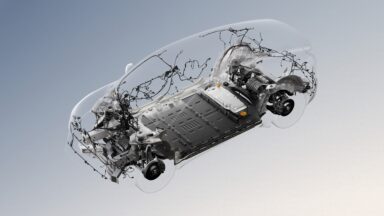
Tinder's Bold Move: Revamping Dating with Real-Life Events and AI Innovations
In a bid to re-engage users and attract a younger audience, Tinder unveiled a series of exciting updates during its firs...
TechCrunch | Mar 12, 2026, 18:40
Stryker Faces Cyber Assault Amid Global Tensions: What We Know
In the wake of recent airstrikes by the US and Israel on Iran, cybersecurity experts issued warnings to organizations wo...
Ars Technica | Mar 12, 2026, 22:20
Software Industry Faces a Financial Reckoning Amid AI Disruption
A recent conversation with a CEO from a leading software firm revealed alarming predictions for the industry. He warned ...
Business Insider | Mar 12, 2026, 18:20