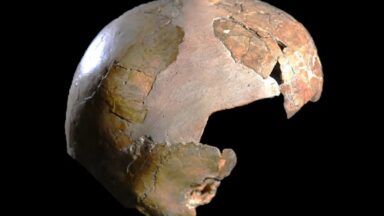
Ancient skull may have been half human, half Neanderthal child
In a significant archaeological discovery from 1929, researchers found several human skeletons, including those of seven adults and three children, during excavations at Skuhl Cave, located just south of Haifa, Israel. These remains are believed to date back approximately 140,000 years, marking the end of the Middle Pleistocene, with most identified as early Homo sapiens. Among these skeletons was a child, estimated to be between 3 and 5 years old, whose anatomical features exhibited a remarkable combination of early human and Neanderthal traits. Recent advancements in technology, particularly CT scanning, have reignited discussions surrounding the origins and classification of this unique specimen, as detailed in a new study published in the journal L’Anthropologie. The interaction between Neanderthals and Homo sapiens is well-documented, especially during the period when their populations coexisted. As modern humans began migrating out of Africa around 60,000 years ago, they interbred with Neanderthals, leading to the exchange of genetic material. Ars Science Editor John Timmer previously noted that while humans assimilated Neanderthal DNA, the latter's population was gradually diminished by the influx of modern humans. This case is not isolated, as evidenced by a 2018 analysis of a bone fragment from a cave in Russia. Researchers discovered that the remains belonged to a young girl, subsequently named "Denny," who was identified as the child of a Neanderthal mother and a Denisovan father. This finding suggested that instead of becoming extinct, Neanderthals might have been integrated into other hominid populations, indicating that such interbreeding events were possibly more prevalent than earlier assumptions suggested. In the current study, the researchers concentrated on the neurocranium, mandible, and teeth of the Skuhl Cave child’s skeleton to explore the distinctive blend of features that sparked this long-standing debate. The skeleton itself is largely intact, with the left side being better preserved, following the conditions of its burial.
2026 Lexus RZ 550e: A Promising Electric SUV with Room for Growth
Driving a vehicle sometimes feels like a mismatch, and that's how I felt during my initial experience with the original ...
Ars Technica | Feb 25, 2026, 18:35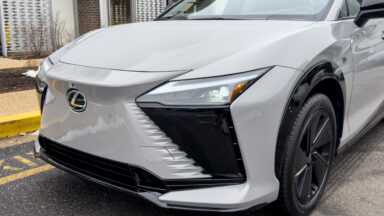
Navigating the AI Landscape: A Founder’s Journey from Novice to Innovator
Starting a business without a technical background may seem daunting, but for Tim Desoto, founder and CEO of an AI-drive...
Business Insider | Feb 25, 2026, 20:20Revolutionizing Project Management: Perplexity Computer Launches as the Future of AI Workflows
On February 25, Perplexity introduced its groundbreaking AI system, dubbed the 'Perplexity Computer.' This innovative pl...
Business Today | Feb 25, 2026, 20:35
Growing Backlash Against AI Data Centers Sparks Legislative Action
Nationwide discontent is rising over the proliferation of server farms that have surged alongside the AI expansion. This...
TechCrunch | Feb 25, 2026, 19:35
Snapchat to Host Inaugural Creator Awards, 'The Snappys,' Celebrating Cultural Innovators
On Wednesday, Snapchat revealed plans for its first-ever awards event, dubbed "The Snappys," scheduled for March 21. Thi...
TechCrunch | Feb 25, 2026, 20:20