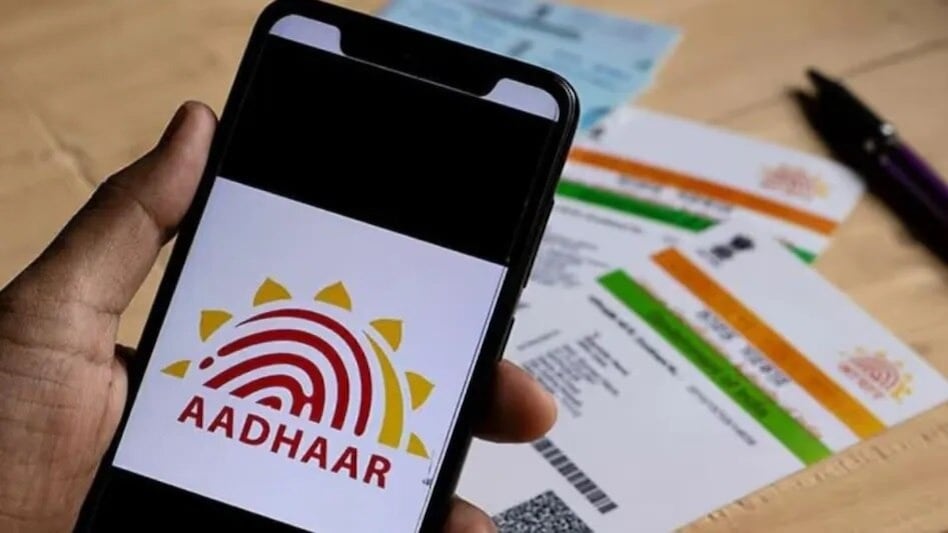
UIDAI may redesign Aadhaar card with only photo, QR code; check details
The Unique Identification Authority of India (UIDAI) is contemplating a significant overhaul of the Aadhaar card to enhance user privacy and reduce the risk of personal data misuse. Reports indicate that the revamped Aadhaar cards may soon include only the cardholder's photograph and a QR code, eliminating all printed personal information such as names, addresses, and Aadhaar numbers. During a recent online conference focused on an upcoming Aadhaar application, UIDAI CEO Bhuvnesh Kumar highlighted that this redesign aims to deter offline verification practices, which continue despite being banned under the Aadhaar Act. Many hotels, event organizers, and private companies persist in collecting photocopies of Aadhaar cards, raising alarms about potential data breaches and identity theft. "There is a thought process as to why there should be any detail on the card. It should be only a photo and a QR code," Kumar stated, stressing that printed information facilitates misuse. "People who know how to misuse it will keep misusing it." This proposed design seeks to bolster privacy while allowing for faster age and identity verification. The encrypted QR code will house all necessary information, enabling authorized parties to authenticate users securely without revealing sensitive data. UIDAI is expected to review this proposal on December 1. In addition to the physical redesign, UIDAI is gearing up to launch a new Aadhaar app to replace the existing mAadhaar app. The upgraded application will allow users to update address proof documents, add family members lacking mobile phones, and update mobile numbers using facial recognition technology. It will also facilitate Aadhaar-based verification for hotels, cinemas, educational institutions, events, and other scenarios requiring age or identity validation. Recently, UIDAI officials convened a joint meeting with banks, hotels, and fintech firms to discuss these upcoming changes and ensure they align with the Digital Personal Data Protection Act, set to be fully implemented within the next 18 months. The new app is designed to function similarly to DigiYatra, providing various authentication use cases. Organizations that require offline verification, termed OVSEs, will need to adapt to the new system. The QR code-based verification process will be complemented by facial matching, serving as proof of both identity and physical presence. UIDAI plans to implement this rule by December 2025, allowing OVSEs to transition to the new privacy-centric framework.
Navigating Market Turbulence: Cramer Urges Caution in Tech Investments
In a recent discussion, CNBC's Jim Cramer expressed concerns about the current state of the artificial intelligence mark...
CNBC | Jul 20, 2026, 22:35
Cybersecurity Alert: Millions of WordPress Sites at Risk from Exploited Vulnerabilities
Recent cybersecurity reports indicate that hackers are actively targeting websites that utilize outdated versions of the...
TechCrunch | Jul 20, 2026, 15:55
Google's Ambitious AI Chip 'Frozen v2' Set to Revolutionize Efficiency by 2028
Alphabet, the parent company of Google, is in the process of developing an innovative server chip aimed at enhancing the...
TechCrunch | Jul 20, 2026, 21:55
Leadership Shakeup at AI Standards Agency Sparks Concerns Over U.S. AI Policy
Chris Fall has stepped down from his position as the head of the Center for AI Standards and Innovation (CAISI), just th...
CNBC | Jul 20, 2026, 19:25
Streamlining AI: Major Update to the Model Context Protocol Simplifies Operations
The Model Context Protocol (MCP) serves as a crucial foundation for AI interoperability, enabling AI models to securely ...
TechCrunch | Jul 20, 2026, 21:15