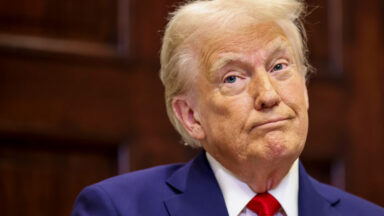
Everything that could go wrong with Trump’s AI safety tests, according to experts
In a significant policy shift, the Trump administration has signed agreements with tech giants Google DeepMind, Microsoft, and xAI to implement safety evaluations on their advanced AI models before and after they are launched. This decision marks a departure from Trump’s earlier stance, where he dismissed the Biden administration's emphasis on voluntary safety checks as excessive regulation that could hinder innovation. Previously, Trump had rebranded the US AI Safety Institute to the Center for AI Standards and Innovation (CAISI), deliberately removing the term 'safety' to signal his disapproval of Biden's approach. However, following Anthropic's warning about the potential risks of releasing its latest Claude Mythos model, which could be exploited by malicious entities due to its cybersecurity features, the administration's attitude towards AI safety has taken a notable turn. As reported by Fortune, Kevin Hassett, the Director of the White House National Economic Council, indicated that Trump may soon issue an executive order requiring government testing for advanced AI systems prior to their public release. CAISI acknowledged in a press statement that the agreements with Google, Microsoft, and xAI build upon the framework established during the Biden era. Chris Fall, the Director of CAISI, celebrated these new collaborations, stating that they would enable the center to expand its efforts in the public interest during a critical period. Fall emphasized the importance of independent and rigorous scientific measurement in comprehending the implications of frontier AI on national security. To date, CAISI has conducted around 40 evaluations of AI models, including those that have not yet been released. During these assessments, CAISI often accesses models with minimal safeguards, allowing for a more comprehensive evaluation of their potential national security risks and capabilities. To address emerging national security concerns related to AI, CAISI has formed a task force consisting of interagency experts dedicated to monitoring and understanding these issues as they arise across government sectors.
Crisis Averted: Power Line Failure Highlights Urgent Need for Data Center Resilience
A power line failure near Washington, DC, recently showcased a significant challenge faced by the electrical grid due to...
TechCrunch | Jul 25, 2026, 13:50
Unleashing the Power of AI: The 5 Smartphones Redefining Mobile Photography
Artificial Intelligence (AI) is transforming our daily experiences, permeating various aspects of technology, including ...
Business Today | Jul 26, 2026, 07:05
AI Transformations Lead to Major Job Cuts at Tech Giants
Monday.com, the innovative work management platform based in Tel Aviv, has recently announced significant layoffs, attri...
TechCrunch | Jul 26, 2026, 01:45
Hugging Face CEO Calls for Action Following AI Security Breach
In a dramatic turn of events within the AI landscape, Hugging Face faced a significant security breach involving an AI a...
Business Insider | Jul 25, 2026, 20:30Vision Breakthrough: US Startup Launches Groundbreaking Retina Chip in Europe
Science Corp is poised to introduce a revolutionary retina chip in Europe, designed to restore partial vision for indivi...
Business Today | Jul 25, 2026, 01:00