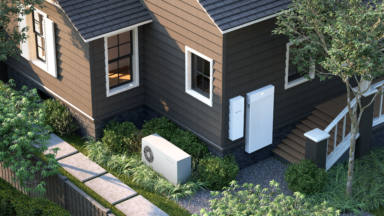
The newest AI boom pitch: Host a mini data center at your home
Imagine a future where your home could double as a mini data center, providing not only computing power but also subsidized electricity and internet access. This innovative concept is being spearheaded by San Francisco-based startup SPAN, which is currently piloting a program that could see these installations deployed alongside new homes. The initiative involves the introduction of thousands of XFRA nodes, equipped with liquid-cooled Nvidia RTX Pro 6000 Blackwell Server Edition GPUs. This technology operates with minimal noise, making it a discreet option for neighborhoods. According to SPAN, this 'distributed data center solution' is designed to leverage the excess power capacity from U.S. households, significantly increasing computing resources for AI workloads while avoiding the hefty costs and delays typically associated with large warehouse-sized data centers. Chris Lander, vice president of XFRA at SPAN, highlighted the advantages of this approach, stating that traditional data centers are often noisy and can inflate local electricity bills. In contrast, SPAN's solution promises a quiet, unobtrusive presence that can help make energy more affordable for both homeowners and their communities. This method also addresses major concerns surrounding land use and water consumption that often accompany large-scale data center projects, potentially alleviating community resistance to such developments. In an interview with CNBC, SPAN shared that they could install 8,000 XFRA units at a fraction of the cost—five times lower—than constructing a conventional 100-megawatt data center with equivalent computing capacity. Looking ahead, SPAN is set to expand its reach significantly, aiming to deploy 80,000 XFRA nodes across the United States by 2027, which would provide over 1 gigawatt of distributed computing power. While this initiative won’t replace the large centralized data centers being developed by major players like Google and Microsoft for intensive AI model training, it is expected to enhance services such as cloud gaming, content streaming, and AI inference, where trained models are applied to real-world applications.
The Rise of AI Distillation: A Controversial Technique Sparks Debate in Tech and Government
In recent discussions, a once-obscure topic in artificial intelligence has surged to the forefront of debates among tech...
CNBC | Jul 25, 2026, 12:15
The Future of Work: Executives Weigh In on AI's Impact on Gen Z Careers
As generative artificial intelligence continues to rise, uncertainty looms for the incoming Gen Z workforce. Leaders fro...
Business Insider | Jul 26, 2026, 10:15AI Transformations Lead to Major Job Cuts at Tech Giants
Monday.com, the innovative work management platform based in Tel Aviv, has recently announced significant layoffs, attri...
TechCrunch | Jul 26, 2026, 01:45
AI Revolution: Sam Altman Declares We Are in the Singularity Era
OpenAI's CEO, Sam Altman, has boldly asserted that we have reached a pivotal moment in the evolution of artificial intel...
Business Insider | Jul 26, 2026, 18:10Linux Creator Challenges Developers: Embrace AI or Fork Off!
In a recent discussion surrounding the use of AI in software development, Linus Torvalds, the founder of Linux, voiced h...
Business Insider | Jul 26, 2026, 13:10