Indian IT’s fresher hiring slump signals structural shift, not just slowdown
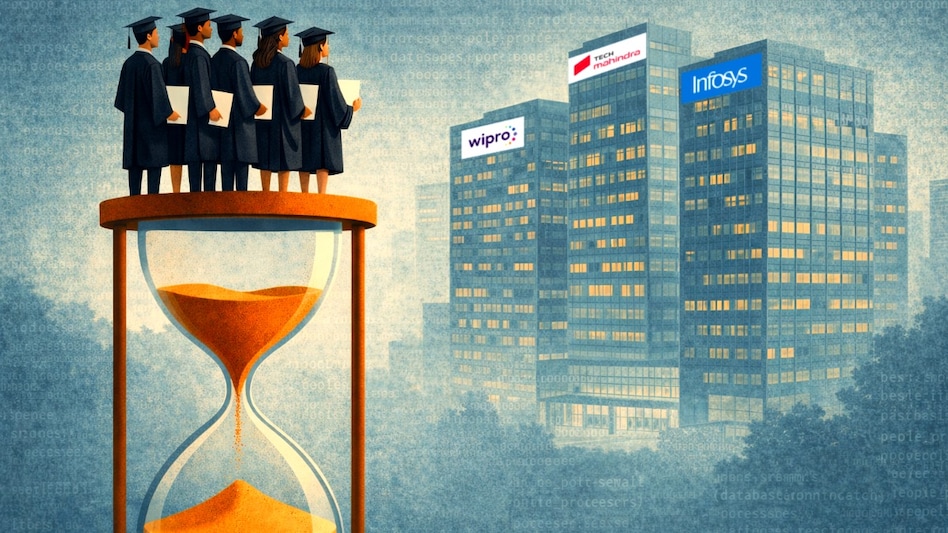
India's IT services sector is experiencing a notable transformation in its hiring strategies, marked by a significant decrease in the recruitment of fresh graduates and a rise in postponed onboarding practices. Over recent years, many companies have been issuing offer letters to new graduates, only to delay their start dates by several months. One recent recruit from Wipro reported receiving an offer letter in May 2025 for an August start, which was pushed back by seven months with vague references to 'business needs.' This situation has prompted a group of affected individuals to reach out to an IT workers’ union, seeking clarity and support amidst growing confusion. The data paints a stark picture of this trend. Hiring numbers for freshers in the IT sector plummeted from a peak of 600,000 in the fiscal year 2022 to approximately 120,000 by fiscal year 2025, reflecting an alarming 80% decline. Projections indicate that hiring levels will remain only marginally above this figure in the current fiscal period. Reports suggest that around 1,000 candidates are still awaiting joining letters from Tech Mahindra, while over 200 new recruits at Wipro have reported similar delays. Wipro has recently revised its fresher hiring target down to between 7,500 and 8,000, significantly lower than its previous estimate of 10,000, having onboarded roughly 5,000 so far. In contrast, Tech Mahindra plans to scale back on fresh hires in fiscal year 2026, focusing instead on reallocating existing personnel freed from ongoing transformation projects. Infosys, however, maintains a more optimistic outlook, aiming for 20,000 fresh hires, of which 18,000 have already been onboarded. CFO Jayesh Sanghrajka affirmed their commitment to reaching the target, viewing it as a crucial investment in future capacity despite a recent moderation in utilization rates. The conventional model of IT services hiring, which typically involved large batches of fresh graduates being trained for deployment, is facing challenges. Kamal Karanth, co-founder of Xpheno, attributes this sharp decline in fresh recruitment to various factors linked to revenue and margin pressures that have intensified since late 2022. With fluctuating global demand and uncertain deal pipelines, companies are exercising caution in expanding their workforce without assured deployment prospects. The financial implications are significant; hiring 10,000 freshers can necessitate an expenditure of around Rs 400 crore solely on salaries, excluding training expenses, making extensive recruitment less justifiable in the current economic climate. This shift towards a demand-driven hiring model is evident, with companies increasingly relying on lateral recruitment and staffing agencies while keeping their workforce leaner and productivity-focused. Employee representatives have highlighted a growing disconnect between hiring announcements and actual onboarding, with promises made at the beginning of the fiscal year often failing to translate into actual job placements. Harpreet Singh Saluja, President of the Nascent Information Technology Employees Senate (NITES), pointed out that while these hiring figures are intended to reassure investors about a healthy business outlook, the reality for many graduates is prolonged uncertainty as they wait for job confirmations. The emergence of artificial intelligence (AI) is also playing a pivotal role in reshaping entry-level hiring practices. Although the full impact of AI on job availability is still unfolding, initial enterprise implementations are expected to affect entry-level positions, particularly in fields like testing and support. Karanth noted a growing preference among employers for freshers equipped with 'future-ready skill sets' rather than those with more generic qualifications. This trend suggests a long-term pivot towards enhancing AI capabilities rather than simply increasing the number of entry-level hires. Nonetheless, not all companies are retreating from fresh recruitment. Accenture's CEO Julie Sweet emphasized the ongoing importance of freshers, noting that younger employees tend to be more adept with AI tools and can adapt to new roles more swiftly. As these dynamics unfold, it becomes evident that the longstanding correlation between headcount growth and revenue in India's IT services is weakening. A new, more selective hiring framework is taking shape, one that is increasingly responsive to immediate business needs and technological advancements. While the transition continues, it is clear that the era of mass fresher hiring, once a cornerstone of the industry’s growth narrative, is evolving towards a more cautious and efficiency-oriented strategy driven by economic realities and the advent of AI.
U.S. Biotech Firm Makes Bold Move to List in Hong Kong Ahead of U.S. Debut
In a significant shift in the biotech landscape, Axiom Biosciences, a firm specializing in regenerative and genetic medi...
CNBC | Jul 21, 2026, 23:55
Tesla Expands Robotaxi Trials in Florida Ahead of Earnings Report
Tesla has introduced an undisclosed number of its self-driving Model Y SUVs in Orlando and Tampa, just a day prior to it...
TechCrunch | Jul 21, 2026, 18:45
OpenAI Welcomes New Financial Minds to Its Leadership Team
OpenAI has announced the addition of two prominent financial professionals, David Vélez and Robin Vince, to its boards o...
CNBC | Jul 21, 2026, 21:25
Sony's Shift to Digital-Only Games Raises Concerns Over Resale Market
In a significant departure from its past, Sony has announced plans to cease physical disc production for new games on it...
CNBC | Jul 22, 2026, 24:20
Dimension Capital Raises $800 Million Fund, Highlighting Growth in Science and Technology Investments
In a remarkable move amid a challenging fundraising environment for many emerging venture capital firms, Dimension Capit...
TechCrunch | Jul 22, 2026, 01:50