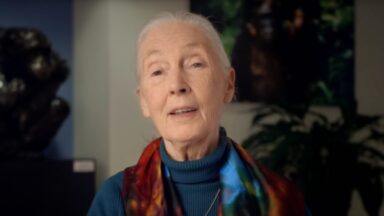
World-famous primatologist Jane Goodall dead at 91
Renowned primatologist Jane Goodall, who revolutionized our understanding of the bond between humans and animals through her groundbreaking field research with chimpanzees in the 1960s, has passed away at the age of 91. The Jane Goodall Institute (JGI) announced that she died of natural causes while in California as part of a speaking tour across the United States. Goodall was deeply committed to inspiring younger generations to engage in conservation and humanitarian efforts. She spearheaded numerous educational programs aimed at promoting awareness of both wild and captive chimpanzees. The institute's statement highlighted her remarkable contributions: "[Her] discoveries as an ethologist revolutionized science. She was always guided by her fascination with the mysteries of evolution, and her staunch belief in the fundamental need to respect all forms of life on Earth." Born in April 1934, Goodall's love for nature was evident from an early age. Her father gifted her a stuffed monkey doll, which she named Jubilee, and kept throughout her life. She found mentorship in paleoanthropologist Louis Leakey, who initially employed her as a secretary at the National Museum in Nairobi. During her time with Leakey and his wife, Mary, she accompanied them on fossil hunts at the Olduvai Gorge. Recognizing her potential, Leakey sent Goodall to Tanzania to study chimpanzees in Gombe Stream National Park. He also facilitated her enrollment in a PhD program in ethology at Cambridge University, from which she graduated in 1965 with a thesis focused on her Gombe research. The program she established continues to thrive today. Goodall adopted a unique approach to studying chimpanzees by naming them instead of assigning numbers, a practice that was met with skepticism in the male-dominated field. However, Leakey valued her insights. Her groundbreaking observation in 1960 of a chimpanzee named David Greybeard using a twig as a tool to extract termites shattered the long-held belief that only humans used tools. Upon learning of this behavior, Leakey famously remarked, "Now we must redefine 'tool,' redefine 'man,' or accept chimpanzees as humans."
Revolutionizing Office Automation: Prentis Aims to Secure $100 Million in Funding
Prentis, a newly established AI research lab, is making waves in the tech industry as it prepares to raise $100 million ...
TechCrunch | Jul 25, 2026, 24:00
Vietnam's Controversial Social Media Proposal: A New Approach for Youth Engagement
Vietnam is contemplating a distinctive approach to youth social media regulations, diverging from the more common outrig...
TechCrunch | Jul 24, 2026, 21:25
OpenAI's Micro Keypad: A Novelty for Coders or Just a Confounding Gadget?
Last week, OpenAI made its debut in the hardware landscape with the launch of Micro, a stylish keypad designed to integr...
TechCrunch | Jul 25, 2026, 24:40
Vision Breakthrough: US Startup Launches Groundbreaking Retina Chip in Europe
Science Corp is poised to introduce a revolutionary retina chip in Europe, designed to restore partial vision for indivi...
Business Today | Jul 25, 2026, 01:00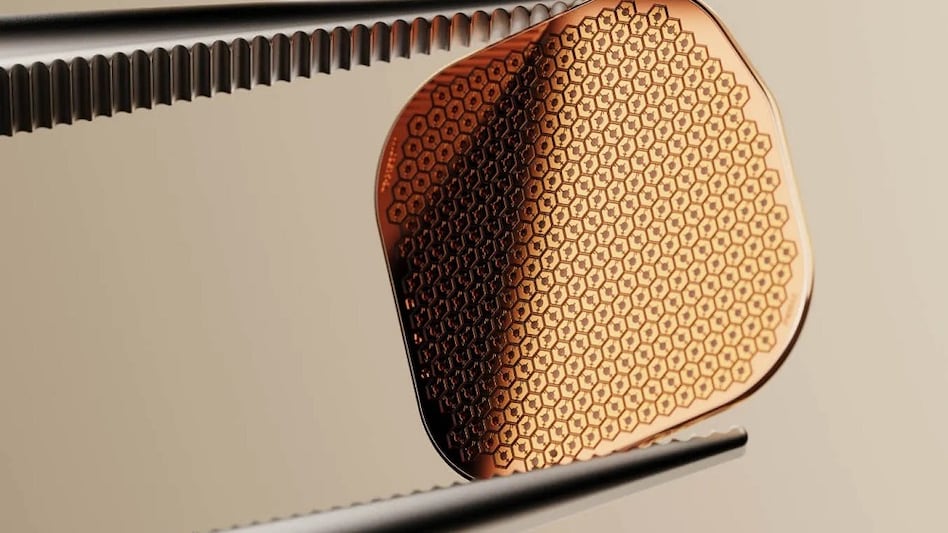
Prentis: Ambitious New AI Lab Eyes $100 Million Funding with Innovative Automation Goals
Prentis, a cutting-edge AI research laboratory co-founded by Ritankar Das, Reid Hoffman, and Marc Pincus, is currently i...
TechCrunch | Jul 24, 2026, 22:45