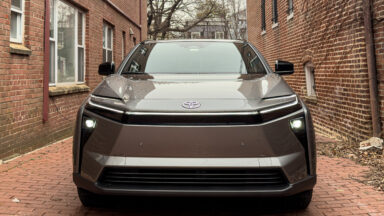
And the award for the most improved EV goes to… the 2026 Toyota bZ
Toyota, the world’s largest automaker, has had a complex journey in the realm of battery-electric vehicles (BEVs). Once a trailblazer in hybrid technology, the company has often emphasized the advantages of hybrids, particularly in light of limited battery supply. However, its first full BEV, the bZ4x, encountered significant issues right out of the gate, including a recall due to improperly attached wheels, which cast a shadow over its initial release. The reception of the bZ4x was lukewarm at best, with many reviews highlighting its struggles to differentiate itself from competitors. Acknowledging the need for improvement, Toyota revamped its electric vehicle platform, known as TNGA, which it shares with both Lexus and Subaru. The most notable change is the simplification of the model name—what was once called the bZ4x is now simply the bZ. Equipped with a new 74.7 kWh battery pack, the bZ offers both front-wheel and all-wheel drive options, enhanced by the latest silicon carbide power electronics. Notably, for the North American market, it now features a Tesla-style NACS charging port, replacing the previous CCS1 configuration. Our review focused on the $37,900 XLE FWD Plus variant, which stands out with an impressive range of 314 miles (505 km) as per EPA testing. This marks a remarkable enhancement compared to the pre-facelift version, which only managed 252 miles (405 km) with a 71.4 kWh battery. After testing the bZ, we also had a chance to experience its more luxurious Lexus counterpart. While the Lexus offered a premium interior and conveniences like ventilated seats, the Toyota bZ emerged as a superior electric vehicle in terms of performance. With a front-wheel drive system delivering 221 horsepower (165 kW) and weighing in at 4,156 lbs (1,885 kg), the XLE FWD Plus isn’t particularly fast; it accelerates from 0 to 60 mph (97 km/h) in about eight seconds. Despite this, it provides sufficient torque to engage the low rolling resistance tires, ensuring a responsive driving experience.
Crisis Averted: Power Line Failure Highlights Urgent Need for Data Center Resilience
A power line failure near Washington, DC, recently showcased a significant challenge faced by the electrical grid due to...
TechCrunch | Jul 25, 2026, 13:50
Finland Unveils World's Largest Sand Battery to Tackle Renewable Energy Challenges
In a groundbreaking move to address the critical issue of renewable energy intermittency, a small town in southern Finla...
CNBC | Jul 25, 2026, 05:35
The Rise of AI Distillation: A Controversial Technique Sparks Debate in Tech and Government
In recent discussions, a once-obscure topic in artificial intelligence has surged to the forefront of debates among tech...
CNBC | Jul 25, 2026, 12:15
Volkswagen Engineers Indicted for Insider Trading Linked to Rivian Partnership
In a significant legal development, the U.S. Department of Justice has brought securities fraud charges against two engi...
TechCrunch | Jul 24, 2026, 20:30
Nvidia Strikes Major Deal with SK Hynix to Secure AI Memory Supply
Nvidia has successfully forged a significant partnership with South Korea's SK Hynix to secure memory supplies essential...
CNBC | Jul 25, 2026, 05:15