
The best AI dictation apps, tested and ranked
AI dictation applications have significantly improved in recent years, evolving from their early days of sluggish performance and limited accuracy. Thanks to breakthroughs in large language models (LLMs) and advanced speech-to-text technologies, these tools now provide impressive accuracy and context retention, making text editing a breeze. Among the standout options is Wispr Flow, a well-funded dictation app that allows users to add custom vocabulary and instructions. Currently available on macOS, Windows, and iOS—with an Android version on the way—Wispr Flow offers various transcription styles, including formal and casual, tailored for different communication needs. The free version allows up to 2,000 words weekly on desktop and 1,000 words monthly on iOS, while premium plans start at $15 per month for unlimited usage. Another notable app, Willow, promises to save time for users who prefer dictation over typing. Employing LLMs, it generates full passages from minimal input and emphasizes privacy by storing transcripts locally. Users can dictate up to 2,000 words monthly for free, with paid subscriptions also starting at $15 per month for unlimited features. For those prioritizing privacy, Monologue offers a unique solution by allowing users to download its AI model for offline use. It offers a free tier with 1,000 words per month and subscription options at $10 monthly or $100 annually. Additionally, engaged users may receive a physical shortcut device called the Monokey, designed to enhance dictation efficiency. Superwhisper expands beyond basic dictation by enabling transcription from audio and video files, offering customizable AI models for varied speed and accuracy. With a free basic voice-to-text feature, users can test advanced functionalities for 15 minutes, while subscription plans start at $8.49 per month. VoiceTypr takes an offline-first approach, catering to over 99 languages and supporting local transcription models. After a three-day free trial, users can purchase a lifetime license, with prices starting at $35 for a single device. Aqua, a Y Combinator-backed app, emphasizes low latency in voice typing and includes features like text autofill. Its free plan provides 1,000 words monthly, while paid options begin at $8 per month. Handy serves as an open-source transcription tool available across various operating systems, offering a straightforward experience without customization. Typeless stands out with a high free word count limit, allowing users to dictate up to 4,000 words weekly, with subscription options for unlimited usage starting at $12 per month. VoiceInk is another open-source application designed for Mac users, featuring shortcuts for easy recording and the ability to adjust output based on context. It is available for a one-time fee of $25 for lifetime access. Lastly, Dictato, priced at around $12, integrates offline models and offers quick transcription capabilities using local processing. AudioPen, initially a voice notes app, now combines dictation with advanced editing features, allowing users to rewrite notes in various styles. Subscription options for AudioPen start at $33 for three months. With such a diverse array of AI dictation apps available, there is likely a solution that meets your specific needs, whether you prioritize speed, privacy, or advanced functionality.
Navigating the AI Landscape: Insights from a Former OpenAI Intern
As the demand for expertise in artificial intelligence surges, many are seeking ways to break into this dynamic field. H...
Business Insider | Jul 26, 2026, 10:10The Future of Work: Executives Weigh In on AI's Impact on Gen Z Careers
As generative artificial intelligence continues to rise, uncertainty looms for the incoming Gen Z workforce. Leaders fro...
Business Insider | Jul 26, 2026, 10:15The Boring Company Eyes $4 Billion Funding Boost Amid Expanding Tunnel Ventures
Elon Musk's tunneling enterprise, The Boring Company, is reportedly negotiating a substantial funding round of $4 billio...
TechCrunch | Jul 25, 2026, 19:50
The Aluminum Foil Trend: A DIY Shield Against Wireless Identity Theft
Have you noticed an unusual trend where people are wrapping their wallets in aluminum foil? This peculiar practice has e...
Business Today | Jul 25, 2026, 02:45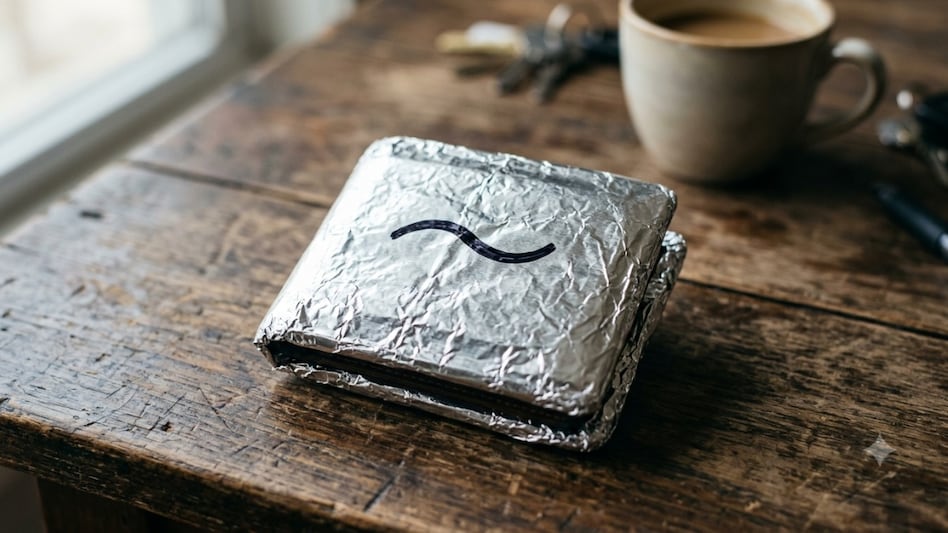
OpenAI's Micro Keypad: A Novelty for Coders or Just a Confounding Gadget?
Last week, OpenAI made its debut in the hardware landscape with the launch of Micro, a stylish keypad designed to integr...
TechCrunch | Jul 25, 2026, 24:40