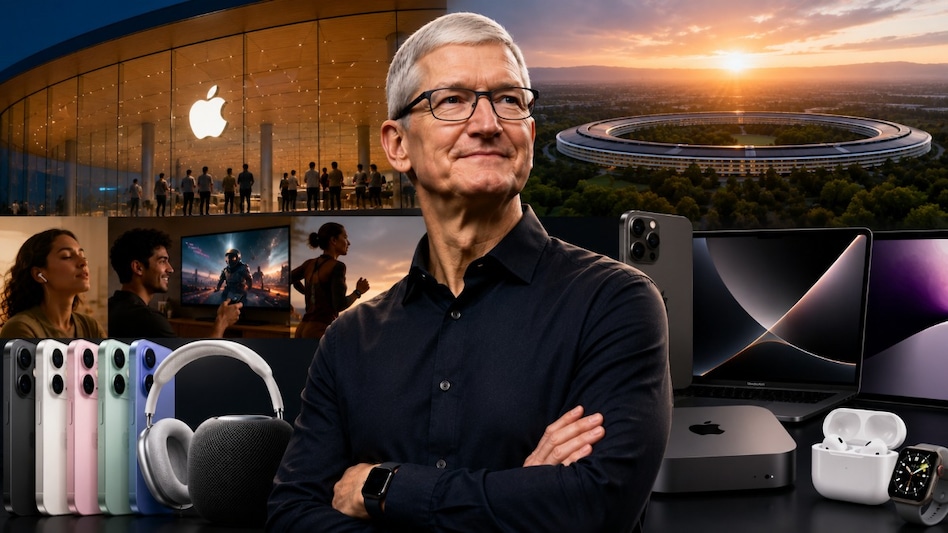
Tim Cook’s 15-year Apple legacy: How he transformed the company after Steve Jobs
In August 2011, Tim Cook took the helm as CEO of Apple, stepping into a role that followed the legendary Steve Jobs. Cook inherited a company renowned for its innovation and leadership in consumer technology. His background in supply-chain management and operations proved crucial as he optimized manufacturing processes, reduced inventory levels, and secured vital component contracts, all of which would become integral to Apple’s growth strategy. Over the past fifteen years, Apple has dramatically transformed, expanding its reach far beyond the foundation laid by Jobs. The company now boasts a diverse ecosystem of products and services, with its market capitalization briefly exceeding $5 trillion in July 2026. This financial success is a testament to Cook's vision and leadership. One of the pivotal shifts under Cook’s guidance was the significant growth of Apple's services sector. In 2011, services contributed only a minor portion to Apple's revenue. However, Cook's leadership saw a massive expansion into platforms like Apple Music, Apple TV+, iCloud+, Apple Fitness+, and Apple Arcade. By 2025, revenue from services soared to an impressive $109 billion. Furthermore, Cook spearheaded the introduction of products such as the Apple Watch, AirPods, HomePod, and HomePod mini, expanding Apple's wearables and accessories market from less than $10 billion annually to over $30 billion. This growth reflects Apple’s strategy of becoming more vertically integrated. The scale of Apple's evolution is evident in its financial figures. Revenue jumped from approximately $108 billion in 2011 to nearly $400 billion today, with market capitalization soaring from around $350 billion to approximately $5 trillion. Cook’s operational expertise also led to increased supply-chain investments and a diversification of manufacturing locations beyond China, while maintaining a focus on hardware scaling. A significant innovation during Cook's tenure was the transition to custom silicon. While the initiative began before his arrival, Cook accelerated the shift, culminating in the announcement in 2020 that Macs would utilize Apple’s proprietary M1 chips instead of Intel processors. This move significantly enhanced Apple's control over its hardware and software integration. Cook's era also saw the launch of groundbreaking products like the Apple Watch and Vision Pro, as well as the expansion of the iPhone, iPad, and Mac lines. Additionally, he revamped Apple's approach to returning capital to shareholders by initiating a dividend and stock buyback program in 2012, resulting in hundreds of billions of dollars spent on repurchases. As Cook prepares to transition the CEO role to John Ternus on September 1, he will step into the position of executive chairman. The Apple he leaves behind is not just larger but is intricately woven into a comprehensive ecosystem of hardware, software, and services, marking a significant evolution from the company he took over in 2011.
Tidal Takes Bold Step Against AI Music Flood, Set to Remove Millions of Tracks
In a decisive move to combat the overwhelming influx of AI-generated music, Tidal announced on Tuesday its plans to ban ...
TechCrunch | Nov 24, 2026, 17:10
Uber and Nuro Kick Off Driverless Trials for Lucid Robotaxis Ahead of 2027 Launch
Uber and Nuro have officially launched their driverless testing phase for the Lucid Gravity SUVs on the streets of the S...
TechCrunch | Nov 24, 2026, 17:15
Threads Expands to iPad with New Cashtag Feature to Rival X
Meta's Threads app has officially launched a dedicated version for iPad, marking a significant milestone in its developm...
TechCrunch | Nov 24, 2026, 18:00
Pinterest Empowers Parents with New Controls Over AI Content for Teens
This week, Pinterest unveiled an enhancement to its parental controls, introducing a feature that allows parents to regu...
TechCrunch | Nov 24, 2026, 16:25
Nvidia's CEO Jensen Huang Returns Amid Scandal and Government Intervention
In a surprising turn of events, Nvidia's board has reinstated Jensen Huang as CEO and president just two weeks after his...
TechCrunch | Nov 24, 2026, 13:45