
Underwater cables are a vital piece of the AI buildout and internet — investment is booming
More than 95% of global data and voice communications traverse an extensive network of nearly a million miles of underwater cables. These vital links facilitate everything from governmental communications and financial transactions to emails, video calls, and streaming services around the globe. The evolution of these subsea cables began with the first commercial telecommunication line, which was laid across the English Channel in 1850 for telegraph use. Over the years, the technology transformed from coaxial cables that carried voice calls to the advanced fiber optics that enable today's internet. Paul Gabla, Chief Sales Officer at Alcatel Submarine Networks, the largest subsea cable manufacturer, notes that in the last decade, major tech companies like Meta, Google, and Amazon have become key players in this market, now representing about 50% of the total. As the demand for subsea cables surges, particularly with the rise of computation-heavy artificial intelligence models, investments in new projects are projected to hit around $13 billion between 2025 and 2027—almost double the amount invested from 2022 to 2024, according to TeleGeography. Meta's Vice President of Network Investments, Alex Aime, emphasizes the crucial role of connectivity in AI development. He argues that without robust infrastructure connecting data centers, the expensive hardware becomes little more than isolated storage facilities. In a groundbreaking endeavor, Meta recently announced Project Waterworth, a colossal 50,000 km (31,000-mile) cable that will link five continents, marking it as the world's longest subsea cable initiative. Amazon has also entered the subsea realm with Fastnet, its first wholly-owned cable project, designed to connect Maryland's eastern shore to County Cork, Ireland. With a capacity exceeding 320 terabits per second, it could handle the data equivalent of streaming 12.5 million HD movies at once. Matt Rehder, Vice President of Core Networking at AWS, highlighted the importance of such infrastructure for international connectivity, noting the limitations and higher costs associated with satellite alternatives. Google has made significant investments in over 30 subsea cables, while Microsoft is also enhancing its infrastructure. Matthew Mooney, Director of Global Issues at cybersecurity firm Recorded Future, remarked on the exponential growth of submarine cables over the past two decades, driven by an insatiable demand for data. However, disruptions caused by cable damage can have substantial impacts, particularly in regions with limited internet connectivity. Erin Murphy, a senior fellow at the Center for Strategic and International Studies, pointed out that severing a cable can isolate entire nations from the internet, affecting crucial services such as banking and e-commerce. This was starkly illustrated in 2022 when Tonga lost its only subsea communication cable due to volcanic activity, leaving the island cut off from the world. Recent incidents, including cable cuts in the Red Sea affecting Microsoft’s Azure cloud services, have raised concerns about both accidental damage and potential sabotage. Experts like Murphy have noted that while many damages are accidental—often caused by fishing activities or ships' anchors—there is a growing apprehension that some incidents may be intentional, particularly amid rising geopolitical tensions. In response to these threats, NATO initiated the "Baltic Sentry" operation, deploying advanced technologies to safeguard subsea infrastructure. The U.S. Federal Communications Commission has also tightened regulations for foreign firms seeking to establish or operate subsea cables connected to the U.S., particularly focusing on security risks associated with adversarial nations. As the demand for reliable and secure subsea connectivity continues to grow, major tech companies are taking proactive measures to ensure that their infrastructure meets rigorous safety and security standards. The undersea cables that connect our world are not just technological marvels; they are the backbone of our digital communication and an essential component of the burgeoning AI landscape.
Oracle Secures Massive $7 Billion Deal with Pentagon to Enhance Military Data Operations
The Pentagon has officially announced a significant partnership with Oracle, awarding the tech giant a contract valued a...
CNBC | Jul 23, 2026, 21:15
Unlocking Your Google Account Just Got Easier with Selfie Video Verification
In an innovative move, Google has introduced a new recovery feature called the 'Selfie Video' method, designed to simpli...
Business Today | Jul 24, 2026, 06:50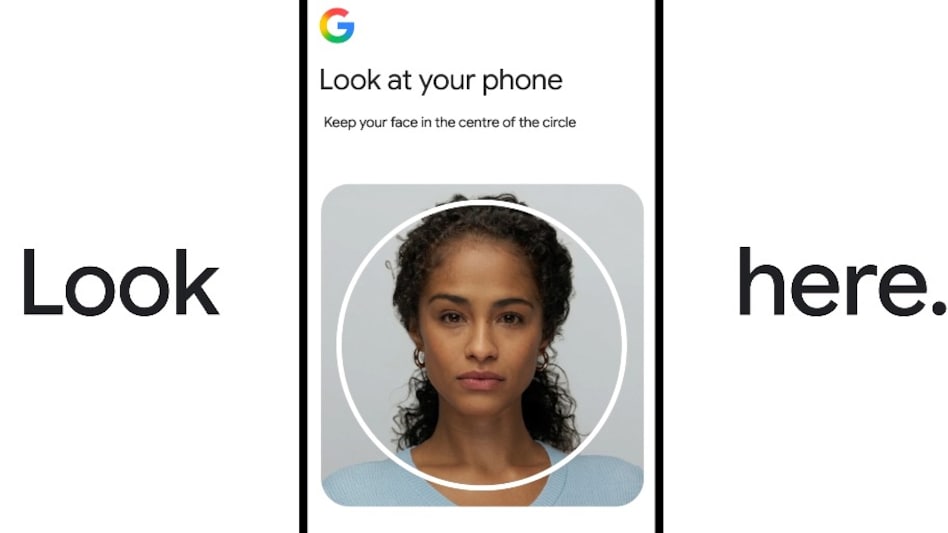
AI Guardrails: A Double-Edged Sword for Cybersecurity Researchers
In recent months, leading AI companies have implemented stringent regulations and vetted programs to curb potential misu...
TechCrunch | Jul 24, 2026, 01:15
New Safety Rules on the Horizon for Vehicle Exit Mechanisms Following Tesla Incidents
U.S. safety regulators are set to establish new standards aimed at ensuring that both drivers and passengers can safely ...
TechCrunch | Jul 23, 2026, 20:40
OpenAI's Latest Launch Sends Shockwaves Through Software Stocks
In a striking move, OpenAI has significantly impacted the software industry with its recent unveiling of a new enterpris...
Business Insider | Jul 23, 2026, 22:30