
Tesla Dojo: the rise and fall of Elon Musk’s AI supercomputer
Elon Musk's vision for an AI supercomputer, known as Dojo, was a cornerstone of Tesla's ambitious plans in the realm of artificial intelligence. Since its inception, Musk touted Dojo as a pivotal element in Tesla's journey towards achieving full self-driving capabilities. In July 2024, he announced a commitment to enhance the project, particularly leading up to the much-anticipated robotaxi launch in October. However, after six years of anticipation, Tesla announced the termination of the Dojo project and the disbanding of its dedicated team in August 2025. In a shocking turn of events, Musk declared Dojo 2, intended to be the next iteration of Tesla's supercomputer, an “evolutionary dead end” just weeks after projecting its potential success by 2026. Initially, the article aimed to delve into the functionalities of Dojo and its potential to propel Tesla into the forefront of AI technology, focusing on self-driving cars and humanoid robots. Now, it serves as a reflection on a project that shifted perceptions of Tesla from an automotive manufacturer to an AI powerhouse. Dojo was designed to train Tesla’s Full Self-Driving (FSD) neural networks, which are currently integrated into numerous Tesla vehicles. While FSD operates with advanced driver assistance, it still requires driver supervision. The project was integral to Tesla's goal of launching a fully autonomous robotaxi service, which saw its first limited deployment in Austin with Model Y SUVs. Despite the growing focus on Dojo, Tesla had not publicly credited the supercomputer for any of its self-driving advancements over the past year. Instead, in August 2024, the company began promoting a new AI training supercluster named Cortex, which Musk claimed would enhance FSD and the Optimus robot by offering significant video storage capabilities. The mixed reactions to the termination of Dojo reflect broader concerns about Musk's ambitious promises amidst declining electric vehicle sales and an underwhelming rollout of robotaxi services. Some analysts perceive this move as a strategic shift from self-sufficient hardware development to partnerships for chip production, while others view it as a sign of Musk's failure to deliver on lofty aspirations. The disbandment of the Dojo team, including its lead Peter Bannon, followed the departure of around 20 employees who launched their own AI chip venture, DensityAI. Analysts have warned that losing such specialized talent could hinder Tesla's progress in AI. This decision came shortly after Tesla secured a $16.5 billion contract to procure its next-generation AI6 chips from Samsung. Musk indicated that the convergence towards the AI6 chips necessitated the closure of Dojo, claiming that the project had reached a point where it was no longer viable. Musk has consistently framed Tesla as more than just an automaker, positioning it as an AI entity that aims to revolutionize autonomous driving through a vision-based system that relies solely on cameras for data collection. While competitors often use a mix of sensors, Tesla insists on leveraging extensive visual data processed by sophisticated neural networks. The ambitious goal was to utilize Dojo to train AI systems capable of operating on par with human perception. However, industry experts have cautioned that merely accumulating data might not lead to smarter models, citing economic constraints and the potential exhaustion of useful training data. Despite the challenges, Tesla’s approach has been to gather vast amounts of driving data to refine its AI systems. Dojo was intended to be the computational backbone of this strategy, designed with thousands of nodes to handle extensive training tasks efficiently. Tesla's previous reliance on Nvidia for GPU technology highlighted its need to innovate in-house. The D1 chip, announced in 2021, was a critical component of Dojo, promising enhanced performance for AI tasks. However, the transition to the next-gen D2 chip was not realized before the project's closure. As Tesla pivots towards collaborations with established tech companies, including Nvidia and AMD, the future of its AI ambitions remains uncertain. Musk has hinted at a broader vision for Tesla's AI division, potentially exploring new revenue channels through software and services. However, the road ahead is fraught with challenges, particularly as the tech landscape continues to evolve rapidly. This saga encapsulates the highs and lows of Tesla's journey into artificial intelligence, illustrating the complexities and risks inherent in pioneering new technological frontiers. While Musk’s aspirations for Dojo may have faltered, the implications for Tesla's future in AI and autonomous driving remain a critical topic for stakeholders and industry observers alike.
Vivo Set to Unveil Budget-Friendly X300 E with Impressive Specs Next Week
Vivo is gearing up to introduce the X300 E, a new addition to its flagship X300 series, with a launch scheduled for July...
Business Today | Jul 21, 2026, 07:45
Exploring the Rise of the Clipping Economy and Its Impact on Gen Z Wealth
An emerging trend known as the 'clipping economy' is paving the way for a new generation of millionaires, particularly a...
CNN | Jul 21, 2026, 09:20
Oppo Raises Prices of K14 Series and A6s in India Amid Component Shortages
Oppo has announced a price increase for its budget-friendly K series smartphones, specifically the Oppo K14 and K14x mod...
Business Today | Jul 21, 2026, 09:35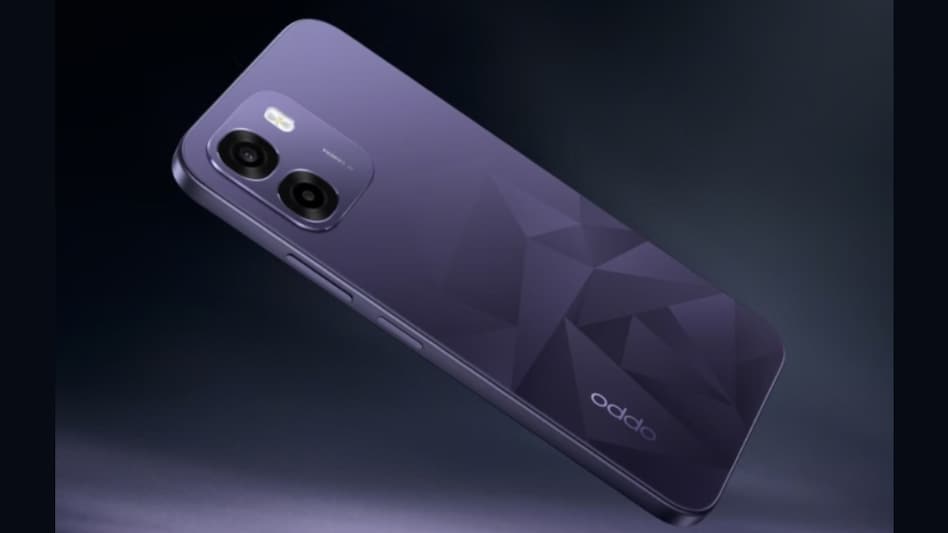
Nvidia Takes Bold Step with 9.3% Investment in Nebius, Fueling Stock Surge
Shares of Nebius experienced a significant boost on Tuesday following Nvidia's announcement of a 9.3% investment in the ...
CNBC | Jul 21, 2026, 09:55
China Considers New Export Controls on AI Technologies and Semiconductors
In a significant move reflecting rising global tensions over advanced technologies, China is contemplating stricter expo...
Business Today | Jul 21, 2026, 10:55