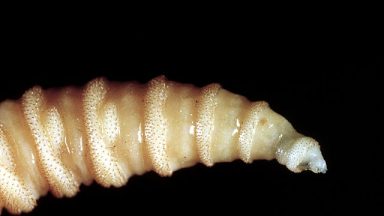
Screwworms in US: Human risk is low—but they can burrow through your skull
The alarming reappearance of flesh-eating screwworms in the United States has raised significant concerns among agricultural officials and health experts alike. Recently, the US Department of Agriculture reported an increase in cases, with three new incidents documented on Monday and Tuesday, bringing the total to five. Among these cases, one involved a dog residing in New Mexico, which had its infection reported in Texas and may have traveled to Mexico, where the flies are also proliferating. The other four cases, all affecting calves, were detected in Texas—specifically in Zavala County and La Salle County. Much of the focus surrounding this resurgence has been on the potential threat to livestock, particularly cattle, and the financial implications for the cattle industry. The USDA warns that if screwworm infestations reach levels similar to past outbreaks, Texas could face losses exceeding $732 million annually, with the broader Texas economy at risk of losing up to $1.8 billion. While the threat to livestock is considerable, humans are not entirely safe from these parasitic flies. Although human infestations are less common, they can be extremely serious when they occur. Research has shown that such infestations lead to rapidly expanding and painful wounds that may penetrate deeper tissues, posing significant risks of secondary infections, sepsis, and even death. The larvae are capable of destroying muscle, cartilage, and bone if not addressed promptly, and in dire cases, they can even breach the human skull. To grasp the full scope of this threat, it is crucial to understand the lifecycle of the screwworm, scientifically known as Cochliomyia hominivorax. This parasitic blowfly has a short lifespan of 10 to 30 days, during which a single female can lay up to 3,000 eggs after mating just once. Attracted to the scent of wounds and bodily openings in warm-blooded animals, females deposit hundreds of eggs at these sites. The eggs hatch within a day, and the larvae, known for their distinctive screw shape, begin their gruesome feast on the living flesh of their host. This predatory phase can last up to a week before the mature larvae drop to the ground, pupating in the soil and eventually emerging as adult flies within 7 to 54 days.
Ashneer Grover Unveils Innovative Loan Guarantee Platform for Employees
Ashneer Grover, the former MD and co-founder of BharatPe, has made waves with the announcement of his new fintech initia...
Business Today | Jul 24, 2026, 05:55
New Safety Rules on the Horizon for Vehicle Exit Mechanisms Following Tesla Incidents
U.S. safety regulators are set to establish new standards aimed at ensuring that both drivers and passengers can safely ...
TechCrunch | Jul 23, 2026, 20:40
Mobileye's Visionary Leader Transitions as Company Shifts Focus to Robotics and Robotaxis
Amnon Shashua, the founder and CEO of Mobileye, has announced his intention to step down from his leadership role after ...
TechCrunch | Jul 23, 2026, 23:15
Corgi Insurance Secures Additional Funding, Boosting Valuation to $4 Billion
Corgi, a startup specializing in insurance technology and data services, is reportedly closing yet another funding round...
TechCrunch | Jul 23, 2026, 20:40
Flipkart Enters the Food Delivery Arena, Challenging Major Competitors
Walmart's e-commerce powerhouse, Flipkart, is gearing up to launch its own food delivery platform, igniting competition ...
Business Today | Jul 24, 2026, 07:15