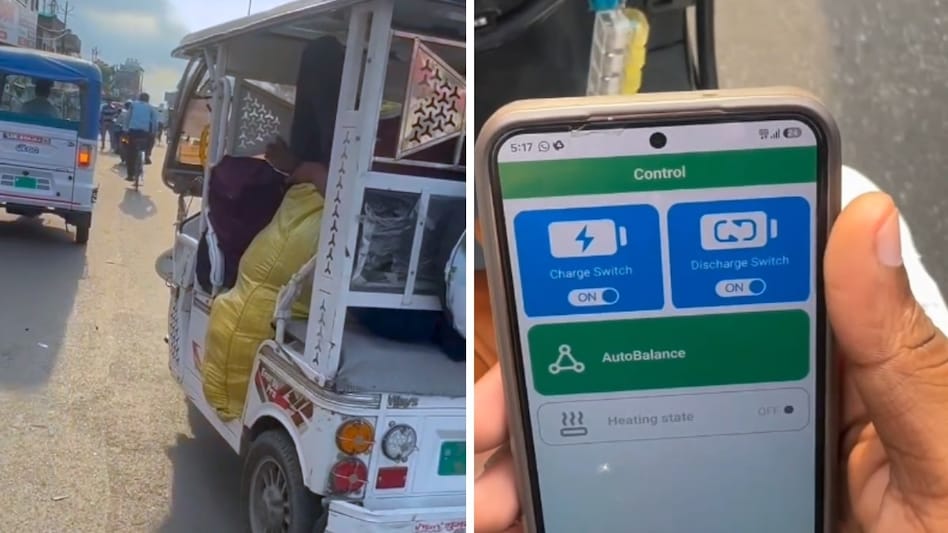
Viral e-rickshaw 'prank' app: Switching off batteries could cost you ₹5 lakh & 3 years in jail
A seemingly harmless trend circulating on social media is raising alarming concerns over public safety and legal repercussions. The viral phenomenon involves individuals using a smartphone app to remotely disable the batteries of e-rickshaws, leaving drivers stranded in traffic and bewildered. Numerous videos circulating on platforms like Instagram and YouTube depict young people standing near e-rickshaws, activating an application that abruptly cuts power to the vehicles. This reckless act often leaves drivers in precarious situations, forcing them to manually push their rickshaws or repeatedly attempt to restart them. Some clips even feature distressed drivers who are left in tears, unable to comprehend the sudden malfunction of their vehicles. Marketed as a form of 'revenge' against allegedly reckless e-rickshaw drivers, many critics argue that this trend unjustly punishes innocent operators, whose vehicles often represent their sole source of income. At the heart of this controversy lies the BAT-BMS app, a legitimate battery management tool developed by Shenzhen Grenergy Technology in China. Initially designed to connect via Bluetooth with compatible lithium battery packs for legitimate purposes, reports indicate that the app can also connect to certain low-cost e-rickshaws and electric scooters that lack adequate security measures. This vulnerability allows anyone nearby to issue commands, including disabling the battery, within Bluetooth's typical operating range of 10 to 15 meters. While the app has been removed from the Apple App Store, it remains accessible on the Google Play Store, raising further concerns. The safety implications of this prank are severe. An unexpected power loss in an e-rickshaw can lead to dangerous road conditions. For many drivers, who depend on daily earnings from their vehicles, even a temporary disruption can have significant financial repercussions. But is this act illegal? Absolutely. Intentionally accessing or interfering with someone else's electronic system without permission falls under India's Information Technology Act, 2000. Section 66 outlines that actions involving unauthorized access to computer systems can result in penalties of up to three years in prison, fines reaching ₹5 lakh, or both. The law encompasses various cyber offenses, including identity theft and data tampering, each carrying its own set of penalties. This incident emphasizes a larger issue within cybersecurity, particularly concerning connected devices. As more vehicles and batteries adopt wireless technology, inadequate Bluetooth security can lead to potential exploitation if manufacturers do not enforce proper authentication practices. The trend serves as a stark reminder that what may appear as a lighthearted social media prank can quickly escalate into a public safety crisis, disrupt livelihoods, and lead to serious criminal charges.
LinkedIn CEO Highlights Gen Z's Potential Edge in AI-Driven Job Market
As the job landscape becomes increasingly challenging for young professionals, LinkedIn's CEO, Daniel Shapero, suggests ...
Business Today | Nov 25, 2026, 24:25
Nvidia's CEO Dismisses Succession Planning Amid Controversy
Nvidia's co-founder and CEO, Jensen Huang, recently addressed employees in a comprehensive all-hands meeting, touching o...
TechCrunch | Nov 24, 2026, 22:50
Cybersecurity Alert: Iranian Hackers Target Shipping Vessels in Surge of Attacks
U.S. authorities are investigating a series of cyberattacks on shipping vessels, with suspicions pointing toward Iranian...
TechCrunch | Nov 24, 2026, 21:15
Trump Open to Pardon for Nvidia's Huang Amid Controversies
As Nvidia’s CEO Jensen Huang faces intense scrutiny from Congress regarding alleged ties to China and possible export co...
Business Today | Nov 25, 2026, 02:40
Nvidia's Jensen Huang Opens Up About Personal Struggles and Commitment to Improvement
In a heartfelt address to Nvidia employees, Jensen Huang revealed that he has been attending daily therapy sessions as h...
Business Today | Nov 25, 2026, 02:10