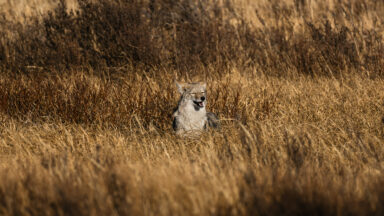
Reintroduced carnivores’ impacts on ecosystems are still coming into focus
In 1995, the reintroduction of 14 gray wolves to Yellowstone National Park marked a significant moment for wildlife conservation. These wolves, once nearly eradicated from the Western United States due to extensive hunting, entered a transformed ecosystem. Their absence had profoundly affected various ecological dynamics and food webs throughout the Rocky Mountains. Since their return, scientists have been eager to investigate whether and how the reintroduction of these carnivores could restore previous ecological balances. Early studies pointed to a compelling connection between wolves and the health of riparian ecosystems, igniting hopes for a rapid recovery. However, a recent publication suggests that the interplay between large carnivores and their environment may be more complex than initially perceived. The crux of the scientific debate revolves around the concept of a "trophic cascade," wherein the presence of predators like wolves indirectly influences other species and vegetation. While early 2000s research seemed to affirm a significant transformative impact of wolves on elk populations and riparian vegetation, newer findings indicate that the relationship might be more nuanced. Chris Wilmers, a wildlife ecology professor at the University of California, Santa Cruz, and the lead author of the latest study, acknowledges that while evidence supporting a trophic cascade exists, its effects are likely more intricate and less pronounced than previously thought. The foundational theory behind the wolves' role in reshaping the landscape stems from observations following the decline of beaver and wolf populations due to human intervention. With fewer predators, elk and other ungulates flourished, leading to overgrazing of riparian vegetation along stream banks. The diminished beaver population meant less dam construction, resulting in rapid water flow that eroded riverbeds and lowered the water table. This cyclical degradation further reduced the habitat for remaining beavers, creating a detrimental feedback loop that dried out areas near the park's streams. As research continues, the ecological impacts of gray wolves in Yellowstone remain a critical topic, highlighting the intricate balance of nature and the ongoing quest to understand it.
Unlocking the AI Lexicon: A Comprehensive Guide to Essential Terms
As artificial intelligence continues to transform our world, it comes with a unique vocabulary that can be daunting even...
TechCrunch | Jul 03, 2026, 21:45
India's Semiconductor Revolution: Chips from Sanand Set for Global Markets
In a significant milestone for India's technology landscape, Union Electronics and IT Minister Ashwini Vaishnaw announce...
Business Today | Jul 05, 2026, 03:55
Building an AI Empire from a Castle: The Unique Journey of a Startup CEO
In the picturesque village of Bourron-Marlotte, located just an hour south of Paris, Rémi Louf, the 39-year-old cofounde...
Business Insider | Jul 04, 2026, 08:45Shifting Strategies: How Companies Are Embracing Model Switching in AI
In the fast-evolving landscape of artificial intelligence, a new trend is emerging: model switching. This approach allow...
Business Insider | Jul 04, 2026, 08:40Midjourney Demands Transparency from Hollywood Studios in AI Legal Battle
In an escalating legal conflict with major Hollywood studios, AI company Midjourney is pushing for transparency regardin...
TechCrunch | Jul 04, 2026, 18:40