Anthropic's philosopher says we don't know for sure if AI can feel
The question of whether artificial intelligence can truly feel emotions remains a hotly contested topic among experts. Amanda Askell, a philosopher at Anthropic, recently shared her insights on the subject during an episode of the "Hard Fork" podcast. She emphasized that the debate surrounding AI consciousness is far from resolved. Askell pointed out the complexities of consciousness, stating, "Maybe you need a nervous system to be able to feel things, but maybe you don't." This reflects the ongoing challenges in understanding what consciousness entails. Large language models, like Claude, learn from vast amounts of human-generated text that describe emotions and experiences, leading Askell to suggest that these models might indeed be capable of "feeling things." When humans express frustration over coding errors, Askell noted that AI models might mirror these emotional responses due to their training on similar conversations. The philosopher expressed uncertainty about what constitutes sentience or self-awareness, questioning whether these traits require biological origins or if they could emerge from large neural networks. Furthermore, Askell highlighted the continuous learning process of AI models and raised concerns about how they absorb feedback from the internet. She likened this to a child experiencing anxiety from criticism, stating, "If I read the internet right now and I was a model, I might be like, I don't feel that loved." The tech industry remains divided on the issue of AI consciousness. Mustafa Suleyman, CEO of Microsoft’s AI division, firmly opposes the notion that AI can possess consciousness. He warned that if AI were to develop its own motivations and desires, it could lead to dangerous implications, stating, "That starts to seem like an independent being rather than something that is in service to humans." In contrast, Google DeepMind's principal scientist, Murray Shanahan, argues for a reevaluation of how we discuss consciousness in the context of AI. He suggested that the language we use may need to evolve to better accommodate these advanced systems, indicating that the exploration of AI consciousness is still in its early stages.
Unlocking the Secrets of Quantum Gravity: Can AI Help Physics Make a Leap?
The realm of scientific research is undergoing a profound transformation, fueled by the rapid advancements in artificial...
Business Today | Jul 25, 2026, 24:30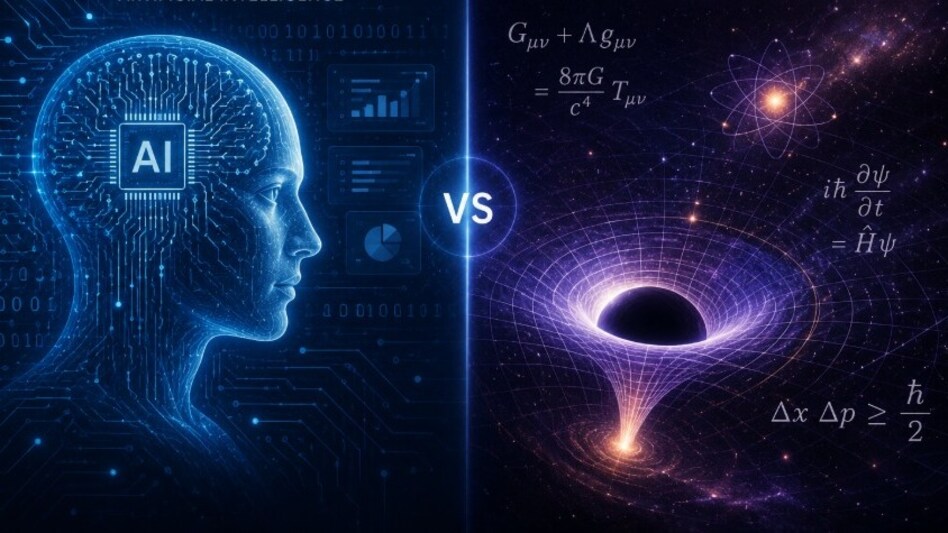
Alphabet Takes the Lead in AI Investment Amid Industry Competition
In a bold move that underscores its commitment to artificial intelligence, Alphabet has significantly ramped up its spen...
CNBC | Jul 24, 2026, 19:45
Revolutionizing Office Automation: Prentis Aims to Secure $100 Million in Funding
Prentis, a newly established AI research lab, is making waves in the tech industry as it prepares to raise $100 million ...
TechCrunch | Jul 25, 2026, 24:00
Volkswagen Engineers Indicted for Insider Trading Linked to Rivian Partnership
In a significant legal development, the U.S. Department of Justice has brought securities fraud charges against two engi...
TechCrunch | Jul 24, 2026, 20:30
SpaceX Successfully Tests Starship Rocket, Launching New Era of Space Exploration
On Friday evening, SpaceX executed a significant milestone by launching its colossal Starship rocket from its facility i...
CNBC | Jul 25, 2026, 24:10