Why AI token prices are about to plummet
Recent conversations with industry leaders reveal a significant shift on the horizon for AI token pricing. One CEO from an AI infrastructure firm, who wishes to remain anonymous, highlighted that a new generation of advanced AI models is set to debut later this year, promising not only improved performance but also enhanced efficiency. This advancement is anticipated to flood the market with AI tokens, leading to a substantial decrease in their value. Tokens, which serve as essential units for processing information in AI models, are currently under scrutiny as concerns about 'token maxing' grow. However, this trend may soon dissipate, or conversely, users may continue to burn tokens at an accelerated rate. Either scenario points toward a likely drop in token prices. The shift is already evident, with several AI model providers beginning to reduce their prices. OpenAI's CEO, Sam Altman, recently commented on the rising costs associated with AI, indicating the company is exploring multiple avenues to provide greater value at a lower cost. Data from a prominent token spending index by Silicon Data has shown a notable decline, with the index peaking at 2.06 in late May and dropping to 1.75 by June 10, suggesting a downward trend in token prices across various AI models. At the heart of this transformation is the deployment of Nvidia's latest Blackwell GPUs, which are being installed in data centers en masse. By the latter half of this year, these powerful systems—essentially supercomputers—will be fully operational, enhancing the efficiency of AI labs in training and running new models. The installation process has been complex, involving advanced cooling systems and innovative data center configurations, but the potential rewards are substantial. Research firm SemiAnalysis has conducted comparisons between Nvidia's Blackwell and its predecessor, the Hopper system. The findings are striking: while the older Hopper generated 90 tokens per second per GPU, the new Blackwell can produce an astonishing 6,000 tokens—an increase of 65 times. Moreover, when evaluating token generation per megawatt of energy consumed, Blackwell outperformed Hopper significantly, producing 2.8 million tokens compared to Hopper's 54,000. As energy costs continue to rise, the efficiency of these new systems will redefine how GPU performance is evaluated. SemiAnalysis found that the cost to generate one million tokens with the Hopper system was $4.20, whereas the Blackwell system slashed this to just 12 cents, making it 35 times more economical. The widespread adoption of these advanced AI models on Blackwell systems is likely to result in a dramatic increase in the availability of cost-effective tokens, prompting AI model providers to consider further price reductions. As we move into 2026, the landscape of AI token pricing is set to evolve dramatically, promising both challenges and opportunities for the industry.
Unleashing the Power of AI: The 5 Smartphones Redefining Mobile Photography
Artificial Intelligence (AI) is transforming our daily experiences, permeating various aspects of technology, including ...
Business Today | Jul 26, 2026, 07:05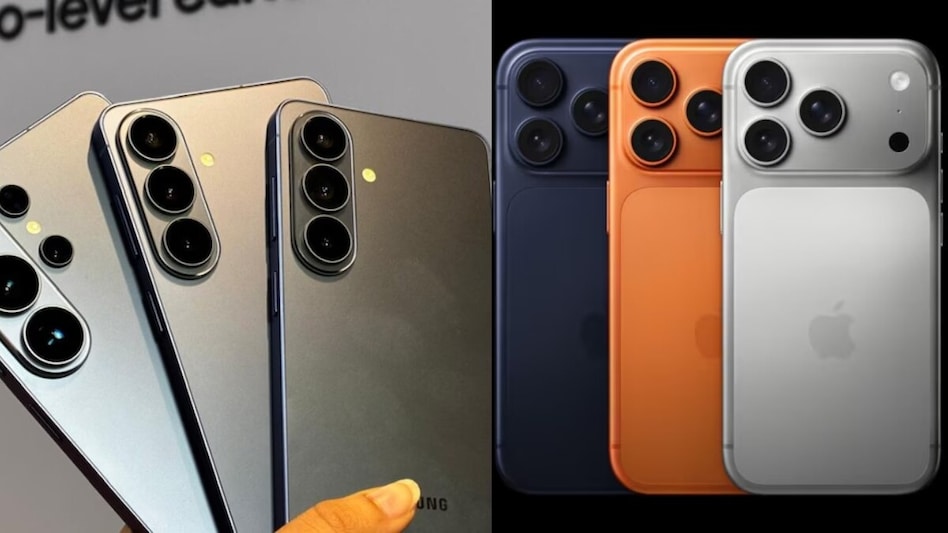
AI Transformations Lead to Major Job Cuts at Tech Giants
Monday.com, the innovative work management platform based in Tel Aviv, has recently announced significant layoffs, attri...
TechCrunch | Jul 26, 2026, 01:45
Crisis Averted: Power Line Failure Highlights Urgent Need for Data Center Resilience
A power line failure near Washington, DC, recently showcased a significant challenge faced by the electrical grid due to...
TechCrunch | Jul 25, 2026, 13:50
Warner Bros. Takes Legal Action Against Amazon Over Executive Poaching Allegations
Warner Bros. Discovery has initiated legal proceedings against Amazon, accusing the tech giant of unlawful interference ...
TechCrunch | Jul 25, 2026, 21:25
AI Revolution: Sam Altman Declares We Are in the Singularity Era
OpenAI's CEO, Sam Altman, has boldly asserted that we have reached a pivotal moment in the evolution of artificial intel...
Business Insider | Jul 26, 2026, 18:10