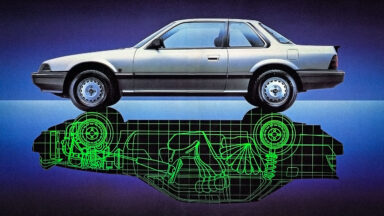
An engineering thesis disguised as a coupe: A history of the Honda Prelude
The Honda Prelude has always represented more than just a vehicle; it is an emblem of engineering ingenuity wrapped in a sporty coupe design. This iconic model embodies Honda’s commitment to precision and thoughtful design, making it a symbol of accessibility and aspiration. Its much-anticipated return in 2026, after being absent for over 25 years, is less about nostalgia and more about honoring a legacy. The Prelude name is steeped in expectations: it signifies a preference for balance over sheer power, innovation over superficial flair, and a pursuit of mechanical sophistication even in challenging market conditions. It’s essential to remember that the Prelude was born during a tumultuous time in the automotive industry. Its development was driven by a philosophy of restraint rather than indulgence, which is evident in its thoughtful design and engineering from the outset. The Prelude made its debut amidst significant economic challenges. It arrived not during a celebratory era but rather during a period marked by uncertainty in the global auto industry. This pivotal moment began on August 15, 1971, when President Richard Nixon severed the dollar's gold standard, effectively dismantling the Bretton Woods system that had underpinned international commerce since 1944. By 1973, the dollar faced formal devaluation, leading to fluctuating exchange rates and a surging yen that made Japanese exports more expensive. In October 1973, the oil crisis struck as OPEC reduced production, causing energy prices to soar and further complicating global demand. For Honda, with approximately 60% of its sales linked to the U.S. market, these economic shifts were dramatic. A stronger yen threatened profit margins, and rising fuel costs jeopardized sales volumes, laying bare vulnerabilities in Japan’s export-driven economy. Amid this instability, the company's founders, Soichiro Honda and Takeo Fujisawa, chose to step back from the company they had built. At this point, Honda had transformed from a small workshop to a corporation employing 18,000 individuals and managing 19.5 billion yen in capital. Yet, with growth came increased risks, highlighting the precarious nature of the automotive landscape.
Netflix Invests Heavily in Ben Affleck's AI-Powered Filmmaking Venture
Netflix has officially disclosed a staggering $587 million cash acquisition of InterPositive, a filmmaking startup co-fo...
TechCrunch | Jul 19, 2026, 22:10
OpenAI's Market Revival: Investors Reignite Interest Amid New AI Models
After a prolonged period of overshadowing by competitors, OpenAI is witnessing a notable resurgence in investor interest...
Business Insider | Jul 20, 2026, 06:10Christopher Nolan Warns: AI Might Be a Modern Trojan Horse
Renowned filmmaker Christopher Nolan, known for his latest adaptation of "The Odyssey," has expressed a cautious view to...
TechCrunch | Jul 19, 2026, 15:15
Moonshot AI's Kimi K3 Surges in Popularity, New User Sign-ups Temporarily Halted
Moonshot AI, a prominent player in China's AI landscape, is currently grappling with an overwhelming surge in demand for...
Business Insider | Jul 20, 2026, 04:15India's Groundbreaking Leap in Precision Timing with White Rabbit Technology
In the realm of modern digital infrastructure, time stands as an unseen yet crucial component. Every mobile call, financ...
Business Today | Jul 19, 2026, 10:50