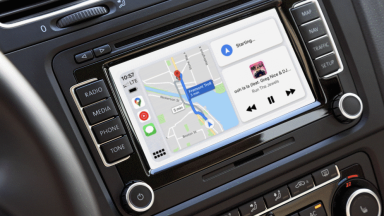
How our digital devices are putting our right to privacy at risk
In today's interconnected digital landscape, the conveniences we enjoy come at a significant price—our privacy. Many of us can hardly remember a time before tools like Google Maps or voice-activated assistants like Siri and Alexa transformed the way we navigate and manage our lives. These technologies, along with fitness trackers and smart home devices, have made our daily routines easier and more efficient. However, a pressing question arises: what are we losing in exchange for this convenience? Each day, we generate vast amounts of personal data, yet the legal frameworks surrounding how this information can be utilized by law enforcement remain ambiguous. This concern is expertly explored in the new book by George Washington University law professor Andrew Guthrie Ferguson, titled *Your Data Will Be Used Against You: Policing in the Age of Self-Surveillance.* Ferguson, who has studied the intersection of surveillance technology and policing, previously addressed the rise of data-driven policing in his book *The Rise of Big Data Policing.* In his latest work, he delves into the concept of self-surveillance, highlighting how the data we willingly generate may expose us to legal repercussions—especially given the lack of regulations governing police access to this information. "I liken this sort of police-driven self-surveillance to democratically mediated self-surveillance," Ferguson explained in an interview. He emphasizes that while we are using our tax dollars to fund these surveillance systems, we are also surrounding ourselves with devices that continuously collect data. This information can easily become evidence against us, depending on the prevailing political climate and the intentions of those in power. The potential for this vulnerability to be exploited by governments is a critical issue that society has yet to fully grasp.
Cognition Acquires Poke: Redefining AI Interaction for Enhanced Productivity
Poke, the friendly AI assistant that users interact with as if chatting with a friend, is set to embark on a new journey...
TechCrunch | Jul 24, 2026, 18:25
Finland Unveils World's Largest Sand Battery to Tackle Renewable Energy Challenges
In a groundbreaking move to address the critical issue of renewable energy intermittency, a small town in southern Finla...
CNBC | Jul 25, 2026, 05:35
Alphabet Takes the Lead in AI Investment Amid Industry Competition
In a bold move that underscores its commitment to artificial intelligence, Alphabet has significantly ramped up its spen...
CNBC | Jul 24, 2026, 19:45
OpenAI's Micro Keypad: A Novelty for Coders or Just a Confounding Gadget?
Last week, OpenAI made its debut in the hardware landscape with the launch of Micro, a stylish keypad designed to integr...
TechCrunch | Jul 25, 2026, 24:40
Vision Breakthrough: US Startup Launches Groundbreaking Retina Chip in Europe
Science Corp is poised to introduce a revolutionary retina chip in Europe, designed to restore partial vision for indivi...
Business Today | Jul 25, 2026, 01:00