AI is igniting a love affair between Silicon Valley and the consulting industry
The relationship between consulting firms and AI startups is intensifying, with both sectors recognizing the critical need for collaboration as artificial intelligence transforms the landscape of their industries. Recently, Google unveiled a substantial $750 million fund aimed at aiding consulting powerhouses like McKinsey, Accenture, and Deloitte in deploying advanced AI solutions to their clientele. Additionally, McKinsey has partnered with Google to establish a working group focused on guiding businesses from identifying AI opportunities to effectively implementing and scaling them within their operations. In a notable development, The Wall Street Journal reported that OpenAI is collaborating with consulting firms such as Accenture, Capgemini, and PwC to promote its AI coding assistant, Codex. The fast-paced evolution of AI technology has created a scenario where Silicon Valley and the consulting sector must rely on one another for success. Ben Ellencweig, a senior partner at McKinsey who oversees alliances for its AI division, Quantum Black, stated that the consulting firm has significantly expanded its network of tech partnerships since the introduction of ChatGPT. He noted that the depth of these partnerships has seen remarkable growth in recent years, with McKinsey working with a diverse array of contributors, including major players like AWS, Amazon, Nvidia, and OpenAI, to develop tailored solutions for their clients. Despite the influx of new AI products and startups, McKinsey maintains a stringent vetting process for potential partnerships. Ellencweig emphasized the importance of mutual understanding in these collaborations, stating, "Partnering means a two-way street." As the AI industry continues to thrive, there is a growing willingness among consulting firms to collaborate with smaller startups. Former McKinsey consultants pointed out that these partnerships help bridge the gap between the advanced AI models developed in labs and the specific needs of corporate clients, enabling the customization and implementation of AI solutions in real-world settings. Currently, McKinsey reports that approximately 40% of its projects are related to generative AI, while BCG anticipates that AI-related work will account for about 20% of its projects by 2024. Andy Triedman, a partner at Theory Ventures, highlighted that tech startups have historically depended on consulting firms to market their products to enterprise clients but are now seeking partnerships much earlier in their development. Previously, these collaborations would typically occur when startups reached $10 million in revenue, a milestone that usually took two to four years. However, the landscape has shifted to allow partnerships to form at the $2 million to $5 million revenue point, often within just 12 to 18 months of a startup's inception. Triedman categorized the AI ecosystem surrounding consulting firms into three segments: enterprise software startups that collaborate with consultants, AI-native consulting firms that rival traditional players, and smaller AI tools that automate critical consulting functions, which may soon attract interest from larger firms. He concluded, "It's a mutually beneficial relationship between the two."
Political Backlash Follows Jensen Huang's Surprising Return to Nvidia
Jensen Huang, the CEO and co-founder of Nvidia, has made a startling comeback after being ousted just over a week ago du...
TechCrunch | Nov 23, 2026, 19:40
Trump Claims Role in Jensen Huang's Return as Nvidia CEO Amid Security Concerns
On Monday, former President Donald Trump asserted that he played a pivotal role in convincing Nvidia's board to reinstat...
Business Today | Nov 23, 2026, 17:05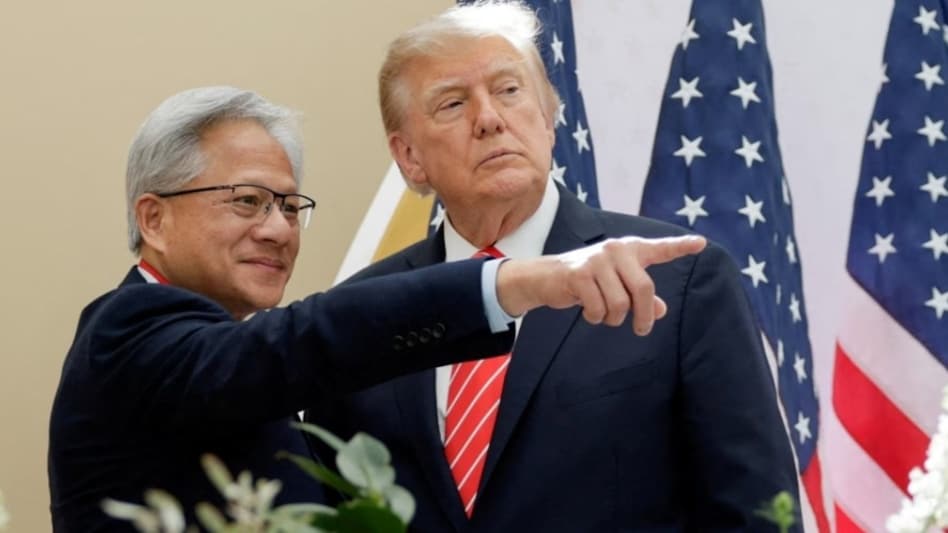
Revolutionizing Code Management: Anthropic Unveils Claude Ship
Anthropic is taking a significant leap in the realm of software development by introducing Claude Ship, a powerful suite...
TechCrunch | Nov 23, 2026, 22:10
Nvidia's CEO Return Sparks Controversy Amid National Security Concerns
In a surprising turn of events, Jensen Huang has resumed his role as CEO of Nvidia, just days after stepping down due to...
TechCrunch | Nov 23, 2026, 17:30
PwC Launches Initiative to Enhance Critical Thinking Skills for AI-Driven Future
PwC is set to introduce a groundbreaking certification program aimed at enhancing the critical thinking abilities of its...
Business Insider | Nov 23, 2026, 19:20