
Nvidia GPUs are everywhere. Here are the ways companies are accessing them
Nvidia's GPUs have become the most coveted processors in the realm of artificial intelligence, pushing the company's stock to new heights and bringing its market capitalization close to an astonishing $6 trillion. Organizations are now exploring diverse avenues to access these vital chips, from major cloud providers like Amazon, Microsoft, and Google to emerging neoclouds such as CoreWeave. Additionally, companies have the option to purchase the expensive hardware outright. This surge in demand is reflected in Nvidia's projected revenue, which is expected to hit $108 billion for the October quarter, marking an impressive 89% increase year-over-year. However, the plethora of options can create confusion for businesses urgently in need of computing power. Traditionally, large cloud service providers have dominated Nvidia's customer base, but the landscape is evolving. Recent filings reveal that five clients accounted for at least 10% of Nvidia's receivables in the July quarter—up from three in January. According to industry research firm SemiAnalysis, the number of providers utilizing Nvidia GPUs has risen to 323 as of September, a significant jump from 209 less than a year prior. Nvidia's CEO, Jensen Huang, noted at a recent Goldman Sachs tech conference that a new wave of innovative neoclouds is emerging, with substantial backlogs of demand. Big corporations are increasingly investing millions annually in cloud services from the giants, particularly since the inception of AI tools like ChatGPT in 2022. This shift has led many to rely on these established hyperscalers for GPU access, leveraging their reputation to build trust with potential clients. Bindu Reddy, CEO of AI startup Abacus, emphasized the importance of these relationships, stating, "When you're talking to enterprises, your subprocessor had better be Azure." In the past year, leading AI labs such as Anthropic and OpenAI have committed to spending over $500 billion with Amazon and Microsoft, who together held a 59% share of the cloud infrastructure market as of 2025, according to Gartner. However, these hyperscalers face challenges in meeting the ever-growing demand for GPUs. Amazon CEO Andy Jassy acknowledged in July that they might not be able to satisfy all the anticipated demand for this year. As a result, neoclouds have gained traction. Modal, a startup that previously relied on hyperscalers, has transitioned to utilizing multiple neoclouds, currently partnering with 25. CEO Erik Bernhardsson noted the need for an expanded GPU supply, stating, "You can get a few hundred GPUs or maybe a thousand, but at our scale, we needed way more GPUs." The competition between hyperscalers and neoclouds is intensifying, with Google and Microsoft now seeking capacity from providers like CoreWeave. Marc Boroditsky, Chief Revenue Officer at Nebius, a neocloud, mentioned that some hyperscalers have approached them to help service clients whose needs they cannot meet. For companies looking to access GPUs quickly, neoclouds may offer more flexibility than larger cloud providers, even though some of them may require upfront payments. Specialist neoclouds often provide options like bare-metal GPUs, allowing customers greater control but also requiring more technical management. While major players like Oracle are allowing clients to bring their own GPUs, startups with limited budgets are finding ways to rent GPUs on an hourly basis, presenting a viable alternative to building entire data centers. OpenAI, for instance, has committed over $300 billion to Oracle but has not yet disclosed any plans for GPU integration. The landscape is continuously evolving, with companies like SpaceX leveraging their excess GPU capacity in deals with hyperscalers and startups. The competition remains fierce, as organizations strive to balance capability with cost control in a rapidly changing technological environment. As the demand for GPUs surges, many firms are reconsidering their strategies to ensure they can harness the power of AI effectively.
Navigating the AI Job Landscape: Challenges and Opportunities Ahead
The landscape of employment is undergoing a significant transformation as artificial intelligence (AI) permeates various...
Business Insider | Nov 24, 2026, 22:40Trump Open to Pardon for Nvidia's Huang Amid Controversies
As Nvidia’s CEO Jensen Huang faces intense scrutiny from Congress regarding alleged ties to China and possible export co...
Business Today | Nov 25, 2026, 02:40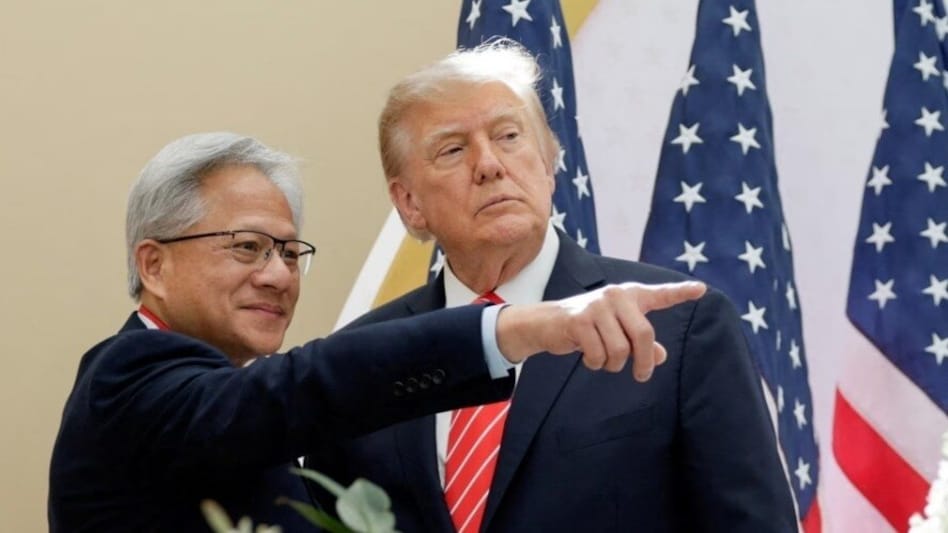
Cybersecurity Alert: Iranian Hackers Target Shipping Vessels in Surge of Attacks
U.S. authorities are investigating a series of cyberattacks on shipping vessels, with suspicions pointing toward Iranian...
TechCrunch | Nov 24, 2026, 21:15
UK Government Sounds Alarm on Surge of AI-Enhanced Cyber Threats
The United Kingdom's cybersecurity agency has reported a significant increase in cyberattacks driven by artificial intel...
TechCrunch | Nov 24, 2026, 18:30
Jensen Huang Shares Personal Journey in First All-Hands Meeting Post-Reinstatement
In a pivotal moment for Nvidia, CEO Jensen Huang addressed employees on Tuesday during his first companywide meeting sin...
Business Insider | Nov 24, 2026, 19:55