
A private equity deal reviving Rocketdyne seems more like a corporate breakup
For those acquainted with the history of space exploration, the name Rocketdyne may ring a bell. This company played a pivotal role in the production of nearly all large liquid-fueled rocket engines in the United States during its peak. The Saturn V rocket, which propelled astronauts toward the Moon, depended on the robust engines developed by Rocketdyne, as did the Space Shuttle, Atlas, Thor, Delta rockets, and the early ballistic missiles of the U.S. military. However, Rocketdyne's prominence began to wane after the Cold War. Established in 1955 as a division of North American Aviation, it transitioned through various corporate identities, becoming part of Rockwell International and eventually acquired by Boeing in 1996. Throughout the latter half of the 20th century, Rocketdyne was at the forefront, designing and testing substantial rocket engine models until the decline of its innovation in the 1990s. Since then, the company has managed to develop only one large engine from the ground up—the RS-68—before its retirement in 2024. The emergence of the commercial space sector accelerated Rocketdyne's downturn. In 2005, Boeing divested Rocketdyne to Pratt & Whitney for $700 million, equivalent to about $1.2 billion today, just before SpaceX's inaugural rocket launch and NASA's conclusion of the Space Shuttle program. During this tumultuous period, Rocketdyne’s competitors advanced rapidly. Companies like SpaceX and Blue Origin, supported by affluent investors, adopted innovative strategies in rocket design and production. They focused on vertical integration to reduce costs and lessen dependence on external supply chains, aiming to manufacture their own rocket engines instead of relying on third-party suppliers. In contrast, Rocketdyne remained committed to selling pre-made engines, marking a significant divergence from the evolving landscape of the space industry.
The Aluminum Foil Trend: A DIY Shield Against Wireless Identity Theft
Have you noticed an unusual trend where people are wrapping their wallets in aluminum foil? This peculiar practice has e...
Business Today | Jul 25, 2026, 02:45
Vision Breakthrough: US Startup Launches Groundbreaking Retina Chip in Europe
Science Corp is poised to introduce a revolutionary retina chip in Europe, designed to restore partial vision for indivi...
Business Today | Jul 25, 2026, 01:00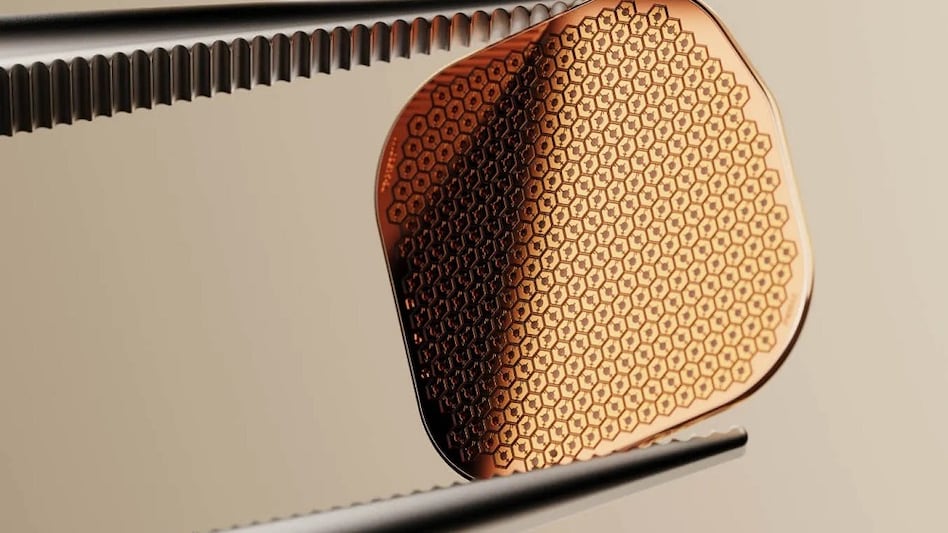
The Shift in Human Cognition: Embracing AI as a Collaborative Tool
As technology continues to evolve, a notable shift is occurring in the relationship between humans and artificial intell...
Business Insider | Jul 25, 2026, 09:50SpaceX Successfully Tests Starship Rocket, Launching New Era of Space Exploration
On Friday evening, SpaceX executed a significant milestone by launching its colossal Starship rocket from its facility i...
CNBC | Jul 25, 2026, 24:10
Unlocking the Secrets of Quantum Gravity: Can AI Help Physics Make a Leap?
The realm of scientific research is undergoing a profound transformation, fueled by the rapid advancements in artificial...
Business Today | Jul 25, 2026, 24:30