The Rise of AI Reasoning Models Comes With a Big Energy Tradeoff
Recent investigations reveal that while the evolution of artificial intelligence is steering developers towards models that simulate human reasoning, these advancements come with significant energy costs. A study from the AI Energy Score project indicates that AI reasoning models consume an astonishing 100 times more energy to respond to 1,000 text prompts compared to models lacking this capability. Led by Hugging Face's research scientist Sasha Luccioni and Boris Gamazaychikov from Salesforce, the study assessed 40 publicly available AI models from major players such as OpenAI, Google, and Microsoft. Results showed a stark contrast in energy consumption among these models. For instance, a simplified version of DeepSeek's R1 model consumed only 50 watt-hours when reasoning was disabled, akin to the energy used by a 50-watt lightbulb for an hour. However, with reasoning enabled, the energy requirement skyrocketed to 308,186 watt-hours. The escalating energy demands of AI have prompted scrutiny from industry experts, especially as tech companies expand data centers to meet the growing needs of AI applications. This expansion has raised alarms about the potential strain on power grids and the increase in energy costs for consumers. A recent Bloomberg report highlighted that wholesale electricity prices surged by as much as 267% in regions surrounding data centers over the past five years. Environmental concerns are also becoming more pronounced, as Microsoft, Google, and Amazon have acknowledged the challenges posed by data center expansion on their climate goals. Since OpenAI introduced its first reasoning model, o1, over a year ago, many companies have followed suit, prioritizing complex problem-solving in areas like science and mathematics. Despite the rapid adoption of reasoning systems, there remains a lack of comprehensive research into their energy consumption. The study's findings emphasize that reasoning models typically generate more extensive responses, contributing to their heightened energy demands. Luccioni advocates for a more discerning approach to AI usage, urging that not every query necessitates the use of the most energy-intensive systems. To assess the energy usage differences, researchers employed uniform hardware and identical prompts, ranging from straightforward queries to intricate mathematical problems, while using the CodeCarbon tool for real-time energy tracking. The results revealed significant variations; for example, Microsoft's Phi 4 model utilized 9,462 watt-hours with reasoning activated, in stark contrast to just 18 watt-hours when it was off. OpenAI's largest gpt-oss model exhibited a less dramatic difference, consuming 8,504 watt-hours at the highest computational setting compared to 5,313 watt-hours on a lower setting. Major tech companies, including OpenAI, Microsoft, Google, and DeepSeek, did not provide immediate comments on the findings. In August, Google shared internal research indicating that its Gemini AI service utilized 0.24 watt-hours per median text prompt, which is comparable to watching TV for under nine seconds, and claimed this figure was much lower than previous public estimates. As discussions around AI energy consumption continue, there is a noticeable shift from training AI systems to inference, the stage where these systems are actively used post-training. The growing focus on reasoning models plays a significant role in this transition. Recently, Microsoft CEO Satya Nadella pointed out the necessity of addressing AI's energy consumption, stating that the industry must earn the "social permission to consume energy" for AI data centers by ensuring that AI contributes positively to society and economic growth.
Hyderabad Police Warns of Dangerous WhatsApp Scam Targeting Bank Accounts
Hyderabad City Police Commissioner VC Sajjanar has issued a stark warning regarding a new WhatsApp scam that could resul...
Business Today | Oct 14, 2026, 24:45
Fitbit Air vs. Edge: Which Google Fitness Tracker Fits Your Lifestyle?
When selecting between Google’s Fitbit Air and Fitbit Edge, your health tracking preferences play a crucial role. The Fi...
Business Today | Oct 14, 2026, 03:10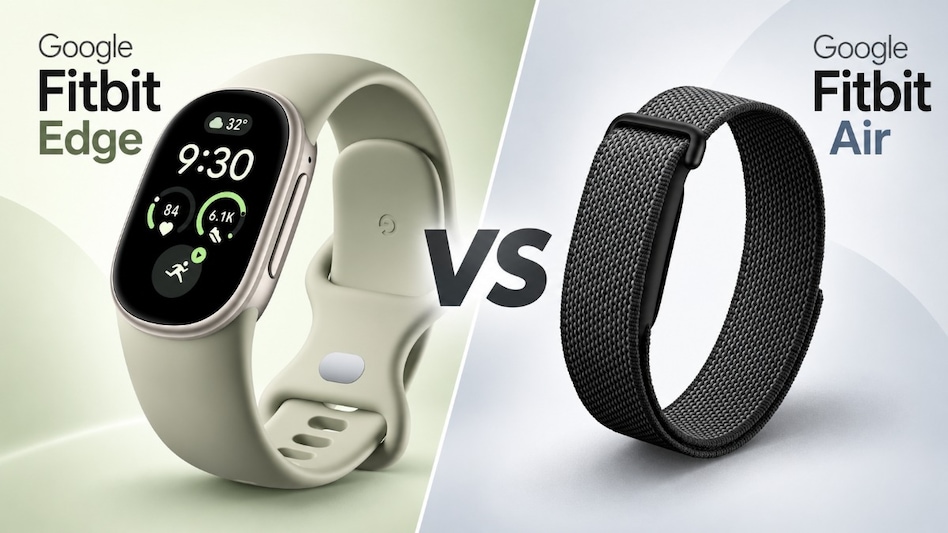
Revolutionizing Iron Production: Helix Carbon Aims to Cut Costs and Emissions
The iron and steel sectors rank among the top polluters globally, prompting numerous startups to seek ways to reduce the...
TechCrunch | Oct 13, 2026, 21:50
Fitbit Edge: The Latest in Health Tracking, But Buyers Beware
Google has unveiled its latest health-monitoring device, the Fitbit Edge, which promises advanced features for tracking ...
Business Today | Oct 14, 2026, 24:45
AI Investment on the Rise but Cost Challenges Loom for Businesses
Businesses are poised to increase their spending on artificial intelligence (AI), yet the escalating costs associated wi...
Business Today | Oct 13, 2026, 22:35