We still don’t have a more precise value for “Big G”
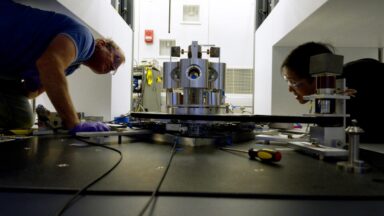
The gravitational constant, often referred to as 'Big G', is a cornerstone of our understanding of the universe. It quantifies the gravitational force between two masses separated by a certain distance, and in a more complex sense, it indicates how a mass can warp space-time. For over 200 years, physicists have been striving to measure Big G with ever-increasing precision. Despite this lengthy pursuit, the values obtained have consistently shown slight variations, differing by about one part in 10,000. This inconsistency has made Big G somewhat of an outlier among fundamental constants, leading to considerable frustration among scientists focused on precision measurement. The challenge arises from the inherently weak nature of gravity, which is the least powerful of the four fundamental forces. This weakness results in substantial interference from the Earth’s gravitational field, often termed 'little g', particularly within laboratory settings. In a recent endeavor, researchers from the National Institute of Standards and Technology (NIST) have dedicated a decade to replicating one of the most divergent experimental outcomes related to Big G. Their findings, recently published in the journal Metrologia, do not fully reconcile the discrepancies but do provide an additional data point that may aid physicists in their continuous efforts to determine a more accurate value for this critical constant. The concept of a gravitational constant was first introduced by Isaac Newton in the late 17th century with his law of universal gravitation, although the designation 'Big G' did not come into use until the 1890s. Newton speculated that the strength of gravity could be determined by swinging a pendulum near a large hill and measuring its deflection, yet he refrained from conducting this experiment, believing the effect to be too minute to detect. By the year 1774, the Royal Society had even formed a committee to ascertain the Earth's density as an indirect method to estimate Big G, employing a variation of Newton’s pendulum theory.
Vision Breakthrough: US Startup Launches Groundbreaking Retina Chip in Europe
Science Corp is poised to introduce a revolutionary retina chip in Europe, designed to restore partial vision for indivi...
Business Today | Jul 25, 2026, 01:00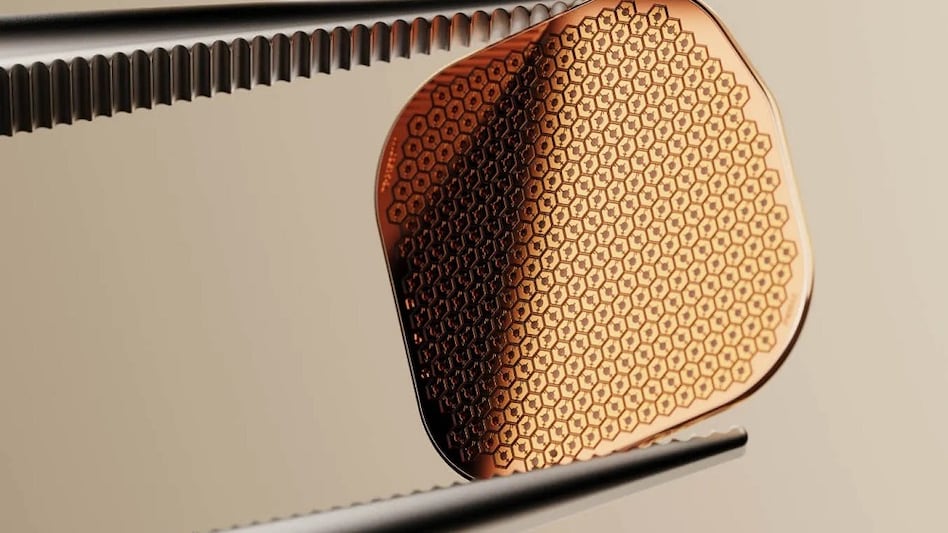
Elon Musk Faces Major Setbacks as Tesla and SpaceX See Significant Stock Declines
It has been a challenging week for Elon Musk, as both Tesla and SpaceX experienced substantial stock declines. Tesla sha...
CNBC | Jul 24, 2026, 20:40
Waymo Considers Parting Ways with Uber Amid Rising Tensions
Waymo is reportedly exploring options to exit its partnership with Uber, which has allowed the Alphabet-owned firm to de...
TechCrunch | Jul 24, 2026, 21:00
Alphabet Takes the Lead in AI Investment Amid Industry Competition
In a bold move that underscores its commitment to artificial intelligence, Alphabet has significantly ramped up its spen...
CNBC | Jul 24, 2026, 19:45
Revolutionizing Office Automation: Prentis Aims to Secure $100 Million in Funding
Prentis, a newly established AI research lab, is making waves in the tech industry as it prepares to raise $100 million ...
TechCrunch | Jul 25, 2026, 24:00