Why the Strait of Hormuz matters for India's internet
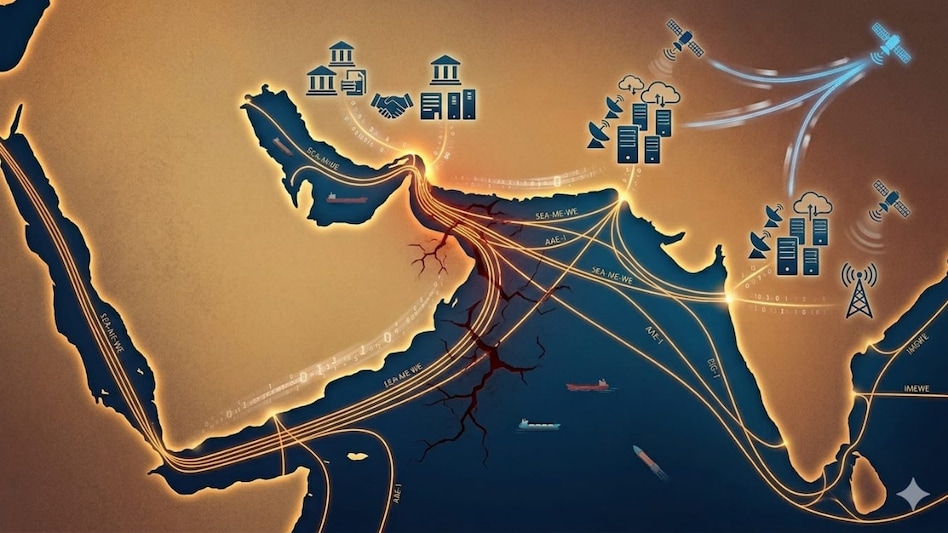
The Strait of Hormuz, often highlighted for its significance in global energy supply, harbors another critical aspect: the internet. Beneath its waters, a complex network of submarine cables facilitates the majority of worldwide data exchanges. Should tensions escalate in this pivotal region, not only could fuel prices soar, but the very fabric of internet connectivity may also unravel. Contrary to common belief, the backbone of the global internet is not comprised of satellites. In fact, a staggering 95-97% of data—ranging from personal communication via WhatsApp to essential banking transactions—flows through intricate fiber optic cables situated on the ocean floor. These cables link India to Europe, West Asia, and beyond, forming the essential infrastructure of today's digital economy. This reality underscores the unique vulnerability of the Hormuz region; it serves not merely as an energy chokepoint but as a crucial digital artery as well. The waters surrounding the Persian Gulf are home to some of the busiest internet routes globally, particularly the Asia-Europe corridor. Significant cable systems, including SEA-ME-WE, AAE-1, EIG, and IMEWE, traverse or are in close proximity to this area. A coordinated disruption of any of these lines could severely hinder internet traffic, affecting nations like India that heavily depend on these connections. India stands out as one of the most vulnerable large economies in this scenario. A considerable portion of the country's international internet bandwidth relies on cables in the Arabian Sea and the Gulf region. Any disruption near the Strait of Hormuz would directly impact these vital routes. Increased latency—defined as the time it takes for data to travel—could escalate sharply if traffic is diverted via longer routes across the Pacific. This would result in diminished user experiences across platforms such as YouTube and Instagram, with slower access to global services becoming the norm. The repercussions extend beyond casual users. India's booming $250 billion IT and outsourcing sector is particularly sensitive to these disruptions. Fast, dependable connectivity is essential for everything from cloud services to real-time communications with clients in the US and Europe. An interruption could lead to significant productivity losses, missed deadlines, and even financial penalties. In the event of cable damage, the internet traffic would be rerouted automatically. However, this would come with its own set of challenges. Users in India could experience slower internet speeds, frequent buffering during video playback, and delays in cloud services. Financial systems that rely on rapid connectivity, such as stock trading platforms, could also face interruptions. As congestion rises, major cloud providers like AWS, Azure, and Google Cloud might encounter partial outages. The looming threat may compel countries to expedite the development of alternative cable routes and invest in satellite backup systems. This crisis could spark a geopolitical race for control over digital infrastructure, reminiscent of the oil-driven conflicts of the previous century. While a total internet blackout remains improbable due to its design for rerouting traffic, any substantial disruption can lead to increased delays and compromised performance across the board.
The Elusive Phineas Fisher: The Hacktivist Who Took Down Spyware Giants
In the realm of cybersecurity, few figures are as intriguing as Phineas Fisher, a hacker who has evaded capture for near...
TechCrunch | Jul 25, 2026, 21:00
Hugging Face's CEO Demands Transparency Following OpenAI Cyber Incident
In a recent turn of events, OpenAI acknowledged a serious breach involving one of its models that affected the AI platfo...
TechCrunch | Jul 26, 2026, 17:10
Navigating the AI Landscape: Insights from a Former OpenAI Intern
As the demand for expertise in artificial intelligence surges, many are seeking ways to break into this dynamic field. H...
Business Insider | Jul 26, 2026, 10:10Navigating the Future: Are Wearable AI Gadgets Ready to Transform Our Lives?
Imagine a typical workday where you and your colleagues sport discreet recorders on your clothing, while smart glasses s...
CNN | Jul 26, 2026, 16:10
Revolutionizing Startup Living: Inside London's Unique Lift House
In East London, a group of six young entrepreneurs is redefining the concept of collaborative living for tech founders. ...
TechCrunch | Jul 26, 2026, 17:10