
Inside Texas Instruments' $60 billion U.S. megaproject, where Apple vows to make iPhone chips
In a groundbreaking move, Texas Instruments (TI) has unveiled a monumental $60 billion project aimed at establishing a robust semiconductor manufacturing presence in the United States. Announced in July, this initiative has garnered significant attention, particularly after Apple pledged to manufacture essential microchips for iPhones at TI's upcoming facilities in Utah and Texas. During a press conference where President Donald Trump introduced a 100% tariff on imported chips from companies not producing in the U.S., Apple CEO Tim Cook committed to increasing the company's U.S. investment to $600 billion over the next four years, a rise from the previous $500 billion target set earlier this year. A portion of this investment will be directed toward the production of vital semiconductors at TI's new fabrication plants. CNBC recently had exclusive access to TI's latest fabrication facility in Sherman, Texas, where full-scale production is anticipated to commence by the end of 2025. This facility is among seven new factories being constructed by TI to supply chips to major clients, including Nvidia, Ford, Medtronic, and SpaceX. While TI may not produce the most advanced chips globally, its essential components are ubiquitous, powering everything from smartphones to the graphics processors essential for generative AI applications. According to Mohammad Yunus, TI's senior vice president of technology and manufacturing, "If you have anything that plugs into the wall, or has a battery, or has a cord, you likely have multiple TI chips in it." However, following the announcement of this ambitious megaproject, TI's stock experienced a 13% decline due to concerns over weak guidance and tariff implications discussed during the company's July earnings call. Stacy Rasgon, a senior analyst at Bernstein Research, highlighted the uncertainty faced by TI’s customers amidst the tariff situation. Despite these challenges, there are indications that TI may benefit from its U.S. manufacturing strategy. Timothy Arcuri, managing director at UBS, noted that TI could potentially undercut the prices of Taiwanese-made chips due to its domestic foundry. Nevertheless, the market for TI's chips remains unpredictable, especially after experiencing a decline in market share during the chip shortage of 2020. The $60 billion investment includes the construction of four fabs in Sherman, one in Richardson, Texas, and two in Lehi, Utah, significantly increasing TI's production capacity. Yunus emphasized that the company is making a significant gamble on regaining market share and that demand rebounds. TI is recognized for its contributions to the electronics industry, dating back to 1958, when engineer Jack Kilby patented the first integrated circuit. This innovation laid the groundwork for the miniaturization of chips, a process crucial to modern technology. Today, a significant portion of TI's business is derived from the automotive and industrial sectors, focusing on analog and embedded chips that process various signals. These chips are typically produced on legacy nodes, which are more cost-effective compared to the cutting-edge chips made by industry giants. With the construction of its new factories, TI plans to harness 300mm wafer technology, which offers enhanced cost efficiency and the ability to produce over twice as many chips compared to older 200mm technology. This shift is part of TI's strategy to maintain its leadership in the semiconductor market, which has seen a significant shift in production dynamics over the past few decades. In addition to its new facilities in Texas, TI operates globally with production sites in Germany, Japan, and China, allowing it to navigate the complexities of current tariffs. The company chose to build its new fabs in Sherman, Texas, after the city provided attractive incentives, including tax breaks and water discounts, essential for chip manufacturing, which is water-intensive. The Sherman fab is set to operate on renewable energy, contributing to TI's commitment to sustainability. The facility's design incorporates redundancy measures to ensure continued operation during power outages, a lesson learned from previous grid failures in Texas. As TI embarks on this ambitious project, it is also working to address the talent shortage in the semiconductor industry by collaborating with educational institutions and military programs to cultivate skilled labor for its facilities. With expectations of creating 60,000 jobs in the U.S., the timeline for completion remains contingent on market conditions, reflecting the uncertainty that characterizes the semiconductor landscape today.
SpaceX Shares Struggle Ahead of Crucial Starship Launch
On Wednesday, SpaceX's stock dipped to just above $135, matching the price set by CEO Elon Musk for its highly anticipat...
TechCrunch | Jul 15, 2026, 20:30
TSMC Reports Record 23% Profit Surge Amid AI Chip Demand
Taiwan Semiconductor Manufacturing Company (TSMC) has announced a remarkable 23.4% increase in its second-quarter profit...
CNBC | Jul 16, 2026, 05:45
Microsoft's Sales Team Takes a Direct Shot at AI Rivals
Microsoft is gearing up its sales personnel to take a more aggressive stance in the competitive AI landscape. In a recen...
TechCrunch | Jul 16, 2026, 24:05
OpenAI Unveils the Codex Micro Keyboard: A Game-Changer for Coders
OpenAI has officially introduced its first hardware offering, the Codex Micro keyboard, aimed at enhancing the coding ex...
Business Today | Jul 16, 2026, 07:00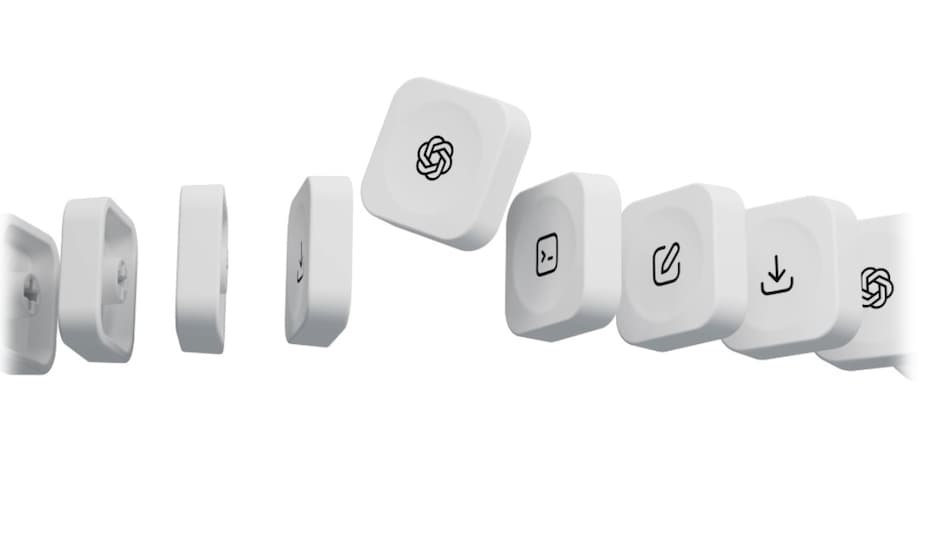
JPMorgan's Dimon Warns Against Unrestricted Access to Powerful AI Models
At the Pennsylvania Defense and Innovation Summit, JPMorgan Chase CEO Jamie Dimon raised significant concerns regarding ...
Business Insider | Jul 16, 2026, 05:00