
Tesla engaged in deceptive marketing for Autopilot and Full Self-Driving, judge rules
In a significant ruling, an administrative law judge has determined that Tesla misled consumers through deceptive marketing practices regarding the capabilities of its Autopilot and Full Self-Driving software. This decision marks a critical moment in an ongoing case initiated by California’s Department of Motor Vehicles (DMV), which has been in progress for several years. The judge supported the DMV's request to impose a 30-day suspension on Tesla's sales as a penalty for these misleading practices. However, the DMV has temporarily paused this order, granting Tesla a 90-day window to amend or eliminate any misleading language before the suspension takes effect, according to various reports. Additionally, the judge recommended a 30-day suspension of Tesla's manufacturing license, though this recommendation has also been stayed by the DMV. It remains unclear what steps the California DMV will require for Tesla to comply with the ruling. If Tesla meets these requirements, the proposed suspensions will be lifted. The DMV has not yet provided comments on the situation, and Tesla currently lacks a public relations department to address these issues. Tesla has previously faced multiple investigations from the California Attorney General, the Department of Justice, and the Securities and Exchange Commission concerning similar allegations regarding its marketing practices for partial autonomy systems. The company has also dealt with several civil lawsuits related to crashes involving its Autopilot technology, some of which have been settled. The DMV's case has been slowly progressing through the state’s Office of Administrative Hearings, where the agency contends that Tesla’s claims led customers to overestimate the autonomy of its advanced driver assistance systems. This overconfidence, the DMV argues, has resulted in numerous accidents and fatalities. Tesla has countered these allegations, asserting that its marketing is protected under free speech. A temporary halt on sales in California, which is Tesla's largest U.S. market, could have profound implications for the company. Furthermore, a manufacturing suspension could hinder its operations, particularly as Tesla continues to depend on its Fremont, California facility to produce a significant portion of its vehicles, including all Model 3 sedans destined for North America. This ruling comes at a critical time for Tesla, which is currently testing its Robotaxi service in Austin, Texas. Recently, the company removed safety monitors from its small fleet operating in the city, after offering rides to customers for the past six months with a safety monitor present in either the driver's or passenger's seat. Notably, these vehicles utilize a different version of Tesla's driving software compared to what is available in customer vehicles, as stated by CEO Elon Musk.
Unveiling the Future: Google Teases Pixel 11 Series with Stunning New Features
Google has just given fans a sneak peek at its highly anticipated Pixel 11 series, set to launch on August 12, 2026. The...
Business Today | Jul 16, 2026, 06:10
JPMorgan's Dimon Warns Against Unrestricted Access to Powerful AI Models
At the Pennsylvania Defense and Innovation Summit, JPMorgan Chase CEO Jamie Dimon raised significant concerns regarding ...
Business Insider | Jul 16, 2026, 05:00AI's Role in the Workforce: Why Some Jobs Remain Safe from Automation
As artificial intelligence reshapes various industries, the replacement of many front-line workers by robots remains a c...
Business Today | Jul 16, 2026, 02:00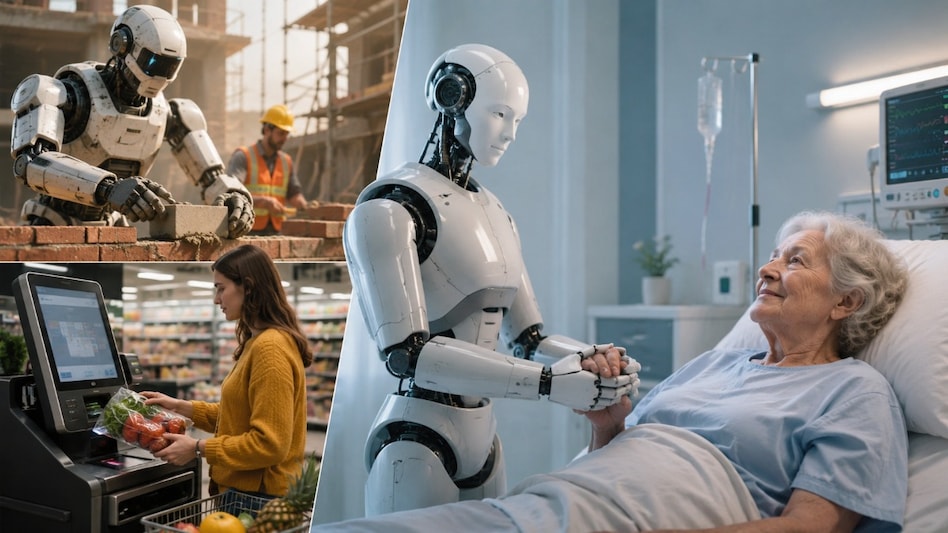
SpaceX Shares Struggle Ahead of Crucial Starship Launch
On Wednesday, SpaceX's stock dipped to just above $135, matching the price set by CEO Elon Musk for its highly anticipat...
TechCrunch | Jul 15, 2026, 20:30
Lululemon Fuels Innovation with $30M Investment in Nylon Recycling Pioneer Syntetica
Lululemon, the well-known activewear brand, has made a significant investment in Syntetica, a French startup that has de...
TechCrunch | Jul 16, 2026, 04:30